I opened Apple’s website in July looking for a Mac Studio for a small video editing setup. Last time I checked the price, months back, it was under two grand. Now it started at $2,499. I refreshed page twice, thinking it was a glitch. It wasn’t.
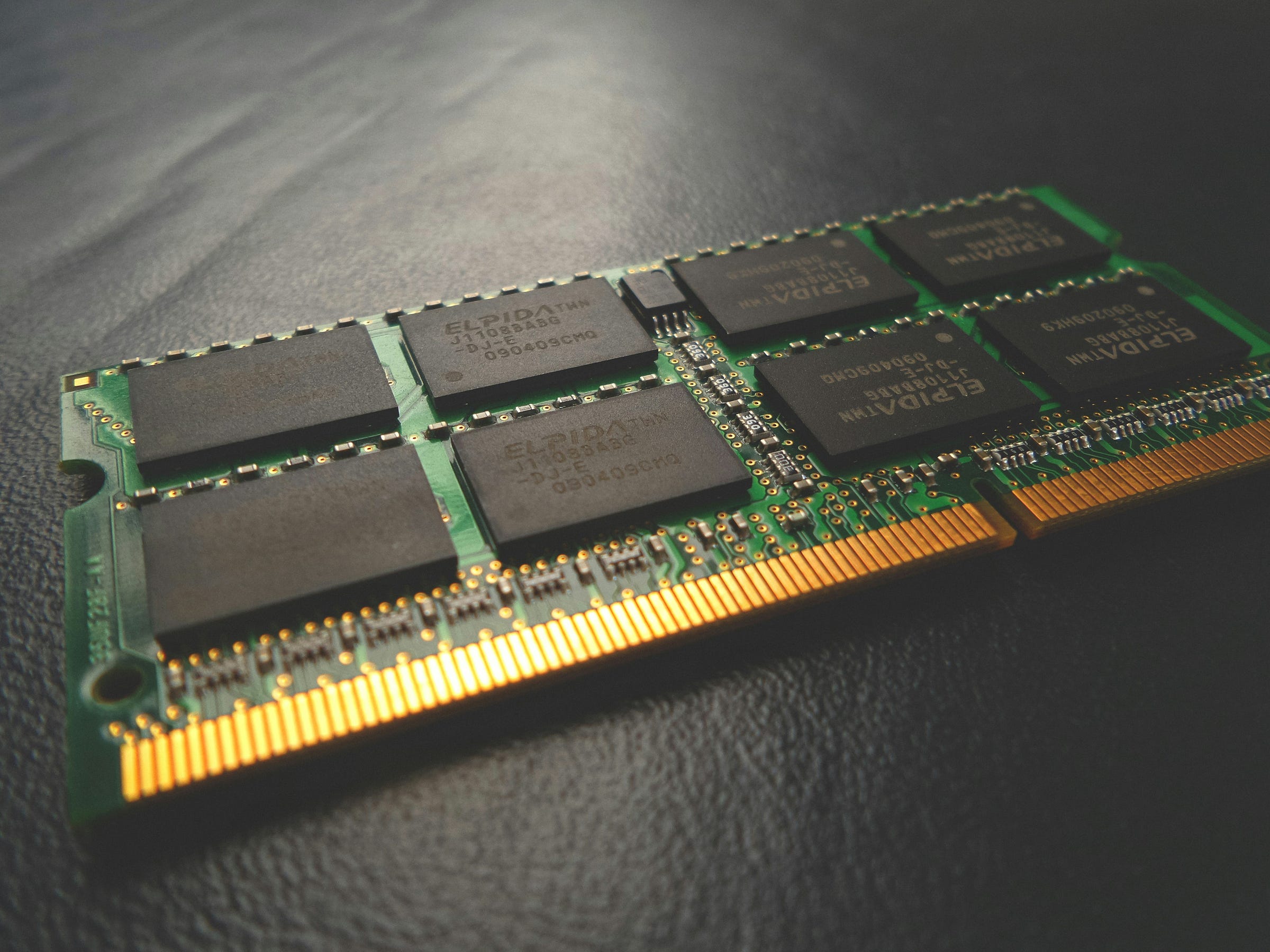
That’s basically been 2026 in one screenshot. Doesn’t matter if you’re shopping for a laptop, a PS5, or just a decent SSD to back up your photos, you’re paying more than you were a year ago, sometimes a lot more, and the reason is the same everywhere: RAM and storage chips got expensive, fast, because AI data centers are buying them up faster than anyone can make them. This isn’t a normal price cycle where things settle down after a quarter. Micron’s own leadership has said this could run through 2028, maybe longer.
I want to walk through what’s actually happening, with real numbers, because “AI is making everything expensive” gets thrown around so much it’s started to sound like background noise. It isn’t. It’s showing up on receipts.
The short version of why this is happening
Every laptop, phone, console, and increasingly every fridge or TV needs memory chips, mainly DRAM and NAND flash, to function. For years, prices for these chips crept up and down depending on demand, but supply mostly kept pace.
Then the AI boom hit differently than past tech cycles. Training and running large models needs enormous amounts of high-bandwidth memory, the specialized stuff used in data center GPUs. So chipmakers like Samsung, SK Hynix, and Micron started shifting factory capacity away from ordinary consumer DRAM toward the high-margin AI stuff.Data centers now absorb something like 70 percent of global memory chip output. When your biggest customer is buying by the container load and paying whatever it takes, the price for everyone else goes up too. Basic supply and demand, just at a scale nobody planned for.
DRAM prices jumped roughly 95 percent in the first quarter of 2026 alone. NAND wasn’t far behind. Analysts at TrendForce were still projecting another double-digit jump for the third quarter as I was researching this. SK Hynix executives have said the shortage environment could persist through 2030. So no, this isn’t a blip you wait out until Black Friday.
Apple’s June surprise
Apple usually tries to hold pricing steady even when component costs move, partly because it buys chips in bulk years ahead and partly because its margins can absorb some pain. That buffer ran out.
On June 25, 2026, Apple took its online store offline for a bit, no warning, no announcement. When it came back, prices had moved on nearly everything except the iPhone, Apple Watch, and AirPods. The MacBook Air went from $1,099 to $1,299. The MacBook Pro moved from $1,699 to $1,999. And the Mac Studio, which is what I was actually shopping for, took the biggest single hit of the bunch: $1,999 up to $2,499, a flat $500 jump before you even touch storage or memory upgrades.
Even the budget MacBook Neo wasn’t spared. Its base configuration went from $599 to $699, a 16.7 percent increase on a laptop that had only been out for about four months. Tim Cook had actually hinted at this about a week earlier in a WSJ interview, saying price increases were unavoidable given what was happening with memory costs industry-wide.
What actually surprised me was different, though. When Apple launched the newer M5 MacBook Air and Pro earlier in the year, before the June jump, it raised entry prices by $100 to $200 but kept RAM upgrade pricing exactly the same as before. Apple’s RAM markup has always been famously brutal, so it had enough margin cushion there to absorb the component inflation without touching upgrade tiers. That cushion is thinner now. If you’re planning to max out storage or memory on a new Mac, I wouldn’t bet on that holding through the rest of the year.
Consoles got hit even harder, twice
Sony raised PS5 prices twice in under a year. The standard console went from $549.99 to $649.99 in April 2026, and the PS5 Pro jumped $150 to $899.99. That’s a console that’s been out for six years costing more today than it did at launch in 2020. Sony has since told the SEC, in an actual filing, that it doesn’t plan future discounts either. The old console playbook, where prices drift down as the generation ages, is dead for this cycle.
Microsoft followed with the Xbox Series X climbing from $499.99 to $799.99. Nintendo, which almost never touches its pricing, raised the Switch 2 from $449.99 to $499.99 starting September 1. Microsoft’s own statement said console storage and memory costs had risen more than 2.5 times and could double again by fall 2027.
You can feel this in the sales numbers too. PS5 unit sales in the US fell 58 percent year over year in May, the worst month for PlayStation hardware sales in 26 years, according to Circana’s tracking. People aren’t buying less because they want less. They’re buying less because the sticker shock is real.
The sneaky version: same price, worse specs
Not every manufacturer is raising the number on the price tag. Some are doing something sneakier, and honestly a bit more annoying because it’s harder to notice. Industry analysts call it de-speccing. Instead of a $600 laptop becoming a $750 laptop, it stays $600 but ships with 8GB of RAM instead of 16GB, or a dimmer screen, or a smaller battery.
TrendForce’s Avril Wu put it plainly in one report I read: high-end models are more likely to see outright price hikes, while mid and low-end models get the spec cut instead, just to protect that familiar $599 or $799 price point on the shelf. So the laptop looks the same in the ad. It just does less.
I’ll admit I didn’t fully get how widespread this was until I started digging. It’s not one or two brands cutting corners without telling you. It’s basically the whole mid-range PC market doing it at once, and most buyers won’t notice only until the thing starts lagging on something that used to run fine.
Where this goes next: TVs, fridges, and the stuff you don’t think has RAM in it
This is the bit that actually worries me more than laptop prices.
Memory chips aren’t just in computers and phones. They’re in your TV, your smart fridge, your Bluetooth speaker, your car’s dashboard screen, basically anything with a chip that needs to remember something for half a second.
These devices mostly use older, cheaper “legacy” memory chips, the DDR3 and DDR4 stuff instead of the cutting-edge DDR5 or HBM that AI servers want. The problem is that fabs have been retooling their production lines away from legacy chips too, because why keep a line running for cheap old memory when you can retool it for the expensive new stuff everyone’s fighting over. So even though your fridge doesn’t need AI-grade memory, it’s competing for factory capacity with chips that are basically going extinct.
Samsung’s co-CEO said at CES 2026 that no company is immune to this. TV panel and memory costs both started climbing in the same window, and TrendForce reported panel prices for common sizes, 32-inch up through 65-inch, were set to rise starting in January. Roku already raised prices across its whole streaming stick lineup. The base Streaming Stick went from $29.99 to $39.99. The Roku Ultra jumped from $99.99 to $149.99, a 50 percent increase on a device that just plugs into a TV.
Nvidia’s Jensen Huang reportedly said memory could end up being as much as 10 percent of the total cost of most electronics going forward, and up to 30 percent on something like a smartphone. That’s not a small shift. That’s the kind of math that turns a $30 Bluetooth speaker into a $45 one without anyone touching the design.
How far can this actually go
I keep asking myself this and I don’t have a clean answer, which I think is honest, better than pretending I do. Multiple industry analysts, IDC among them, expect the shortage to run at least into 2027, and SK Hynix’s own leadership has floated 2030 as a realistic horizon for supply catching up with AI demand. That’s not next quarter. That’s years. Gartner is projecting PC shipments could shrink over 10 percent in 2026 just from affordability pressure, and smartphone shipments could drop close to 8 percent. So it’s not that manufacturers are gouging people for fun. Demand is actually softening because people are pushing back, buying used, holding onto old devices longer, skipping the upgrade cycle. That pushback might be the only real brake on this whole thing, more than anything the chipmakers themselves are doing.
I don’t think this ends with a dramatic crash back to old prices either. What’s more likely, going by what Counterpoint Research and IDC keep saying, is a slow grind where legacy chip supply eventually catches back up sometime around 2028, prices ease off gradually, and by then everyone’s just accepted the new normal as, well, normal. That’s usually how these things go. Nobody remembers exactly when gas or groceries got expensive. It just becomes the price.
If you actually need a new laptop or console right now, I’d say buy sooner rather than later, current stock built before the worst of this hit is probably as cheap as it’s going to get for a while. If you can wait, wait, because there’s a real chance the device you’re eyeing gets either more expensive or downgraded on the specs sheet in the next six months. Neither option feels great. That’s kind of the point of this whole situation. There isn’t a good option right now, just less bad ones depending on how much patience you’ve got.