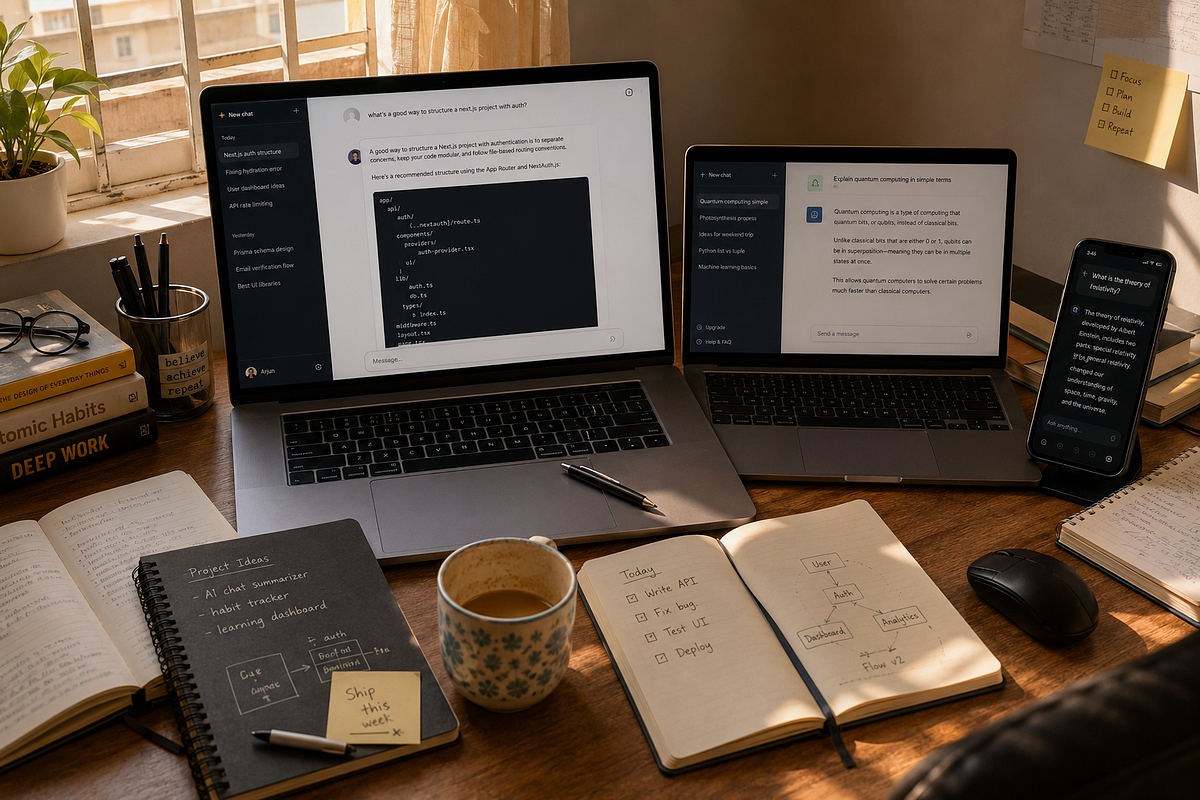
That’s basically the problem right now. Every major lab shipped a new flagship model in the last two three months, sometimes the same week, and half of them got tangled up in government reviews on top of it. Claude, GPT, Gemini, Kimi, GLM, Mistral, all moving at once. If you’re trying to figure out what to actually pay for, it’s a mess.
So I sat down and actually went through all of it properly this time, not just skimmed the press release. This is that comparison, written the way I’d explain it to a friend over coffee, not a spec sheet. I’ll cover what each model is actually good at, what it costs, where it falls short, and at the end I’ll give you my honest picks by use case.
The last few months, quickly
Here’s roughly what happened, in order. Anthropic released Claude Sonnet 5 along with Opus 4.8, and separately launched a new top tier called Fable 5 and Mythos 5 in early June. Within days, the US government stepped in on export control grounds and Anthropic had to switch Fable and Mythos off completely for about eighteen days. Access came back July 1. It’s genuinely the first time a frontier model got turned off and back on by regulators, not by the company itself.
OpenAI was right behind with GPT-5.6, which now comes in three flavors: Sol (the flagship), Terra (the everyday one) and Luna (cheap and fast). Same story here too, actually. OpenAI previewed GPT-5.6 to the government for a cybersecurity review before the public launch, and the wider rollout only happened on July 9, about two weeks after the government-restricted preview.
Google’s Gemini 3.1 Pro has been the generally available flagship since February, with Gemini 3 Pro Deep Think sitting above it for the hardest reasoning problems, and a Gemini 3.5 Pro that was announced back in May but is still stuck in limited preview even now.
Then there’s the open weight side. Moonshot AI’s Kimi K2.7 is out, and Kimi K3 is supposed to drop as fully open weights on July 27, which is two days from when I’m writing this. Zhipu’s GLM-5.2 is the strongest self-hostable option if you don’t want to depend on anyone’s API. And Mistral, the French lab, has Large 3 (its biggest open model), Small 4, and Medium 3.5, all released between December and April.
That’s ten-plus models in about seven months. Nobody has time to read all their model cards, so let’s go one by one, then I’ll put it all in one table so you can just scan it.
Claude: Sonnet 5, Opus 4.8, and the Fable/Mythos situation
Claude Sonnet 5 is what most people on claude.ai are actually using day to day. It’s fast, cheap enough, and good at writing and coding without you needing to think about which mode to pick. Opus 4.8 sits above it at $5 input / $25 output per million tokens and is what Cursor and Claude Code default to for anything harder than routine work.
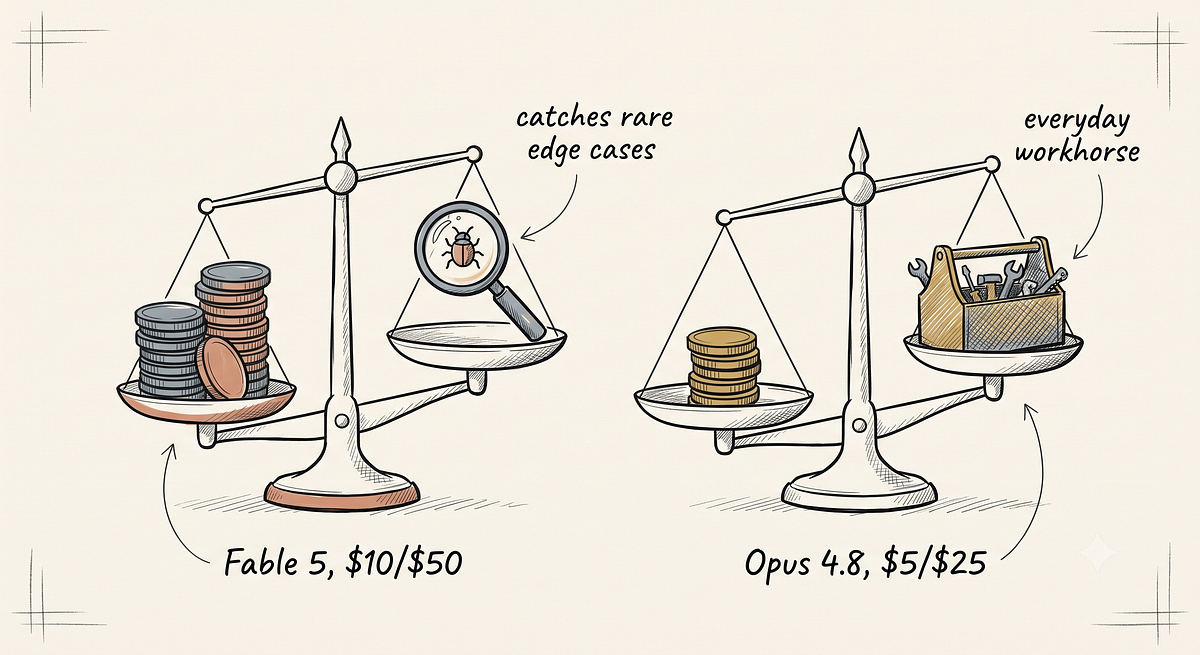
Fable 5 is the interesting one. It’s the same underlying model as Mythos 5, just with extra safety layers around biology, cybersecurity and AI research, which is why it’s the one that’s publicly available while Mythos stays limited to a handful of trusted partners under something Anthropic calls Project Glasswing. Fable 5 currently tops the Artificial Analysis Intelligence Index at 60 points, ahead of GPT-5.6 Sol at 59, and it leads coding benchmarks too at around 80% on SWE-bench Pro. It’s priced at $10/$50, though, so it’s not something you turn on for casual chat.
I’ll admit I was skeptical Fable 5 would be worth the price difference over Opus, since on paper the coding gap looked small. Then I actually ran a messy multi-file refactor through both and Fable 5 caught an edge case in a config file that Opus completely missed. So, fine, it earns its price for the hard stuff. For 90% of daily work though, Opus 4.8 is genuinely the better value pick, and it’s what powers most of the Claude Code and Cursor workflows I see people actually shipping with.
One honest limitation: access to Fable 5 has been unstable this month because of the export control back and forth, so if you’re building a product around it, keep a fallback model ready. That’s not a small thing to plan around, especially if you’re on a paid plan and depending on it for a client deadline.
On the writing side, Claude has always had a reputation for sounding less like a corporate brochure and more like an actual person, and Sonnet 5 keeps that up. If your work involves long documents, emails, or anything where tone matters more than raw benchmark scores, this is where Claude still wins over the others, in my opinion. Anthropic also backs the whole lineup with SOC 2 Type II compliance, a HIPAA BAA option, and a zero data retention setting, which matters a lot if you’re in healthcare, legal, or anything regulated.
OpenAI’s GPT-5.6 family: Sol, Terra, Luna
OpenAI restructured its naming with this release, and I actually think it’s cleaner than the old alphabet soup of suffixes. Sol is the top model, built for the hardest coding, science and cybersecurity work, and it comes with two extra modes: max, which lets it think longer before the first token, and ultra, which spins up multiple sub-agents that work in parallel and then combine their results. On the Artificial Analysis Coding Agent Index, Sol scores 80, about 2.8 points above Fable 5, while apparently using less than half the tokens and costing roughly a third less.
Terra sits just above Fable 5 on most measures and is meant for daily use, the kind of model you’d leave switched on by default for a team that doesn’t want to think about routing between tiers. Luna is the cheap, fast option and reportedly beats Claude Opus 4.8 on some benchmarks despite costing much less, though I’d want to see that hold up in real projects before fully believing it. Vendor numbers on a brand new release always look better than they end up being once a few thousand people have actually poked at the model for a month.
The government review thing happened here too, which tells you something about where this industry is heading. GPT-5.6’s cyber capabilities triggered a voluntary 30-day safety review process the administration asked major labs to go through, and OpenAI’s version of that review actually wrapped up faster than expected, so the public launch landed on July 9 instead of dragging into August. It’s a strange kind of milestone. Two labs, two suspensions, same month, for basically the same reason.
Alongside the models, OpenAI also shipped ChatGPT Work, an agent that can dig through your connected apps and files to draft documents, spreadsheets and slides on its own. Worth checking out if your team lives in ChatGPT already, though I haven’t tested it enough myself to say how it holds up against something like Claude’s document tools or Gemini’s Workspace integration.
Gemini 3.1 Pro and the Deep Think question
Google’s approach is different from the other two. Gemini 3.1 Pro, live since February 19, is the one most people should actually be using. It has a 1 million token context window and takes text, images, video, audio and PDFs natively. Google says it ranks first on 12 out of 18 benchmarks it tracks, and it leads pretty clearly on abstract reasoning tests like ARC-AGI-2, where it scores 77.1% against Deep Think’s 45.1%.
Wait, that number looks backwards at first, doesn’t it? Deep Think is supposed to be the smarter one. But Deep Think isn’t actually built to be a better all-rounder, it’s a narrow tool for research-grade problems like Math Olympiad questions, and it trades general reasoning ability and speed for depth on that narrow slice. So for basically everything a normal person does, 3.1 Pro wins, and Deep Think only makes sense if you have a genuinely hard, narrow problem and you’re willing to wait for it.
One real limitation: Gemini 3.1 Pro’s time-to-first-token in some Deep Think-adjacent modes has been measured at around 29 seconds. That’s a genuinely bad experience if you’re building a chat interface where people expect an instant reply. Fine for a research report you’re going to walk away from and come back to, not fine for a live support bot answering a customer at 2am.
Gemini 3.5 Pro was announced back at Google I/O in May with a 2 million token context window, but as of today it’s still in limited preview, so don’t build a production plan around it just yet. The free tier of the Gemini app, by the way, is actually decent now, it runs Gemini 3.5 Flash by default with limited access to 3.1 Pro thrown in, plus Gemini Live voice mode and basic image generation. If you’re a student or just want to try things out without paying, that’s not nothing.
The open weight side: Kimi, GLM, and friends
Open weight models have gotten scary competitive this year, whether we like admitting it or not. Kimi, from Moonshot AI in China, is now on K2.7 with K3 landing as fully open weights on July 27 under a Modified MIT license, which would make it the largest open weight release out of China so far. It’s a reported 2.8 trillion parameter mixture of experts model with a 1 million token context window, taking text, image and video input though no audio, and reasoning fixed to maximum by default. Moonshot claims 91.2% on BrowseComp, a web browsing agent benchmark, but there’s no independent SWE-bench or Intelligence Index score for it yet, so treat that number as a marketing claim until someone outside the company verifies it. Hosted API access is priced around $3/$15 per million tokens plus roughly $0.015 per web search call, and there’s a free basic tier in the Kimi app for people who just want to chat.
GLM-5.2 from Zhipu is the one I’d actually point a budget-conscious team toward. It’s cheap, around $1.40 per million input tokens, it can be self-hosted on your own infrastructure if privacy matters to you, and it has a 1 million token context window too, along with training data that reportedly includes real Cursor usage patterns, which shows up in how naturally it handles agentic coding tasks. If you need to keep data off someone else’s servers entirely, this is probably your starting point, not Claude or GPT.
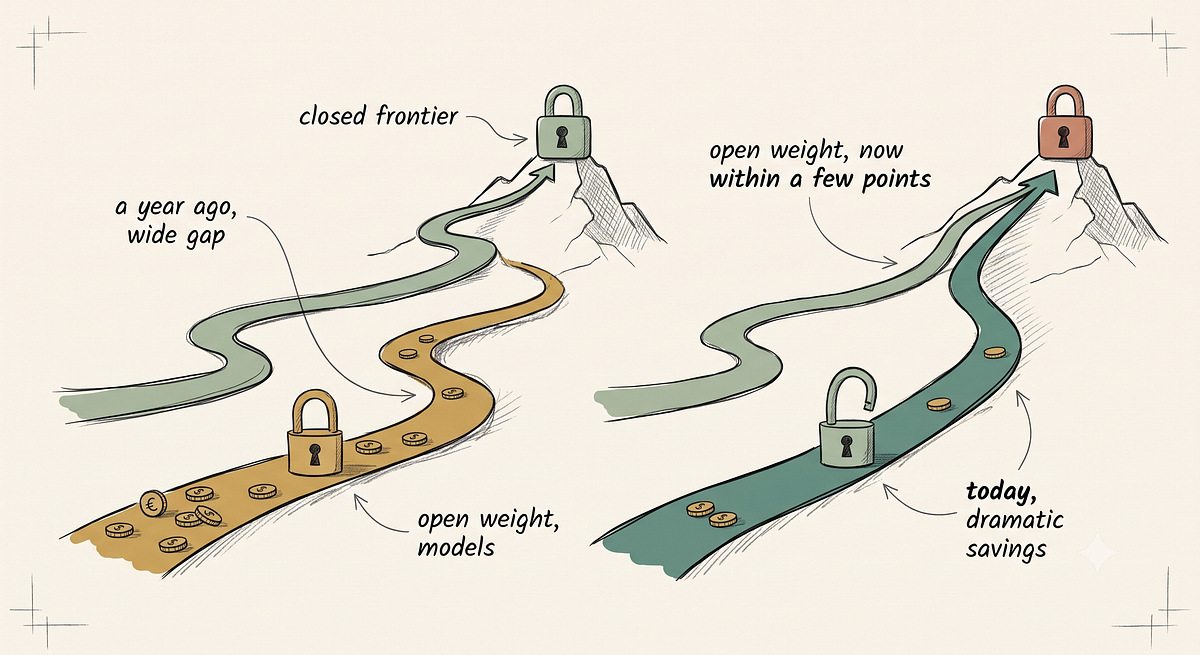
Worth a quick mention: DeepSeek V4, MiniMax M3, and Qwen3.7 Max are also sitting in that same 80% SWE-bench tier, all from Chinese labs, all open weight, all a fraction of the API cost of the closed models. The gap between open and closed frontier models really has narrowed a lot faster than I expected even a year ago. A year or two back, open weights trailed the frontier by a wide margin. Today they’re within a few points on most benchmarks that matter, and you trade some peak capability for dramatic savings and full control over where your data goes.
Mistral: the European open weight option
Mistral doesn’t try to top every benchmark, and honestly I respect that. Mistral Large 3, released December 2, 2025, is a 675 billion parameter mixture of experts model, open under Apache 2.0, and it’s the largest open weight model from a major lab. It scores well on knowledge and math benchmarks, 93.6% on MATH-500 for instance, but as a non-reasoning model it falls behind on the hardest reasoning tests, somewhere around 40% on AIME 2025, which is a real gap compared to Gemini or Claude. Output speed is also on the slower side at roughly 38 tokens per second, a real tradeoff for its huge 675 billion parameter size.
Mistral Small 4, from March, is actually the more interesting release for most builders. It merges three previously separate Mistral products, Magistral for reasoning, Pixtral for vision, and Devstral for coding, into one model where you just set reasoning_effort to none, medium or high depending on what you need. One model instead of three. At $0.15 per million input tokens it’s genuinely one of the cheapest multimodal reasoning options out there, and Mistral claims a 40% cut in end-to-end completion time compared to Small 3.
Medium 3.5 came in April and sits between the two, tuned specifically for coding-heavy teams that want reasoning and agent tool use without running the full Large 3 infrastructure. Mistral’s own pricing page recommends it directly for coding work, which tells you where they’re positioning it.
If European data residency matters for your compliance team, or you just don’t want another US-based API bill, Mistral is worth a serious look even if it’s not winning the leaderboard. Developers I’ve talked to also like that the API mirrors OpenAI’s format closely enough that switching over takes barely any code changes.
Side by side, roughly
+------------------+--------------------------------------+---------+-------------------------------------------+---------------------------------------------+
| Model            | Best at                               | Context | Rough API price (in/out per 1M tokens)     | Access                                       |
+------------------+--------------------------------------+---------+-------------------------------------------+---------------------------------------------+
| Claude Fable 5   | Coding, long agentic runs             | 1M      | $10 / $50                                  | Anthropic, limited history of outages        |
| Claude Opus 4.8  | Everyday coding, writing              | 1M      | $5 / $25                                   | Anthropic                                    |
| GPT-5.6 Sol      | Frontier coding, cybersecurity        | *       | Not published                              | OpenAI                                       |
| Gemini 3.1 Pro   | Reasoning, multimodal, long documents | 1M      | $2 / $12 (higher above 200K)               | Google
| Kimi K2.7 / K3   | Web browsing agents, cheap long ctx   | 1M      | $3 / $15 + search fee                      | Moonshot, open weight from July 27           |
| GLM-5.2          | Self-hosting, agentic coding budget   | 1M      | ~$1.40 input                               | Zhipu, open weight                           |
| Mistral Small 4  | Cheap multimodal reasoning            | Standard| $0.15 input                                | Mistral, open weight (Apache 2.0)            |
+------------------+--------------------------------------+---------+-------------------------------------------+---------------------------------------------+
Numbers move fast in this space, so treat this table as a snapshot of late July 2026, not gospel.
So which one do you actually use
Remember that client I mentioned at the start? I ended up telling him this, roughly.
If you’re writing content, doing research, or need an assistant for general work and don’t want to think too hard about it, Claude Sonnet 5 or Opus 4.8 covers almost everything, and Anthropic’s enterprise data handling matters if you’re in a regulated space.
If you’re doing serious agentic coding, long multi-file refactors, security-adjacent work, GPT-5.6 Sol or Claude Fable 5 are your two real options, and honestly which one wins changes month to month depending on which lab just shipped an update. Don’t marry yourself to either, route between them if your budget allows it.
If you want the best reasoning-heavy generalist and you’re already inside Google Workspace, Gemini 3.1 Pro is hard to beat, just don’t use it anywhere latency actually matters, like a live customer-facing chat widget.
If cost or self-hosting is the deciding factor, GLM-5.2 or Mistral Small 4 will get you 80 to 90% of frontier quality for a fraction of the price, and nobody outside your company touches your data.
And if you just want to try the newest open weight thing on the internet, wait two days and go poke at Kimi K3 when it drops on July 27. Just don’t build your production stack on a model that launched last week. Give it a month, let the independent benchmarks catch up to the marketing claims.
A few things people keep asking
Is Claude Fable 5 better than GPT-5.6 Sol? On the Intelligence Index, Fable 5 edges ahead at 60 versus 59, but Sol leads on the Coding Agent Index and does it with fewer tokens. Neither one is a clean win, it depends what you’re doing with it.
Which model is cheapest for high volume work? Mistral Small 4 and GLM-5.2 both undercut everyone on price, and if you can self-host GLM you cut costs further.
Which model has the biggest context window right now, actually available today? Gemini 3.1 Pro, Kimi, and GLM-5.2 are all at 1 million tokens, with Gemini 3 Deep Think and the still-preview Gemini 3.5 Pro pushing to 2 million once they’re fully out.
Should I wait for Gemini 3.5 Pro or Kimi K3 instead of picking something now? Depends how patient you are, but for anything you’re shipping this month, pick from what’s stable today and swap later. This whole list will look different by October anyway.