Last week, on July 28, 2026, a small science story made the rounds that most people scrolled past without noticing. The James Webb Space Telescope had just ruled out two of the most talked about Dyson sphere candidates. Turns out both of them were just background galaxies sitting right behind closer stars, tricking older telescopes into thinking they were seeing something weird. Project Hephaistos, the team behind the original search, called it a “false positive” and moved on to the next batch of candidates.
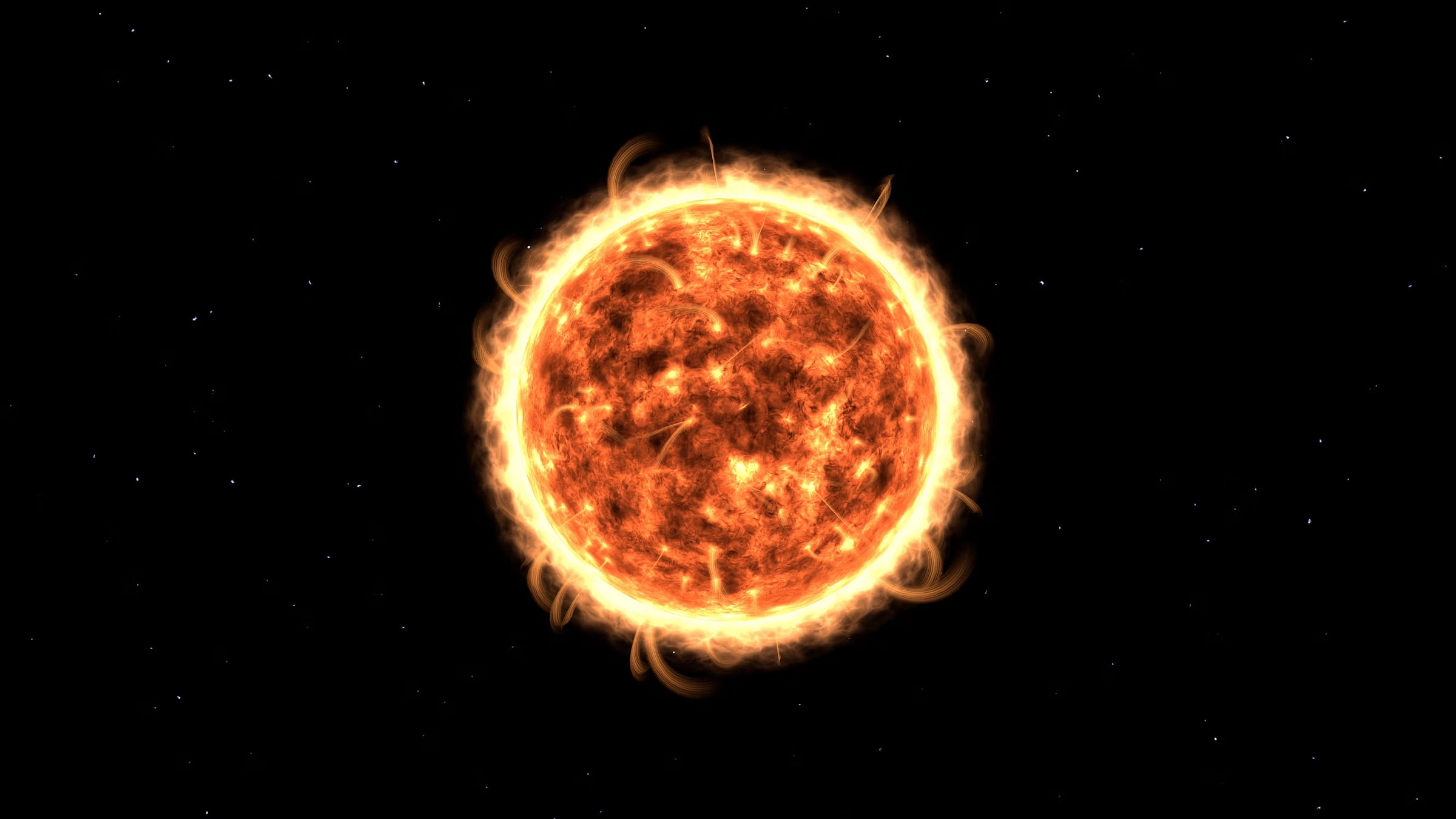
I read that story twice, because it kind of bugged me. Not because I thought aliens were real this time, I did not think that. It bugged me because it reminded me how much effort smart people are putting into finding something we ourselves have zero idea how to build. We talk about Dyson spheres like they are a known engineering problem waiting for enough money and time. They are not. We are, in a very real sense, cavemen looking up at the sky and guessing what a skyscraper might be for.
So this article is about that gap. What a Dyson sphere actually is, what other structures sit in the same crazy category, what scientists found this year while hunting for them, and honestly, how far behind we actually are as a species. Spoiler: farther than most YouTube thumbnails want you to believe.
What a Dyson Sphere Actually Is (And What It Is Not)
Physicist Freeman Dyson proposed the idea back in 1960, in a paper about detecting alien civilizations through infrared radiation. He never said “build a solid metal ball around the sun.” That is a popular misreading that stuck because it sounds cooler and works better in video games and sci-fi shows.
What Dyson actually described was closer to a swarm. Imagine millions, maybe billions, of solar collectors, habitats, and mirrors all orbiting a star independently, none of them touching, none of them structurally connected. Together they would capture a huge chunk of the star’s total energy output. A solid shell version is not physically stable anyway, the gravity and orbital mechanics do not work out cleanly for something that rigid. Researchers still use “Dyson sphere” as the catch-all term, but what they usually mean, and what recent papers focus on, is a Dyson swarm or something called a Dyson bubble.
A Dyson bubble is a slightly different flavor. Instead of relying only on orbital mechanics, it uses light pressure from the star itself to help hold lightweight structures in place, sort of floating rather than strictly orbiting. A January 2026 study out of the University of Glasgow, led by Colin McInnes, modeled this and found that under the right conditions, both stellar engines and Dyson bubbles could actually stay gravitationally stable. That is a bigger deal than it sounds. For decades the physics crowd assumed these things would just drift apart or crash into the star eventually.
Here is the part that surprised me the most, and I will admit I did not know this before researching. A Dyson sphere is considered the classic marker of a Type II civilization on the Kardashev scale, one that can harness the entire energy output of its home star. We are nowhere near that. We are not even close to being done with our own planet yet, let alone our sun.
The 2026 Hunt: JWST, Infrared Excess, and a Lot of False Alarms
The basic idea behind detecting a Dyson sphere from Earth is simple on paper. A star surrounded by a huge amount of artificial material would show up strange in infrared. The structures would absorb visible light and re-radiate it as heat, so instead of a normal-looking star on the Hertzsprung-Russell diagram, you would see something with way more infrared glow than expected and way less visible light.
Project Hephaistos ran with this idea back in May 2024 and found seven candidate stars, all red dwarfs, out of a catalog of roughly five million. That got a lot of headlines at the time. Then this month, JWST pointed directly at two of the strongest candidates and found the infrared signal was not coming from the stars at all. One was sitting in front of what is called a Hot DOG, a Hot Dust-Obscured Galaxy, where a supermassive black hole is heating giant dust clouds. The other was in front of a dusty starburst galaxy just cranking out new stars at a furious pace. Both objects happened to line up almost perfectly behind the candidate stars from our point of view, which is honestly just bad luck for the search team.
Nobody I read seemed too discouraged by this though. One researcher put it well, saying young fields grow up by chasing their false positives all the way to the ground, because each one teaches the next survey what to rule out. That is a fair way to look at it. Science moves like that a lot of the time, two steps forward and one step of “oh wait, that was a galaxy.”
There was also a study published this month, July 10, 2026, in ScienceDaily, suggesting red dwarfs and white dwarfs might actually be the best targets to check, not sun-like stars. The logic is that an advanced civilization could build energy harvesting swarms more easily and cheaply around smaller, dimmer stars. These stars would show up with weird brightness flickers as pieces of the swarm pass in front, plus an infrared glow with none of the usual dust signatures you’d expect from a natural star.
And then there was something I did not expect to find at all. In June 2025, at MIT, over two dozen scientists and engineers met for something called the Dyson Minds Workshop, run jointly by Penn State, MIT, and something called the Ultraintelligence Foundation. The topic was not stars. It was whether an advanced civilization might build Dyson-sphere-like structures around black holes instead, to harvest energy from the accretion disk or even from the black hole’s rotation. I honestly do not fully understand the physics of how you would extract energy from a spinning black hole safely, something about frame dragging and the Penrose process, but apparently there is a real research thread on this now.
Other Megastructures People Talk About in the Same Breath
Dyson spheres get all the attention because Freeman Dyson’s name is catchy and the concept is easy to picture. But there is a whole family of theoretical megastructures that show up in the same papers, the same conferences, and honestly, the same Reddit threads at 2am.
Ringworlds are probably the second most famous. Larry Niven wrote a whole novel about one in 1970. Picture a ring, not a sphere, wrapped around a star at roughly the distance of a habitable orbit, spinning fast enough that centrifugal force acts like gravity on the inner surface. You would get a habitable strip millions of times the surface area of Earth. The material strength needed for something like this is absurd, way beyond anything we can build or even simulate properly with current materials.
Matrioshka brains are a weirder cousin. The idea, credited to Robert Bradbury, is basically a Dyson swarm built specifically to run computation instead of housing people. Layer after layer of computing shells, nested like Russian dolls, each layer using the waste heat of the layer inside it to run its own processing. The outermost layer would be cold enough to dump heat into space efficiently. It is basically a star turned into a supercomputer the size of a solar system.
Then you get Alderson disks, Birch planets, McKendree cylinders, and Shkadov thrusters, also called stellar engines. A Shkadov thruster is honestly one of the wildest ideas in the bunch, it is a giant mirror positioned on one side of a star that reflects radiation pressure asymmetrically, and over millions of years this actually pushes the entire star, and anything orbiting it, in a chosen direction. People have proposed this as a way to steer a solar system away from danger, like an approaching supernova or a rogue star passing too close. The Glasgow team’s January 2026 paper actually modeled the stability of exactly this kind of engine alongside Dyson bubbles.
None of these have blueprints. None of them have a materials list. They exist as thought experiments that happen to be internally consistent with physics, which is different from being buildable.
So How Far Behind Are We, Actually?
This is the part I found the most humbling to write.
Humanity currently sits at around Type 0.73 on the Kardashev scale. Carl Sagan built this fractional version of the scale so we would not have to describe ourselves as a flat zero. Our current global power consumption is somewhere around 18 to 25 terawatts, mostly still coming from fossil fuels. To hit Type I, the point where we are using all the energy that reaches Earth from the sun, we would need something closer to 10¹⁶ watts of harnessed capacity. That is not double our current output, or even ten times. It is closer to four to five orders of magnitude more.
Let that sink in for a second. We are not close to done with our own planet.
A Type II civilization, the one that could plausibly build a Dyson sphere, needs roughly 10²⁶ watts, the total energy output of an entire star. Physicist Michio Kaku has estimated we might hit Type I within 100 to 200 years if things go reasonably well with clean energy and fusion. Type II, he guesses, might take a few thousand years. Type III, an entire galaxy’s worth of energy, could be 100,000 years out or more, assuming we survive that long and assuming interstellar travel even becomes practical, which is its own giant unsolved problem.
I do not say this to be pessimistic. I actually find it kind of exciting, in a “wow we have so much left to figure out” way. But it does put things in perspective. We still cannot build a space elevator. We do not have a fusion reactor that produces more energy than it consumes on a sustained commercial basis, ITER in France is still years from even attempting that milestone. We have not put a person back on the moon since Apollo 17 in 1972, and Artemis keeps slipping its timeline. Compared to any of that, a Dyson swarm is not decades away. It is not really centuries away either, if we are honest. It is a “several civilizational leaps from now” kind of problem.
What bugs me, or maybe what I find kind of funny, is that we already argue online about which type of Dyson structure would work best, swarm versus bubble versus solid shell, like it is a home renovation decision. Meanwhile we still cannot agree on how to fund a fusion plant properly.
Why People Still Care Anyway
If you search around, you will see the same handful of questions come up again and again. Has a Dyson sphere been found. What would it look like if one existed. Why has nobody built one yet. What materials would you even need. Is a Dyson sphere possible with current technology. How does a Dyson sphere relate to the Fermi paradox.
That last one is actually the most interesting angle to me. If a Type II or Type III civilization existed somewhere in the galaxy, a Dyson sphere around their star would probably be visible from Earth with instruments we already have, or close to it. The fact that we have not confidently found one, despite multiple search efforts using WISE and now JWST, is sometimes used as a weak point against the idea that advanced alien civilizations are common. Maybe they are rare. Maybe they do not build things this big. Maybe they use energy sources we have not even thought of yet. Nobody actually knows, and I think that is the honest answer, even though it is not a satisfying one.
There is also a video game called Dyson Sphere Program that just hit its fifth anniversary in January 2026, where you literally build these structures piece by piece across a virtual galaxy. It is popular precisely because it lets you do, in a simulation, what real engineers are nowhere near doing in real life. That gap between the game and reality is kind of the whole point of this article, honestly.
Where This Actually Leaves Us
I do not think we should stop looking for Dyson spheres, or stop researching stellar engines and Matrioshka brains as thought experiments. Some of the best physics comes out of asking “could this exist, and how would it behave.” The Glasgow stability study is a good example, it started as a “what if” and turned into real orbital mechanics work that other researchers can build on.
But it is worth being honest about where humans actually stand right now. We are a Type 0.73 civilization still burning ancient carbon for most of our power. We search other stars for megastructures we could not build ourselves even if someone handed us the blueprints tomorrow. That is not a criticism, it is just where we are in the timeline. Every civilization that eventually builds something like a Dyson swarm, if any ever does, probably went through a phase exactly like ours, arguing about energy policy while looking up at the sky wondering what is possible.
Next time one of these detection stories pops up in your feed, and it will, these searches happen every few months now, it is worth remembering what is actually being searched for and how far off we are from doing it ourselves. The universe might already have its Type II civilizations quietly harvesting their stars. We are just not one of them yet, and probably will not be for a very long time.