OpenAI Just Built Its Own AI Chip: Everything Jalapeño Changes About the Nvidia Era
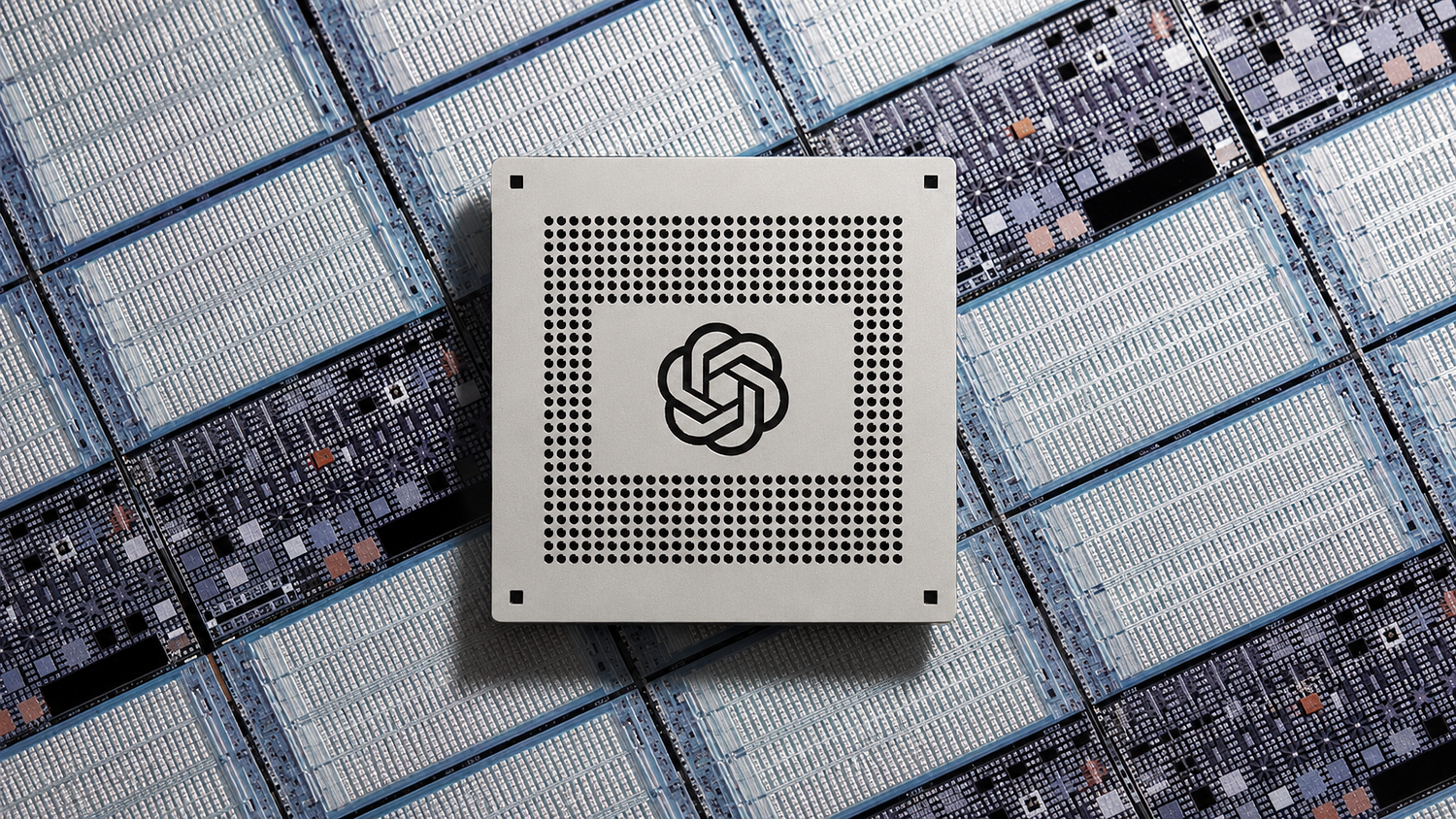
For three years, every company racing to build advanced AI has been paying what industry insiders call the “Nvidia tax.” Every large language model, every chatbot response, every AI-generated image has run through GPUs that Nvidia sells at margins north of 70%. On June 24, 2026, OpenAI and Broadcom stood on a stage in San Francisco and handed over a silicon wafer containing roughly 50 to 60 chips. The chip is called Jalapeño, and it is OpenAI’s first serious attempt to stop renting its most important resource and start owning it.
This is not a concept chip or a paper announcement. OpenAI has physical samples in hand and is already running production AI workloads on them in lab testing. The company says the chip could cut inference costs by roughly 50% compared to the GPUs it currently depends on. If that number holds up once independent benchmarks arrive, it will reshape how every major AI lab thinks about the hardware underneath its models. Here is everything that is confirmed, everything that is still just a claim, and what it actually means for the future of AI compute.
What Jalapeño Actually Is
Jalapeño is an ASIC, short for application-specific integrated circuit. Unlike a GPU, which is built to handle a huge range of workloads reasonably well, an ASIC is designed to do one job and do it as efficiently as physically possible. OpenAI and Broadcom are calling it an “Intelligence Processor,” which is mostly marketing language, but the underlying engineering choice is real: this chip was built from a blank sheet of paper specifically for large language model inference. Not training. Inference, meaning the process of actually running a trained model to answer a user’s prompt.
That distinction matters more than it sounds. Training a model like GPT-5 involves crunching through enormous batches of data, adjusting billions of parameters over weeks or months on massive GPU clusters. Inference is different. It is what happens every single time someone types into ChatGPT or calls the OpenAI API. It is not one dramatic, occasional workload. It’s constant, and at OpenAI’s scale, it is genuinely enormous. Every one of the hundreds of millions of weekly ChatGPT queries, every Codex coding task, every API call from a developer somewhere, runs through inference hardware. Sam Altman has said publicly that OpenAI “cannot get compute fast enough.” Broadcom CEO Hock Tan backed that up, describing demand from OpenAI as “simply insatiable,” and added that Broadcom expects that same elevated demand to continue through 2028.
Jalapeño’s architecture leans on what is called a systolic array, a compute layout that is philosophically similar to what Google used in its earliest Tensor Processing Units. The chip pairs that array with eight HBM (high bandwidth memory) stacks packed into a single reticle-limited package. That’s a fairly deep technical detail, but the reason it matters is simple: modern LLM inference is often bottlenecked not by raw compute but by how fast data can move between memory and the processor, especially during the decode phase where a model generates one token at a time. OpenAI reportedly optimized Jalapeño around memory bandwidth rather than chasing the biggest possible TFLOPS number, which is a very different design philosophy than the one Nvidia has followed with its GPU line for the past decade.
Who Actually Built It
No single company built Jalapeño alone, and the division of labor is worth understanding because it tells you a lot about how the custom chip business actually works in 2026. OpenAI designed the core architecture, drawing on its own deep knowledge of exactly how its models behave in production: the attention patterns, the kernel profiles, the specific memory access habits that come from serving models at planetary scale. Broadcom handled the silicon engineering and implementation, plus its own Tomahawk Ultra Ethernet networking silicon for connecting chips together. TSMC, the Taiwanese foundry that also manufactures Apple’s and Nvidia’s most advanced chips, physically fabricated Jalapeño on its 3-nanometer process node, the same generation used in Apple’s M4 chips and Nvidia’s Blackwell GPUs. Celestica, a systems integrator, is responsible for turning the raw chips into racks and boards that can actually be installed in a data center.
Leading the project on OpenAI’s side is Richard Ho, the company’s head of hardware, who previously worked on Google’s original TPU program before joining OpenAI. That pedigree is not a coincidence. Google is the one hyperscaler that has run its own custom AI silicon at scale for years, and OpenAI is clearly borrowing from that playbook rather than inventing an entirely new one.
One detail that has gotten a lot of attention: OpenAI says it used its own AI models to help design Jalapeño, accelerating parts of the circuit placement and timing path optimization work. The company frames this as a kind of flywheel. Its models help design better chips, the chips run inference more cheaply, and cheaper inference funds and enables the next generation of models. Whether that AI-assisted design process meaningfully compressed the timeline, or whether OpenAI simply accepted more engineering risk to hit an aggressive deadline, is genuinely unclear from the outside. Either way, the number OpenAI is proud of is nine months, design to tape-out. A typical high-performance ASIC development cycle takes 18 to 24 months. Broadcom is calling it the fastest ASIC development cycle ever achieved in advanced semiconductors, though that’s obviously a claim made by the company selling the chip.
The Numbers Nobody Can Fully Verify Yet
Here’s where it gets messy, and where a lot of the breathless coverage of Jalapeño has gotten ahead of what OpenAI has actually confirmed. The 50% lower cost per inference token figure, the one driving most of the headlines including this one, did not come from OpenAI’s own announcement. It came from Hock Tan in a media interview. OpenAI’s own official wording is more careful, describing performance per watt as substantially better than today’s leading GPUs. That’s a real claim, but it’s not the same as a hard cost figure, and nobody outside OpenAI has independently verified it yet.
Several important specs are still missing entirely. OpenAI has not published peak TFLOPS at any precision level, the supported numerical precision formats, which generation of HBM is used or its exact capacity and bandwidth, die size, or total power draw. A separate report circulating widely claims Microsoft will get 40% of the first deployment phase, but that figure traces back to secondary reporting, not anything OpenAI or Microsoft has confirmed on the record. A full technical report is expected in the coming months, and until it lands, a lot of the specific numbers being repeated across tech media should be treated as directionally interesting rather than confirmed fact.
What is solid: engineering samples are already running at target frequency and power in OpenAI’s own labs, and according to the company, that includes an unreleased model called GPT-5.3-Codex-Spark. That’s a meaningfully different situation than a paper chip or a slide deck. Physical silicon exists, it works, and it’s running real workloads, even if the marketing has outpaced the documentation.
This Didn’t Come Out of Nowhere
Jalapeño’s June unveiling was the visible payoff of a deal that OpenAI and Broadcom actually announced back in October 2025. That original agreement covered something much bigger than one chip: a collaboration to deploy 10 gigawatts of OpenAI-designed AI accelerators, one of the largest custom compute commitments announced by any AI lab to date, spanning both the 3-nanometer chips shown in June and a future 2-nanometer generation. Broadcom said at the time that racks built around this program would start deploying in the second half of 2026 and continue through the end of 2029. Jalapeño is the first concrete product of that much larger, multi-year plan, not a standalone side project.
Put the timeline together and it reads like this. October 2025: OpenAI and Broadcom announce a 10-gigawatt custom silicon partnership. June 24, 2026: the companies unveil Jalapeño and OpenAI receives its first physical chip samples. End of 2026: targeted initial deployment, reportedly through Microsoft Azure and other data center partners. The years after that: an expanding, multi-generation compute platform that OpenAI clearly intends to keep building on rather than treating as a one-off.
Why Every AI Company Is Suddenly Building Chips
OpenAI is late to this particular party, not early. Google has been running custom TPUs since 2015 and is now on its seventh generation. Amazon has Trainium and Inferentia chips powering large chunks of its own AI infrastructure. Meta has been developing its own inference silicon too. What’s changed is that the company most associated with the current AI boom, the one that arguably created the demand for all this compute in the first place, has now joined that list.
The reasoning is not complicated once you look at the economics. Nvidia’s data center GPU business runs on gross margins that have hovered around 70 to 75%, some of the highest in the entire hardware industry, and every one of those percentage points is money that OpenAI is currently paying to someone else instead of keeping. When your annual compute bill runs into the tens of billions of dollars, even a modest efficiency gain on inference, which is the workload that runs every single day, forever, translates into a genuinely enormous amount of saved cash over a few years. Training happens in bursts. Inference never stops. That’s exactly why OpenAI targeted inference first with its own silicon rather than trying to replace Nvidia for training workloads, which remain far more general-purpose and far harder to design a narrow chip around.
There’s a strategic angle too, and it’s one OpenAI has been fairly open about. Being fully dependent on one supplier for your single most important input is a genuine business risk, especially when that supplier’s other customers include most of your direct competitors. Google, Amazon, Meta, and now OpenAI all buy from Nvidia, and Nvidia has no real reason to prioritize any one of them over the others. Owning even a slice of your own compute stack changes that dynamic. It also lets a company like OpenAI bake years of hard-won knowledge about exactly how its own models behave directly into silicon, something a general-purpose GPU vendor serving hundreds of different customers simply cannot do.
How Jalapeño Stacks Up Against the Competition
OpenAI is walking into a field that already has some very established players, and it’s worth knowing what Jalapeño is actually competing against. Google’s TPUs are now on their seventh generation and have powered Google’s own AI products, including Gemini, for the better part of a decade. Amazon has two separate custom chip lines, Trainium for training and Inferentia for inference, both running large portions of Amazon’s internal AI workloads and also sold to outside customers through AWS. Meta has been building its own inference silicon too, mostly to cut costs on serving recommendation and ranking models across its apps before turning that same infrastructure toward generative AI.
What sets Jalapeño apart, at least on paper, is how narrowly it’s scoped. Google’s TPUs and Amazon’s Trainium chips both handle a mix of training and inference work. Jalapeño, by contrast, was built for one job only: running trained models as cheaply as possible after they’re already finished. That narrower focus is exactly what lets OpenAI make aggressive tradeoffs, like prioritizing memory bandwidth over raw compute, that a more general-purpose chip couldn’t afford to make. Nvidia, for its part, isn’t standing still either. Its Blackwell architecture remains the benchmark every one of these custom chips gets measured against, and Nvidia has its own roadmap of future GPU generations that will keep raising that bar. Comparable performance to Blackwell and to Google’s TPUs is exactly what Hock Tan has claimed for Jalapeño in early testing, though again, that comparison hasn’t been independently benchmarked yet.
What This Means If You’re Not Building Chips Yourself
Most people reading this are never going to touch a Jalapeño chip directly, and that’s kind of the point. If OpenAI’s cost claims hold up even partially, the effect shows up somewhere else entirely: in API pricing, in how much compute OpenAI can afford to give away for free in ChatGPT, in how aggressively it can price against competitors like Google’s Gemini and Anthropic’s Claude. Cheaper inference is the kind of change that doesn’t announce itself loudly. It just quietly shows up as lower prices, faster responses, and models that can afford to “think” longer before answering because the cost of that extra computation has dropped.
There’s also a broader industry effect worth watching. If OpenAI, Google, Amazon, and Meta are all successfully running meaningful chunks of their inference workloads on in-house silicon, that reduces aggregate demand growth for Nvidia’s GPUs, at least for inference specifically. Nvidia isn’t going anywhere. Training frontier models still leans heavily on Nvidia’s most advanced GPUs and will for the foreseeable future, and Nvidia’s own Blackwell and upcoming architectures remain the benchmark every custom chip gets measured against. But the era where Nvidia captured close to 100% of every dollar spent on AI compute, training and inference alike, looks like it’s ending, one custom chip announcement at a time.
The Honest Read on Jalapeño Right Now
Let’s separate what’s confirmed from what’s still just a claim, because the press release and the actual documentation are not the same thing. The headline facts are real and well documented: this is OpenAI’s first custom silicon, it exists as physical hardware, it’s running actual model workloads in testing, and it came together in nine months as part of a much larger 10-gigawatt platform with Broadcom. Those are not in dispute.
The specific numbers driving most of the coverage are a different story. The 50% cost figure came from an interview, not an official spec sheet. Key technical details like exact power draw, precision support, and peak throughput are still unpublished. Even the strongest language OpenAI itself has used, describing performance per watt as substantially ahead of today’s best GPUs, is carefully hedged and comes from a chip that is, by the company’s own admission, still being tested in a lab, not running at scale in a live data center. None of that means the chip won’t deliver on what OpenAI is promising. It means the proof is still ahead of us. That proof arrives in two forms: the promised full technical report, and, more importantly, the first real customer-facing deployments scheduled for the end of 2026. Until both of those show up, treat every percentage figure floating around, including the ones in this article, as a claim worth watching rather than a settled fact.
For now, Jalapeño is a genuine milestone. OpenAI has credibly entered the custom silicon race that Google, Amazon, and Meta started years earlier, and it has done so with a chip aimed squarely at the workload that actually costs the company the most money every single day. Whether it becomes the foundation of a real challenge to Nvidia’s dominance, or just a useful supplement that trims a percentage or two off OpenAI’s compute bill, depends entirely on what ships over the next 18 months. The wafer handed over on that San Francisco stage in June is a start, not a finish line.
What Comes Next
OpenAI’s roadmap already points past Jalapeño. The original 10-gigawatt Broadcom agreement covers not just this 3-nanometer generation but a future 2-nanometer chip as well, meaning Jalapeño is explicitly the first entry in a multi-generation platform rather than a one-time experiment. Deployment is currently targeted for the end of 2026, starting through Microsoft Azure and expanding to other data center partners from there. Broadcom’s Hock Tan has described the near-term plan as “small prototype development” in late 2026, scaling up from that point rather than jumping straight to full production volume.
What happens between now and then will tell the real story. A technical report with hard numbers is expected, and that document will either confirm the 50% cost claim or complicate it. Independent benchmarks, once the chips are actually deployed and accessible to researchers outside OpenAI, will matter far more than anything said on stage in June. And the broader custom silicon race isn’t slowing down either. Google just moved to its seventh TPU generation, Amazon keeps iterating on Trainium, and Meta continues expanding its own inference chip program. OpenAI joining that group doesn’t end the story of AI hardware. It just adds one more serious competitor to a race that’s only getting more crowded.