There is a reason Apple has spent a decade watching Samsung, Huawei, and Motorola wrestle with foldable smartphones without ever touching the category itself. It was not fear. It was not a lack of patents — the company quietly filed hundreds of them. It was something far more Apple-like, something that almost never gets said out loud in Cupertino’s product meetings but drives every decision anyway: the technology was not good enough, and Apple does not ship not-good-enough.

That appears to be changing. And the leaks pouring out of supply chains, Weibo accounts, and the offices of analysts who track every box of components moving through Asia are painting a picture of a product that could genuinely matter, not just to iPhone users, but to every company that currently owns a square inch of the foldable smartphone market.
The iPhone Fold is real, it is coming, and the story behind the leaks is far more interesting than any spec sheet.
The Leak Flood That Started in Earnest
For most of the past five years, foldable iPhone rumors ran on a loose cycle. Every few months, a credible-sounding report would surface, the internet would briefly erupt, and then silence would swallow it back up. Apple never confirmed, never denied, and the cycle repeated.
What is different heading into spring 2026 is the density and coherence of the leaks. The latest developments come amid a flurry of supply-chain insights and visual leaks that suggest Apple is finalizing key elements after years of speculation. This is no longer the pattern of one analyst floating a rumor. Multiple independent sources converging on the same design details simultaneously is, in the world of supply-chain intelligence, as close to confirmed as anything without an official press release gets.
Longtime Apple leaker Sonny Dickson shared 3D CAD renderings of the device on social media. Separate leaks from Weibo-based accounts including Instant Digital and Fixed Focus Digital have provided measurements so specific that they would be unusual to fabricate. Assembly lines recently received orders from Apple, which has apparently allowed one leaker to learn the crease measurements for the device’s 7.8-inch inner display. These are not whispers from someone close to the project. These are dimensional tolerances leaking out of factory floors, which tells you Apple is deep into physical production testing.
The supply chain, in other words, is starting to talk. And it is saying the same thing from multiple mouths.
The Design Nobody Saw Coming
When the conceptual renders of the iPhone Fold first circulated widely in late 2025, the reaction among people who follow smartphone design closely was something between surprise and recognition. Apple had not done what most people expected.
Apple’s rumored foldable iPhone is expected to adopt a book-style “wide fold” design. Unlike traditional flip or vertical fold phones, this approach lets the device work as a compact smartphone when closed, and a small tablet when opened. That sounds unremarkable until you actually look at the proportions. The leaked CAD renders suggest dimensions of roughly 83.8mm wide and 120.6mm tall when folded. That makes it closer to a passport than to an existing foldable phone. It is noticeably shorter and wider than the Galaxy Z Fold series, and the consequence of that choice is significant.
When you make a foldable phone shorter, you make it more usable with one hand in its closed state. When you make it wider, you get a more natural aspect ratio on the inner display when it opens. Samsung’s Z Fold series has historically felt like a tall rectangle folding into a taller, wider rectangle. Apple’s leaked design folds into something closer to a small book, and the inner display opens into proportions that feel more like reading a magazine than like using a stretched phone. It is a different philosophy, and it looks deliberate.
When folded, users will interact with a 5.5-inch outer display that is similar to a typical iPhone screen, while unfolding it will reveal a larger 7.8-inch iPad-style screen. That inner measurement sits just fractionally below the iPad mini’s 8.3-inch screen, which is not an accident. Apple has one of the world’s most beloved compact tablets, and the iPhone Fold’s inner display has been described repeatedly by people who follow this closely as an “iPad mini killer.” Whether that framing is fair depends on whether iOS 27 actually delivers iPad-quality multitasking on the inner screen, which brings us to the software question, but we will get there.
The Crease Problem Nobody Else Has Solved
Ask anyone who has owned a foldable Android phone what bothers them most, and the answer is almost always the crease. That horizontal ridge running across the center of the inner display where the phone folds. You learn to ignore it. You stop seeing it after a few weeks. But it is there, and on every device Samsung, Google, or Motorola has shipped to date, it is visible enough to feel like a compromise.
Apple apparently decided this was unacceptable. Not “let’s improve on it” unacceptable. Apple is said to have pursued eliminating the crease “regardless of cost,” and the company has developed a “new material property” that makes the crease disappear. That phrase, “regardless of cost,” is unusual enough in a supply-chain leak that it is worth sitting with. Apple is a company that thinks hard about margins, material costs, and component pricing on every product it builds. The decision to absorb whatever expense was required to solve the crease problem was a product decision, not an engineering accident.
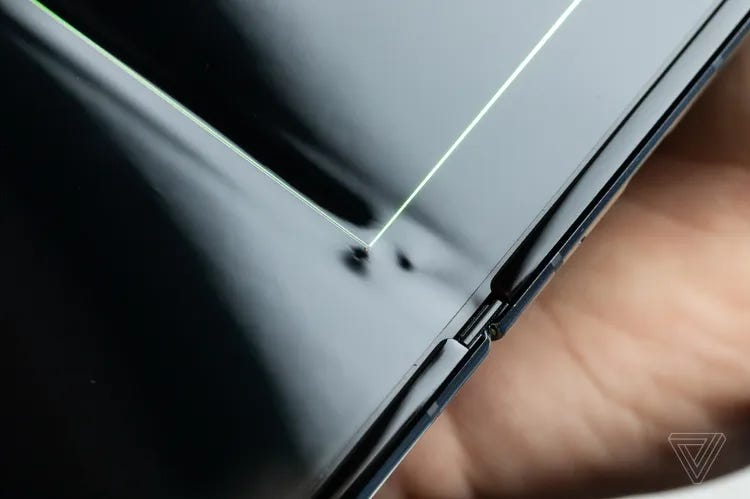
Leakers suggest the iPhone Fold will have a crease depth that is under 0.15mm, which is shallow and should be less noticeable to the eye and to the touch than a crease that is deeper. The crease angle is under 2.5 degrees. To understand what those numbers mean, consider that no other manufacturer publicly discloses crease measurements, which itself is telling. Apple’s decision to apparently share these metrics with component suppliers suggests both confidence in the numbers and an understanding that crease performance is going to be a central part of how this product is evaluated.
The mechanism Apple is using to achieve this is also interesting. To minimize the crease in the display, Apple plans to use liquid metal for the iPhone’s hinge, which will improve durability. Liquid metal is a class of amorphous metal alloys that Apple has used in limited applications before, including the SIM ejector tool for years, and the company has long held patents on its broader manufacturing use. Applying it to a hinge mechanism allows for tighter tolerances than conventional metal stamping can achieve, which is likely part of how the crease angle gets driven down that far.
What Is Actually Inside This Thing
Beyond the form factor and the crease solution, the leaked specs tell a story about where Apple sees this device in its product lineup, and the answer is not “slightly expensive iPhone.” It is considerably more ambitious than that.
The device will likely feature Apple’s A20 or A20 Pro chip, optimized for AI tasks, efficiency and multitasking. It may include the second-generation C2 modem for improved cellular performance, plus eSIM-only support. The A20 chip matters because foldable devices are power-hungry by nature. Running two displays, managing the logic of what content moves between them when you fold and unfold the device, and handling the kind of parallel multitasking that a tablet-sized inner screen invites, all of that demands more from a processor than a standard iPhone workload.
Other rumored specs include advanced display technologies like Color Filter on Encapsulation for brighter, slimmer screens and improved battery efficiency. One leak suggested a substantial 5,500-mAh battery, potentially the largest in any iPhone to date, to support the power demands of dual displays and enhanced performance. If that battery figure is accurate, it represents a genuine engineering achievement in a device that reportedly unfolds to just 4.8mm thin. Getting a battery of that capacity into a chassis that slim, while leaving room for a hinge mechanism, dual displays, and all the internal circuitry, is not a trivial problem.
On the camera front, Weibo-based leaker Digital Chat Station claims that the rear dual lenses will be 48 megapixels each. Other sources have claimed that the inner display features an under-screen camera, while the outer display will have a punch-hole camera. An under-screen camera on the inner display would solve one of the persistent aesthetic tensions in book-style foldables, where a selfie camera interrupting the large inner display always feels like an intrusion. Apple’s approach to this, if the under-screen camera rumor holds up, would maintain a clean, uninterrupted inner canvas.
The Price That Will Start Conversations at Dinner Tables
If there is a single fact about the iPhone Fold that will determine whether it becomes a mainstream product or a premium curiosity, it is the price. And the numbers floating around are not comfortable.
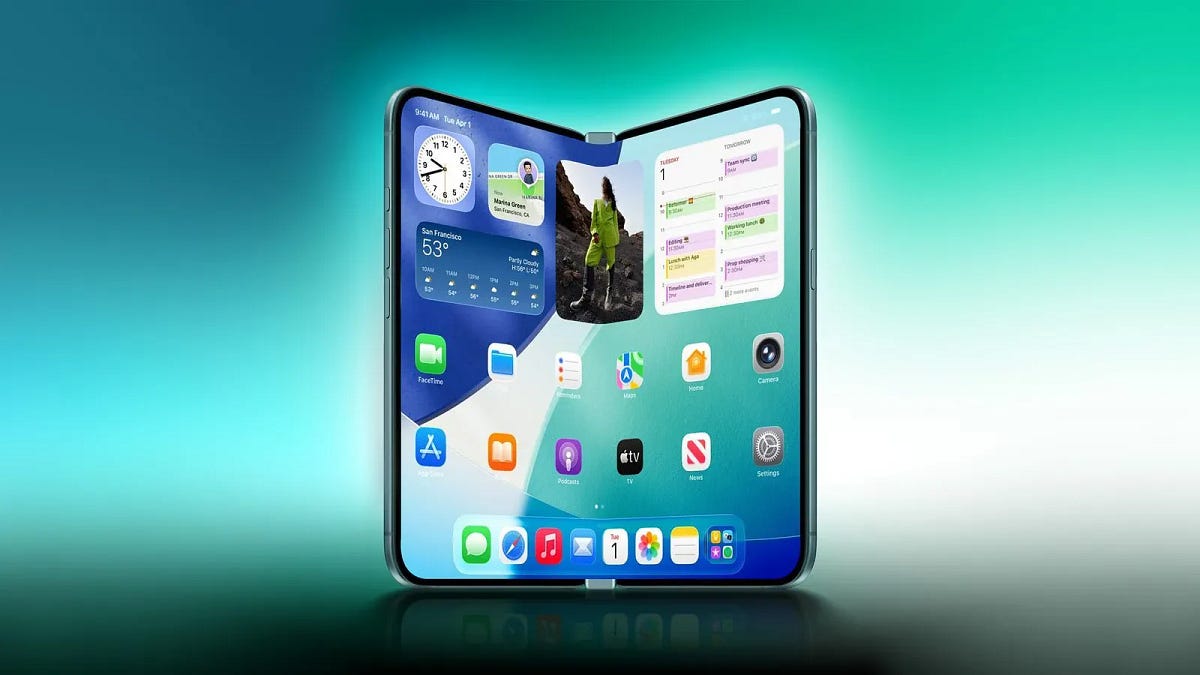
Bloomberg’s Mark Gurman has indicated the device could arrive at a starting price of roughly 2,000 dollars, aligning it closely with premium competitors like Samsung’s Galaxy Z Fold lineup. Some leaks have pushed that estimate higher, to 2,400 or even 2,500 dollars, though more measured analysis from UBS placed the likely range at 1,800 to 2,000 dollars. The span reflects genuine uncertainty about final component costs and Apple’s margin targets, both of which are moving targets as production ramps up.
To put that figure in human terms, the most expensive iPhone Fold would cost more than a fully configured MacBook Pro M4. It would cost more than two iPhone 18 Pros. It would cost more than most people spend on a laptop they use for three years. At 2,000 dollars, you are asking someone to pay twice what a high-end standard iPhone costs for a form factor that is, by Apple’s own first-generation standards, unproven in the real world.
Apple has increased its first production goals from 8 million units to almost 15 million, and some projections have gone as high as 20 million units. For comparison, Samsung is aiming to sell seven million foldables across its entire lineup in 2026, which covers Z Fold, Z Flip, and Tri-Fold devices. Considering Samsung is the biggest player in the foldable market outside of China, the ambition behind Apple’s production targets is striking. Whether 15 to 20 million people will pay 2,000 dollars for a first-generation foldable iPhone remains genuinely uncertain. As one observer noted, the Apple Vision Pro taught the industry that the mere existence of an Apple product no longer guarantees the sales volume Apple seems to expect.
The Competitors Apple Is Walking Into
Apple is entering a market that has matured considerably in the six years since Samsung launched the original Galaxy Z Fold. The company is not pioneering a new category. It is arriving late, deliberately, with the intention of redefining it. That is a very specific kind of competitive posture, and it is not without risk.
For years, Samsung has owned the foldable smartphone market with the kind of dominance that breeds complacency. The Galaxy Z Fold and Z Flip lines have commanded premium prices often north of 1,800 dollars largely because no one else offered anything comparable at scale. That era is ending. Samsung has reportedly decided to hold pricing steady on the Galaxy Z Fold 8 and Z Flip 8 rather than passing along increased component and tariff costs to consumers. This decision signals just how seriously Samsung views the competitive threat from Cupertino. When a company absorbs its own cost increases instead of passing them to customers, it is playing defense. That is not the posture of a company feeling secure.
Google’s Pixel Fold line continues to iterate and is genuinely respected by Android users who prioritize software intelligence over hardware novelty. Google has the advantage of AI integration that rivals Apple’s own in several key areas, and the Pixel Fold’s track record of software support has improved considerably. Chinese manufacturers including Huawei, Honor, and OnePlus are pushing aggressively with thinner designs and competitive pricing that Western flagships struggle to match at the component level.
What iOS 27 Means for This Device
Hardware is only half of what makes a foldable phone useful. The software challenge is arguably harder, and it is one that has hobbled Android foldables since the beginning. Google’s adaptive apps have gotten better, but the experience of unfolding a Galaxy Z Fold into a larger screen and having apps that genuinely take advantage of the real estate, rather than just stretching awkwardly or letterboxing like they are embarrassed by the space, remains inconsistent.
iOS 27 is rumored to optimize apps for the foldable form factor, with seamless transitions between folded and unfolded modes. Apple controls both the hardware and the operating system, which gives it a structural advantage here that no Android manufacturer can match. When Apple ships the iPhone Fold, every first-party app will be optimized for both display states. Safari, Notes, Photos, FaceTime, and the rest will transition fluidly because Apple writes them. The question is third-party apps, and the answer to that question depends on how aggressively Apple prepares developers in the months before launch.
The Timeline and the Risks
Apple’s first foldable iPhone is widely expected to launch in fall 2026, likely alongside the iPhone 18 Pro and Pro Max models, marking Apple’s first entry into the foldable smartphone market. The production timeline lines up with that window. Samsung Display is set to begin mass production of OLED panels for the first foldable iPhone in May 2026. Foxconn is expected to begin official production in early October, with broader availability through the fall event cycle.
That said, not everyone is confident the 2026 window holds. Japan’s Mizuho Securities banking firm has suggested a postponement to 2027 could still happen because of Apple taking longer to decide on key design elements such as the hinge. The hinge is the part of a foldable phone where manufacturing tolerances are the most demanding and where small problems become expensive recalls. Apple’s history of delaying products rather than shipping them with unresolved issues, see AirPower, the original HomePod’s software features, various camera capabilities that launched later than announced, suggests the company would rather miss a launch window than ship something that does not meet its own standards.
Apple’s pursuit of display perfection has led to rejected display samples from Samsung due to visible creasing issues, which creates cascading manufacturing costs. Each iteration of display rejection adds time and cost to the production cycle. If Apple’s crease standard is as rigorous as the leaks suggest, display yield rates could be a real constraint on both the launch timeline and the initial production volumes.
The Bigger Question This Device Is Actually Asking
Strip away every spec, every leaker’s measurement, every analyst’s price estimate, and the iPhone Fold is asking one question that the smartphone market has been circling for years without answering cleanly.
Is the smartphone form factor we have lived with since 2007 still the right one? A glass rectangle, roughly the same shape in every iteration, slightly larger and thinner each year, increasingly hard to differentiate from the model that came before it?
Apple entering foldables is not just Apple chasing Samsung. It is Apple’s clearest signal yet that the era of the flat glass slab might be reaching its natural ceiling, and that the next decade of mobile computing requires a different physical relationship between the device and the person holding it. The productivity arguments for a larger inner display are real. The creative arguments for a near-square canvas are real. The convenience arguments for a device that fits in a pocket but opens into a tablet are real.
Some forecasts predict 10 percent overall iPhone sales growth in 2026 if the Fold lands well. That is a significant number for a company that sells hundreds of millions of iPhones annually. It implies that there is a cohort of current iPhone users, not Android converts, not new smartphone buyers, but existing Apple customers, who have been waiting for exactly this product. People who carry both an iPhone and an iPad mini. People who have looked at the Galaxy Z Fold in an AT&T store and thought “I would buy that if it ran iOS.”
Apple knows who those people are. They have the purchase history.
Closing Thought: Late Is a Strategy, Not a Failure
The technology world tends to reward first movers with narratives about courage and vision, and punish late movers with narratives about being slow and scared. But Apple’s track record with late entry is actually worth examining before applying that framework here.
Apple was not the first company to make an MP3 player. It was not the first to make a touchscreen phone. It was not the first to make a smartwatch. It was not the first to make true wireless earbuds. In each case, it arrived after the category had already proven there was demand, after competitors had absorbed the cost and pain of educating consumers about the form factor, and after the technology had matured enough to be executed without compromise.
The foldable smartphone market is at that exact point right now. Samsung has been teaching the world what a foldable phone is for six years. Durability has improved dramatically. Consumer awareness is high. The manufacturing supply chain exists and is sophisticated. The software patterns are understood, even if imperfectly executed on Android.
Apple watched, waited, solved the crease problem that nobody else could solve regardless of cost, and is now walking in with 20 million units on order.
That is not fear. That is patience dressed up as precision. And if the iPhone Fold delivers on even half of what the leaks are describing, the foldable market will never look the same again.