You know that moment when you realize your main supplier might not be your only option? That is exactly where enterprise AI finds itself right now.
For years, Microsoft and OpenAI have been practically synonymous. You think Copilot, you think GPT. You think enterprise AI, you think the OpenAI relationship Microsoft has carefully cultivated. But something shifted in late 2025. Something quiet. Something that nobody was expecting. Microsoft quietly integrated Anthropic’s Claude models into Microsoft 365 Copilot.
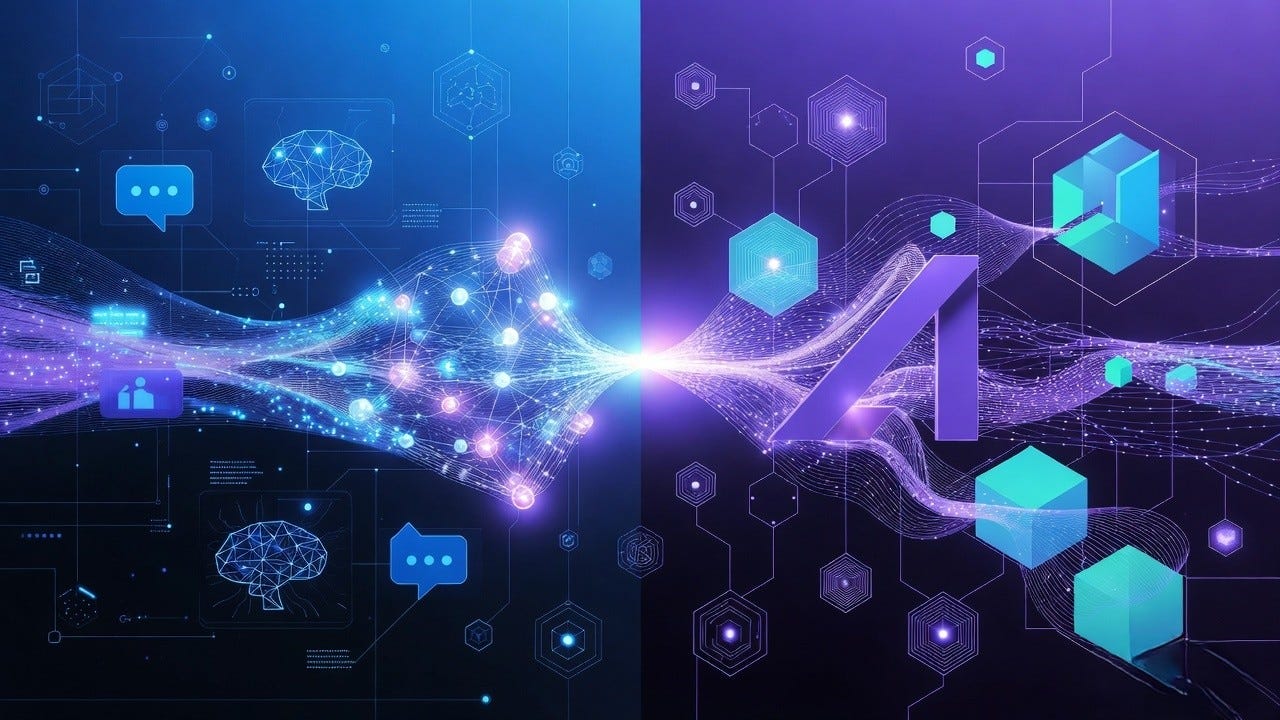
On the surface, it sounds like a minor feature update. Just another checkbox on a product roadmap. But if you squint and look closer, you will see something far more significant. This is not just about adding another AI model to the Copilot family. This is about enterprise AI coming of age. This is about choice. This is about recognizing that the future of AI inside your company will never be one-size-fits-all.
The implications are staggering. And they are only now becoming visible to those paying attention.
The Setup Nobody Saw Coming
Microsoft has been the loyal partner to OpenAI. The company invested billions. Built infrastructure. Bet the farm on the relationship. And it paid off. Copilot became the gold standard for enterprise AI assistance. Teams loved it. Productivity climbed. The narrative was perfect.
Then something unexpected happened.
Microsoft started hearing from customers that they wanted options. Not because OpenAI models were broken. Not because they were bad. But because different teams solved different problems better with different tools. A legal team drowning in document review wanted deep reasoning capabilities. A marketing team building research reports wanted different contextual understanding. An engineering team writing code wanted speed and accuracy.
One model could not handle all of it equally well.
The tension became real inside enterprise technology departments. A company with ten thousand employees could not force everyone to use the same model for every task. That is not how humans work. That is not how knowledge work actually gets done.
Enter Anthropic.
Founded in 2021 by former OpenAI researchers including Dario Amodei and Daniela Amodei, Anthropic built Claude with a specific philosophy. They focused on safety, reasoning, and what they call “constitutional AI.” The idea was not to be bigger or flashier. It was to be better at the things that matter most inside an enterprise. Reading long documents. Understanding nuance. Maintaining context across thousands of tokens. Getting the job done without hallucinating facts that do not exist.
Anthropic was recently valued at $183 billion by investors. Think about that number. $183 billion. That valuation did not come from hype. It came from a growing realization across enterprise boardrooms that Claude was solving real problems. In ways that other models were not. In ways that mattered for the actual work happening inside their organizations.
The valuation happened because major enterprises started quietly choosing Claude. They evaluated both. They tested both. And they kept coming back to Claude for specific, important tasks.
Microsoft saw this. Microsoft watched developers choosing Claude in GitHub Copilot. Microsoft watched enterprises building workflows around Claude. And Microsoft made a decision that shocked the industry. If we cannot beat them at every single task, let us give our customers the option to use their best work.
That is not defeat. That is strategy. That is Microsoft recognizing that their value is not in owning every single model. Their value is in being the platform where the best models live together.
What Microsoft Actually Did
Let us be precise about what happened here. Microsoft brought Claude Sonnet 4 and Claude Opus 4.1 to the Researcher agent in Microsoft 365 Copilot and to Copilot Studio, allowing customers to choose their preferred model for specific tasks.
That does not sound revolutionary. It sounds like a feature. But the implications ripple outward.
First, understand what Researcher does. It is not your average AI chatbot. Researcher is built for the kind of work that requires digging. You want to build a go-to-market strategy for a new product. You ask Researcher to analyze market trends, customer data, competitive positioning, and emerging opportunities. It pulls together information. Synthesizes it. Builds a narrative. Does this in hours instead of the weeks a human team would need.
That is serious work. That is work where mistakes are expensive. A bad go-to-market strategy does not just waste time. It wastes millions of dollars. It burns through market opportunity. It damages brand positioning. The stakes are high.
And now you can do it with either GPT-5 or Claude Opus 4.1. You get to decide which brain does the thinking. Which philosophical approach to reasoning you want working on your most important strategic challenges.
Then there is Copilot Studio. This is where enterprises build their own custom agents. You drag, you drop, you configure. You set up knowledge sources. You define workflows. You create the specific AI behavior your organization needs. And now you choose which model powers the reasoning layer. Want your HR onboarding agent to use Claude because you think it understands employment law better? Done. Want your sales agent to use GPT because you have built all your prompt engineering around its quirks? Also done. Want different parts of the same workflow to use different models? That is possible too.
As of January 2026, Anthropic models became available in Copilot Studio by default in most geographies, with administrators able to control access through the Microsoft 365 admin center. This is not a beta. This is not “experimental access.” This is production. This is fully supported. This is how it works now.
The shift from the September 2025 launch when Anthropic models required opt-in and separate commercial terms, to the January 2026 change where Claude became enabled by default under Microsoft’s subprocessor model, represents a significant shift in how Claude integrates into Copilot. Think about what that means. In September, you had to hunt. You had to actively seek out Claude. You had to commit to a separate relationship with Anthropic. There was friction.
Four months later, that friction disappeared. Claude is just there. On by default. Like a native service. Like something that was always supposed to be part of the family.
This matters because it indicates permanence. Microsoft is not testing. Microsoft is integrating. Claude is not some experimental feature you enable and then forget about. It is becoming part of the foundation. It is becoming the expectation.
Why This Matters More Than You Think
People outside the AI world often miss the significance of this move. They think “oh, another model option” and move on. But this represents a fundamental shift in how AI gets deployed inside companies. This is architectural. This changes everything about how you think about infrastructure.
For the first time, large organizations can standardize on Microsoft as their platform while simultaneously refusing to standardize on any single AI model. You deploy Copilot Studio everywhere. You train everyone on Copilot. You build your processes around Copilot. But your finance team might route their workflows to Claude while your customer service team uses GPT. Your legal team might use Anthropic while your marketing team uses OpenAI. Each gets the right tool.
You are not creating chaos. You are creating efficiency. You are creating the ability to match the model to the task instead of forcing the task to fit the model.
The practical impact is real and measurable. Take data analysis. Claude has demonstrated particular strength at working with large tables of data, maintaining context across thousands of lines, and catching edge cases that other models miss. If you are running quarterly financial reporting, if you are working with complex datasets that have subtle patterns embedded in them, you might want Claude handling that task.
But if you need fast customer support responses where speed beats perfection, if you need to generate fifty variations of marketing copy quickly, GPT-5 might excel. It is not about which one is universally better. It is about context. It is about the specific job you are trying to do right now.
Companies that understand this distinction will move faster. They will make better decisions. They will get higher quality outputs. They will waste less computing resources on tasks that do not need high-end reasoning.
The Reasoning Revolution
Here is something people do not talk about enough: Claude was built differently.
OpenAI chased raw capability. Bigger model. More parameters. More training data. Can it do everything faster? Faster still? Make it do ten thousand tasks instead of nine thousand. Optimize for breadth.
Anthropic took a different path. They invested in reasoning. Not speed. Not flashiness. Reasoning. Deep, careful, step-by-step reasoning. The kind of thinking that takes time but produces reliable results.
When you ask Claude Opus 4.1 to work through a complex problem, it does not just generate an answer out of thin air. It thinks step by step. It questions assumptions. It backtracks when something does not add up. It shows its work. You can follow the chain of reasoning. You can see where it went.
This matters for enterprise tasks. When a lawyer uses Researcher to analyze contract language, when they are reading a five hundred page negotiation document and looking for ambiguous terms or hidden risks, they do not just want an answer. They want to understand how Claude got there. They want to see the reasoning. They want to challenge it if necessary. They want to know whether this is a conclusion based on careful analysis or a lucky guess.

The Researcher agent powered by Claude Opus 4.1 helps with tasks like building detailed go-to-market strategies, analyzing emerging product trends, or creating comprehensive quarterly reports. These are tasks where the reasoning matters as much as the conclusion.
These are not the kinds of tasks where you can afford hallucinations. A quarterly report with fabricated data cascades through a company. Bad decisions get made. Resources get allocated wrong. Quarterly results disappoint. Credibility erodes. Downstream consequences multiply. One bad analysis can affect hundreds of decisions downstream.
Claude was built with constitutional AI principles that emphasize honesty and accuracy over flashiness. The model is trained to admit when it does not know something rather than making something up. That sounds simple. But it is revolutionary in the AI space.
For decades, the industry chased models that could do anything. Broader and broader. More and more coverage. Never admit uncertainty. Fill every silence. Answer every question, whether you truly know the answer or not.
Anthropic inverted that. They built a model that knows how to say “I do not have enough information to answer that reliably.” They built a model that will tell you when it is uncertain. They built a model that would rather admit a gap in its knowledge than confabulate.
For enterprise use, that is worth its weight in gold. That is worth paying for. That is worth changing your infrastructure for.
Understanding Constitutional AI
Constitutional AI is not a marketing term. It is an actual architectural approach to how Claude is trained and how it operates. The idea is that instead of optimizing purely for human feedback, instead of just asking “do people like this answer,” you optimize for a set of principles. Honesty. Helpfulness. Non-harmfulness.
When Claude encounters a situation where these principles conflict, it has a built-in way of reasoning through which principle should win. This is not perfect. Nothing is perfect. But it means Claude has been trained to think about ethics and accuracy in a way that other models were not.
In practice, what does this mean? It means Claude is less likely to make things up. It means Claude is more likely to admit uncertainty. It means Claude thinks about the consequences of its answers. It means Claude can explain why it made a particular choice.
For a healthcare company writing compliance documentation, that matters. For a financial institution doing risk analysis, that matters. For a legal firm doing due diligence, that matters. For any organization where accuracy and accountability are not luxuries but necessities.
A Word About Data and Security
Here is the part that requires transparency, and Microsoft has been transparent about it. Not perfectly transparent, but actually transparent.
When you use Claude inside Microsoft 365 Copilot, your data is processed outside Microsoft-managed environments and audit controls, meaning Microsoft’s customer agreements, including the Product Terms and Data Processing Addendum, do not apply to Anthropic services.
This matters. Especially for regulated industries. If you work in healthcare, finance, or government, you need to understand what this means for your compliance obligations.
Claude is hosted on AWS and Google Cloud, not Azure. Your data leaves the Microsoft ecosystem. It goes to Anthropic. Anthropic processes it. Anthropic has its own data processing agreements. Anthropic has its own security practices. Anthropic has its own privacy commitments.
For most organizations, this is fine. Anthropic is trustworthy. The company was founded by serious researchers. The company has major institutional investors. The contracts are solid. But it is not the same as staying inside Microsoft’s walled garden. That is a choice you get to make. Some organizations will embrace it enthusiastically. Others will opt out for certain workloads. That is the point.
Organizations in the European Union, United Kingdom, and European Free Trade Association regions require explicit admin opt-in due to data residency and regulatory requirements, as Anthropic is not included in the EU Data Boundary or in-country processing guarantees.
If you are in Europe, you need to have an actual conversation with your legal team before enabling Claude. If you are elsewhere, you probably have more flexibility. The key word is “choice.” You decide. Your organization decides. Based on your risk tolerance. Based on your regulatory environment. Based on your data sensitivity.
This is how enterprise software should work. Not “here is what you get, take it or leave it.” But “here are the options, here are the tradeoffs, you decide what works for your situation.”
What This Means for Your Teams
Let us get practical. You run a department inside a company that just got this update. What does it actually mean for your work?
If you use Researcher today, you now have a new button next to “Run.” Click it and you choose your model. You might never click it. You might find GPT works perfectly for your needs. Great. Nothing changes. But if you run into situations where you want that Claude reasoning approach, where you want a model that digs deeper and shows its work, it is there.
If you are building custom agents in Copilot Studio, you now have a configuration option you did not have before. When you set up your workflow, when you define the orchestration layer, when you specify the instructions that the AI should follow, you get to pick which brain handles the thinking. This becomes important when you have specialized tasks. A compliance review agent probably wants Claude. A quick customer lookup agent probably wants speed and GPT. An agent that summarizes long documents probably wants Claude. An agent that generates product descriptions probably wants GPT.
You are not stuck with one. You can use different models in different parts of the same workflow. You can route complex tasks to Claude and simple tasks to GPT. You can experiment. You can measure results. You can optimize.
For development teams, Claude is available through Microsoft Foundry with Claude Code, an AI coding agent, allowing developers to build with Claude models while using their existing Microsoft ecosystem. If you code, this matters. Claude has built a reputation as an excellent coding assistant. Not because it is the fastest. But because it produces clean, thoughtful code. It catches your mistakes. It suggests alternatives. It explains why it made particular choices.
For teams that value code quality, that care about long-term maintainability, that want code that other developers will understand and appreciate, this is a game-changer. You get to use the model you have come to trust for this specific task. You get to stay inside your normal workflow. You get to use your normal tools. But the brain doing the coding thinks differently. Thinks more carefully.
The executive summary is this: You probably do not need to do anything immediately. But you should know the option exists. And you should think about whether certain workflows in your organization would benefit from Claude handling the reasoning instead of whatever you are using today. You should talk to your teams. What are they struggling with? Where are they wishing they had a model that thought more deeply? Where are they wishing they had a model that admitted uncertainty? Those are the places where Claude might help.
The Bigger Picture: Why Multi-Model is Inevitable
Here is the thing everyone gets wrong about this announcement. They think it is about Microsoft making a choice.
It is not. It is about Microsoft admitting a truth that everyone already knows. Different models are different. Really different. Fundamentally different.
GPT is optimized for speed and breadth. Ask it to do a thousand different things and it handles most of them well. It is generalist. It is fast. It is confident. Ask it something and it will give you an answer.
Claude is optimized for depth and reasoning. Ask it to sit with a problem and really think it through, and it will. Ask it to maintain context across a two hundred page document and understand the nuances and relationships between different parts, and it excels. It is specialist. It is thoughtful. It admits when it is uncertain.
Google has Gemini, built on Google’s infrastructure and philosophy. Meta has Llama, which is open source and customizable. Startups have models optimized for specific domains like medical diagnosis or legal analysis. None of them are “wrong.” They are just different. They encode different tradeoffs.
The future of enterprise AI is not “pick one and commit.” The future is orchestration. You have a request. An intelligent layer directs it to the model most likely to handle it well. You do not even think about which model you used. It just works. The system figures it out.
Microsoft is betting that they can be the orchestration layer. OpenAI provides one option. Anthropic provides another. Maybe tomorrow Google provides a third. Maybe the week after that a specialized model optimized for legal work gets integrated. The customer writes once, specifies what they need, and the system routes intelligently.
That requires humility. It requires Microsoft admitting it cannot own the entire AI stack. It requires them to build partnerships instead of monopolies. That is exactly what they are doing.
Last year Microsoft already allowed software engineers to get coding help from Anthropic and Google models in GitHub Copilot Chat assistant, not just from OpenAI, signaling a broader shift toward multi-model strategies. This was not random. This was not a test. This was a strategic choice to say “we are building a platform, not a walled garden.”
GitHub Copilot has offered multiple model options for over a year now. Developers have been voting with their choices. When given the option, developers can let the system choose automatically or they can pick manually. According to reports and usage patterns, GitHub Copilot paid users now predominantly rely on Claude Sonnet 4 when using Visual Studio Code’s automatic model selection.
When given the choice, developers picked Claude. Let that sink in for a moment. In a context where they could choose any model, for a task where speed and productivity matter enormously, developers chose the model built by Anthropic. Not the model built by OpenAI. Not the model that came with GitHub as the default.
They chose Claude.
That tells you something. That tells you Claude is solving a real problem for the people most qualified to judge.
Real-World Use Cases: Where Claude Excels
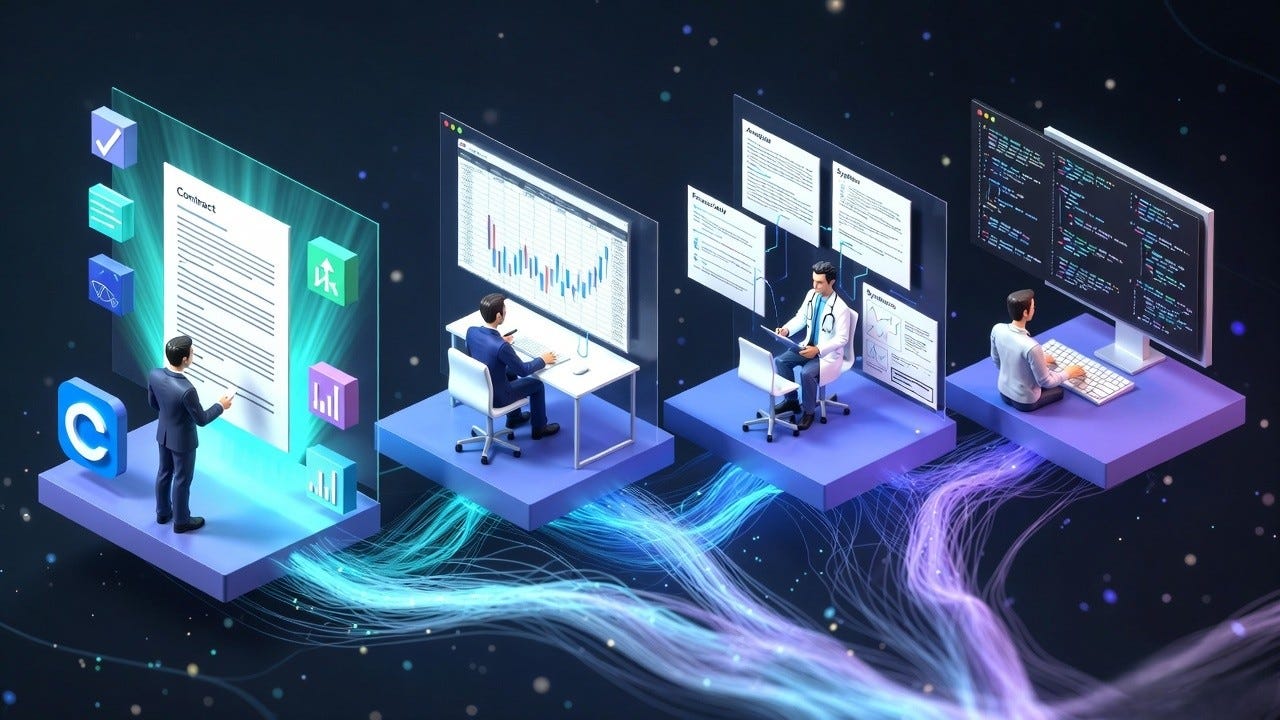
To understand why this integration matters, you need to see where Claude actually outperforms other models in practice.
Legal document analysis is one. When you have a contract that is fifty pages long, when you have nuance and interdependencies you need to understand, when you need to know not just what the document says but what it implies, Claude excels. The reasoning matters. The ability to hold the whole document in context matters. The ability to say “I found this, but I am uncertain about that” matters.
A real example: A corporation is negotiating a software licensing agreement with a vendor. The contract is dense. It is full of legal language. It has multiple versions. There are conflicts between sections. There are implications that are not stated explicitly. When you feed this to Claude and ask it to identify risks and opportunities, Claude does not just spot the obvious issues. Claude catches the subtle relationships. Claude sees how changes in one section might affect the meaning of another. Claude flags assumptions and asks for clarification.
Financial analysis is another. When you are building a model that projects revenue under different scenarios, when you need to reason through assumptions and validate calculations, Claude’s step-by-step approach matters. The ability to show your work matters. The ability to admit where you made assumptions matters.
A real example: A company is building a five-year financial projection. The model is complex. Revenue depends on market adoption rates that are uncertain. Costs depend on operational assumptions that might change. When you ask Claude to review the model and identify weaknesses, Claude does more than just check the math. Claude examines the logic. Claude asks whether your assumptions are reasonable. Claude identifies where small changes in assumptions would have large downstream impacts.
Medical research summary is another. When you are reviewing dozens of studies trying to synthesize what we actually know about a treatment or condition, when you need to identify gaps and conflicts between studies, Claude’s careful reasoning approach is valuable.
Scientific writing is another. When you are distilling complex research into something readable, when you need to be accurate because lives might depend on it, the model that was built to prioritize accuracy over speed is the one you want.
These are not fringe use cases. These are the core work of large enterprises. This is where the value of an AI system gets measured not in tokens per second but in decisions improved.
The Real Winner: Enterprise Innovation
If you strip away all the corporate politics and technical details, what actually matters is this: Your company now has more tools to work with.
The legal team that needs deep document reasoning has Claude. The engineering team that needs fast code generation has GPT. The research team that needs both now gets to experiment and find what works best for their specific workflow.
That flexibility drives innovation. It drives better outcomes. It drives productivity. Companies that figure this out first will have an advantage. They will optimize their workflows around the right tool for the right job. They will get better results. They will ask their AI assistants harder questions because they trust the answers more.
They will also discover new capabilities they did not know were possible. They will find that Claude can do things they thought were impossible. They will find that GPT excels at things they were struggling with.
This is good for enterprises. This is good for productivity. This is good for moving knowledge work forward. This is how technology actually moves humanity forward. Not through monopolies. But through competition and choice.
The Uncomfortable Question: What About OpenAI?
Let us acknowledge what everyone is thinking but most people are not saying out loud.
This is a hedging move.
Microsoft invested billions in OpenAI. Microsoft gets preferential access to OpenAI models. Microsoft is the exclusive cloud provider for OpenAI. The financial and strategic relationships are deep and complex.
And Microsoft is also saying they want options.
That is not disloyalty. That is realistic. OpenAI is one company. Anthropic is another. They might not always align perfectly. OpenAI might have supply constraints. Anthropic might release a capability first. Or you might just find that for your specific use case, you prefer Claude.
The game theory here is straightforward. If Microsoft depends entirely on OpenAI, OpenAI has leverage. If Microsoft has options, the negotiating position changes. Microsoft is not abandoning OpenAI. They are creating alternatives.
It is a rational business move. It is also the right move for customers because it drives competition and innovation. Both companies now have incentive to improve. Both companies now know they cannot rest on their laurels.
OpenAI’s response has been to double down on capability. Release newer, more advanced models. Invest in reasoning. Invest in speed. Compete on the merits. That is healthy competition. Both companies benefit. Customers benefit most of all.
This is how markets work. This is how technology advances. Through competition. Through choice. Through the freedom to make different decisions.
The irony is that by creating alternatives, Microsoft is actually strengthening the entire ecosystem. OpenAI becomes better because they have to compete. Anthropic becomes better because they know customers will evaluate both options. Customers win because both companies are fighting for their business.
Looking Ahead: What Comes Next
This integration is phase one. Microsoft stated that Anthropic models will bring even more powerful experiences to Microsoft 365 Copilot in the future.
That means Claude is coming to more products. Probably Excel, where data analysis and complex formula generation could benefit from Claude’s reasoning. Probably Word, where document editing and content refinement could use Claude’s careful approach. Probably Outlook, where email drafting and message understanding could use better reasoning. Probably Teams, where conversation summarization and decision documentation could benefit from deeper analysis.
It means the option to choose your model becomes a standard expectation, not a special feature. It means the question “which model should I use” becomes as normal as “should I use spellcheck.”
It means the industry converges on multi-model as the default architecture. Not “pick one model and build your entire company around it” but “have multiple models available and choose based on context.”
For you, it means paying attention. Try Claude in Researcher. See if it handles your use case differently. Experiment. Build muscle memory with both approaches. When you understand the strengths and weaknesses of different models, you become more effective at every aspect of your work.
It also means preparing your organization for a multi-model future. Start thinking about which workflows would benefit from different models. Start training your team on how to evaluate model performance. Start building the mental models you need to make good choices.
Think about what this means for your hiring. In the future, skill in evaluating and routing between multiple AI models becomes a core competency. Just like knowing how to use Excel is a core competency, knowing how to match the right AI tool to the right task becomes table stakes.
The Final Thought
Technology is not usually about single heroic moments. It is usually about the gradual accumulation of choices.
This moment, where Microsoft gives customers the power to choose between OpenAI and Anthropic, feels small today. It is just a dropdown menu. It is just another model option.
But it represents a philosophical shift. From “trust the platform to pick the best solution” to “the platform gives you enough power to pick the best solution for yourself.”
That is more important than it might seem.
Every innovation comes from giving people better choices. Better information. Better tools. Better access. Better ability to make decisions that work for them.
Microsoft just gave enterprises a better choice. It is up to you to decide if you want to use it. But the fact that the choice exists at all? That the option is there? That your teams can now experiment with different models?
That is the real story. That is the beginning of something larger. That is enterprise AI coming of age. Not controlled by any single vendor. Not owned by any single company. But distributed. Diverse. Flexible.
The future of work will be built on these kinds of choices. On the ability to match the tool to the task. On the freedom to change your mind. On the power to optimize for what actually matters to your organization.
You now have that power. What you do with it is up to you. But the fact that you have it? That changes everything.