We all know how big Apple is and how much quality they maintain while bringing their products to market. As we move into AI many techgiants are in a race to win the AI, same Apple is also on its biggest move so that it can dominate the AI empire that it cannot depend on anyone else but just a week ago in July 2026 , Apple held back rather providing news on their new AI they filed a 41-pages lawsuit against OpenAI accusing them of stealing their hardware secrets which meant to challege their Iphone. along with this they broke their contract with OpenAI to build new Siri AI rather they given contract to Google to build using the Gemini model.
Damn just listening to this two headlines makes people wondering like Apple is suing one company saying they are trying to steal its future and otherside they are outsourcing a major future project with different company. It’s not a contradiction exactly, but it’s not close enough to one that almost nobody has connected the dots openly. This is the scenario of both moves, what actually happened, and how fragile or weak Apple’s AI Project strategy behind the scenes.
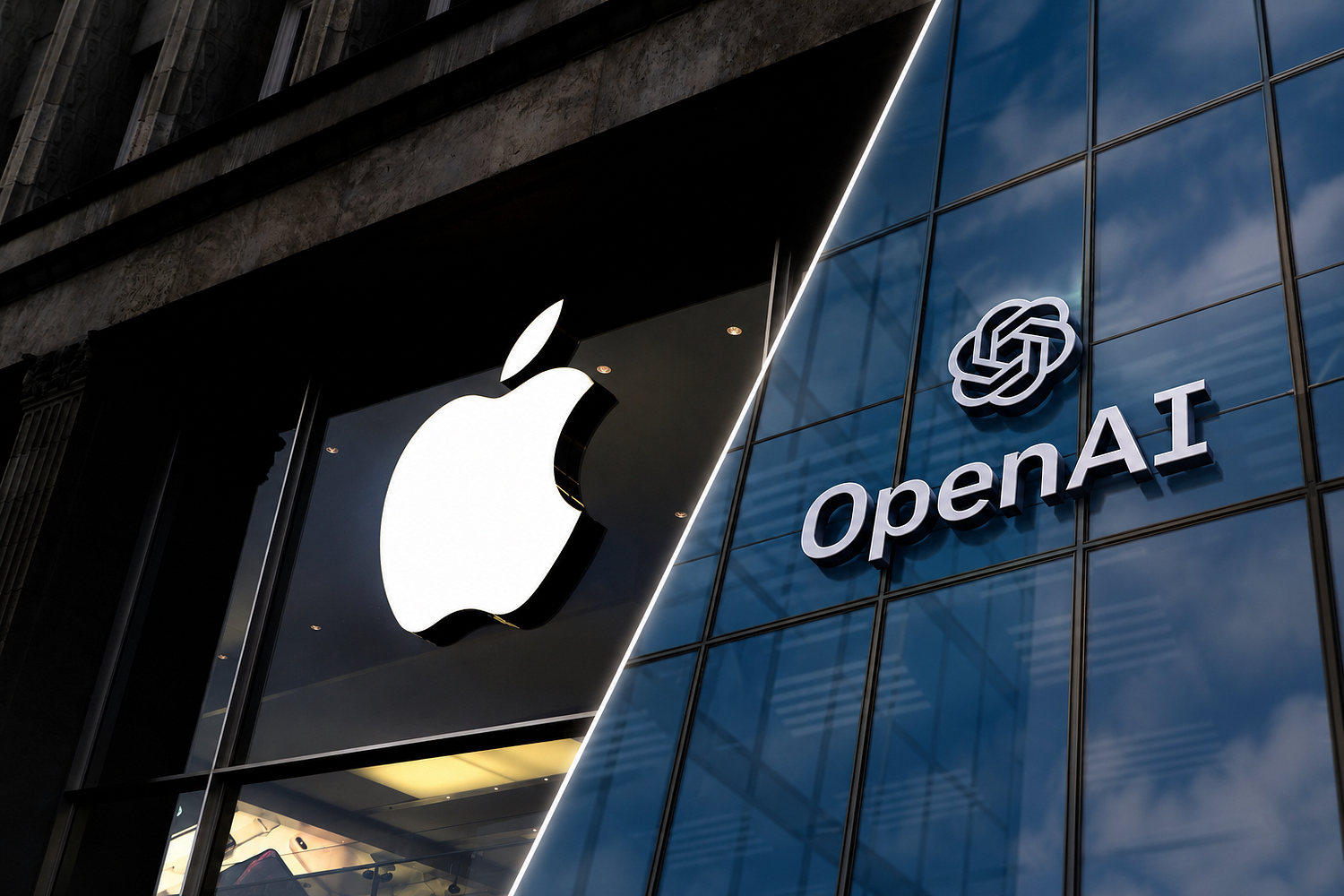
Apple Lawsuit on OpenAI: What Accusation of
It happened on July 10,2026, where Apple filed Lawcase against OpenAI in the U.S. District Court located in the California. Apple accused OpenAI for breach of contrat and using their trade secret misappropriately which could challege Apple in future, along with that they brought names of their two former Apple employees at the allegations.
Chang Liu and Tan were the former employees who were being accused of leaking the trade secret , these two were clinical part of Apple hardware team , Liu spent 8 years at Apple and Tan spent 24 years at Apple before leaving to work at OpenAI.
Just reading this makes me feel like a it more like spy movie thriller less like a corporate dispute, lets dive more into the complaint. according to sources Liu left Apple in Jan 2026 without returning his Company Laptop and another is he installed a bug which let him access Apple’s cloud storage even after his departure which allows him to dowload files of some hardwares which are very confidential as it matters the most to Apple. they were informations of unreleased products, presentation, designs and many more which is something Apple created or owns. the accusation didnt stopped here only they accused him that Liu gained access to a former colleague’s work laptop after he had already left the company. Reading this make me feel so sick and chilling. how come a person can able to use his company apple storage after leaving, its company fault as well. when ever a employee leaves they immediatly needs to disable or deactivate the account rather keeping for cool of period.
Lets talk about the Tan’s alleged role here. hearing his story feels so bizzare , damn he was accused of like Tan used the company internel project code names while interviewing at OpenAI , like its more like he is bribing by provinding the Apples secret projects to the OpenAI to get hired.He even accused of dropping names of Apple unreleased products and even tried to loose more information. He even tried to hire more apple employees and asked them to bring actual parts , batteries, logic boards, chip models to interviews. damn its such a big exposure of hidden Apple security breach. it actually show fragile the internal structure of Apple is, like internally how it broken just one move makes them loose all their essential projects. Apple didnt stopped the accusations here they even said Tan circulated or passed internal Apple offboarding document, one nicknamed “Need to Know,” to help the new hires at OpenAI to understand and how to escape the Apple’s security checks on the exit ways.
For the Years Apple always maintained so much silence and now suddenly became so aggressive and came out public confrontation. just imagine how big the loss happened to them, how much stakes is on the line. the primary accused were at the leadership position of Apple. just see how much the system is rotten up there. imagine how the ground level employees will be if their leaders are being accused and taken out. their very Cheif Hardware Officer to Technical Hardware engineer , every one were involved in this scandal. hearing this news feels so weird and chilling like , a company like Apple which known for it security and intelligence got leaked by its own hardware leader and engineer. its such a big shame.
On the Other hand OpenAI provided a public response stating carefully to the reporters ,”We have no interest in other companies trade secrets. We remain focused on building innovative technology that empowers people everywhere.” That’s it. No more details or clarifications from them regarding the allegations put on them.
The Jony Ive Connection
Here’s where the story gets genuinely tangled, and it’s the part most casual coverage glosses over. io Products, the hardware startup co-founded by Apple’s former chief design officer Jony Ive, is named as a defendant in the lawsuit. OpenAI acquired io for a reported $6.5 billion last year specifically to strengthen its hardware ambitions, and Ive now leads OpenAI’s device work entirely.
Ive himself is not personally named in the suit. That’s a notable choice, and Apple hasn’t explained why, though it’s not hard to guess. Ive is arguably the most respected industrial designer of the smartphone era, the person behind the look and feel of nearly every iconic Apple product since the iMac. Suing him directly would be a much bigger, messier story, one that risks looking personal rather than legal. Naming his company while leaving him out of it lets Apple make its case without turning this into “Apple vs. the man who designed the iPhone.”
What we do know is that OpenAI hasn’t said much publicly about what its secretive hardware project actually is. The Information has reported it’s a smart speaker. The Wall Street Journal has separately reported the device will be aware of its physical surroundings, suggesting some kind of ambient, always-on sensing capability.
This year around April, Ming-Chi Kuo working as analyst went further suggesting that the device could even be something totally build around AI agents instead of the normal tradional apps, something that would compete with the iPhone far more directly than a smart speaker ever could think of.
If that reporting holds up, then Apple’s lawsuit isn’t just about protecting old trade secrets. It’s about slowing down a company that might be building a genuine iPhone replacement, using information Apple says it stole from Apple’s own engineers.
Meanwhile, Apple Handed Its Most Personal Product to Google
While that lawsuit was dominating headlines, a second story was already public and largely treated as separate news: Apple’s new Siri, unveiled at WWDC on June 8, 2026, runs on a custom 1.2 trillion parameter Gemini model built by Google. The deal itself wasn’t new. Bloomberg first reported the negotiations back in November 2025, and the agreement was formally announced on January 12, 2026. But the June keynote is when most of the public actually saw what it meant.
The number is worth sitting with for a second. Apple’s own cloud-based models, the ones powering Apple Intelligence since its 2025 launch, run on roughly 150 billion parameters. The new Gemini model Apple is licensing is eight times larger. Apple is reportedly paying Google around $1 billion a year for access to it, under a multi-year, non-exclusive licensing agreement.
According to reporting on the deal’s architecture, Siri now runs on a three-tier system. Simple requests, setting a timer, checking the weather, stay entirely on-device using Apple’s own smaller models. Moderately complex requests route through Apple’s Private Cloud Compute servers. But the heaviest reasoning tasks, the kind of multi-step, multi-app queries Apple has been promising Siri would eventually handle, get routed to Google’s custom Gemini model, reportedly running on Nvidia Blackwell B200 GPUs inside Google’s own infrastructure.
Apple has been careful to stress that none of its on-device models contain any of Google’s code, and that all Gemini traffic is routed through Apple’s privacy-focused Private Cloud Compute layer so that personal data isn’t retained or visible to Google afterward. Whether that distinction actually satisfies users who’ve spent a decade hearing Apple market itself as the privacy-first alternative to Google is a separate question entirely, and one Apple hasn’t fully answered yet.
The performance numbers, at least according to internal benchmarks that leaked ahead of the announcement, are dramatic. The new Gemini-powered Siri reportedly hits a 92% success rate on complex, multi-app queries, up from just 58% under the old architecture. Response times have reportedly dropped to under half a second. If those figures hold up under real-world use, it would be the first time in years that Siri has actually closed the gap with ChatGPT and Google’s own Gemini assistant, rather than trailing behind them.
Why Apple Even Needed Google in the First Place
To understand why this deal happened at all, it helps to remember how badly Apple’s own AI ambitions had stumbled. Apple Intelligence launched in late 2024 to a mixed reception at best, and the original vision for a genuinely conversational, context-aware Siri kept slipping. Apple had already leaned on OpenAI as something of a stopgap, letting users route certain Siri queries to ChatGPT as an opt-in feature. That partnership, announced back in 2024, was never meant to be permanent.
Bloomberg’s Mark Gurman, who broke much of the original Gemini reporting, has since noted that Apple “still doesn’t want to use Gemini as a long-term solution.” That’s a striking admission buried inside otherwise celebratory WWDC coverage. Apple built an entire keynote moment around a rival’s AI model doing the heavy lifting for its most personal product, while reportedly already planning to replace that same model as early as 2027, once Apple’s own frontier-scale models are ready.
That timeline detail matters more than it might seem. It reframes the entire Gemini partnership not as a long-term alliance but as a bridge, one Apple is apparently already planning to burn once it doesn’t need it anymore. Google, for its part, gets something valuable either way: validation that its Gemini architecture is good enough for Apple’s ecosystem, plus a reported $1 billion a year in revenue while that bridge stays standing. It’s worth remembering Google was already paying Apple somewhere around $20 billion annually just to remain the default search engine in Safari. Now, for the first time, real money is also flowing in the other direction.
How Wall Street Is Reading This
The market’s reaction to all of this has been almost as strange as the news itself. Apple’s stock actually rallied through July, adding roughly $650 billion in market value after bottoming out on June 25. That timing lines up almost exactly with the week the lawsuit against OpenAI became public. But the rally reportedly has less to do with either story specifically and more to do with investors fleeing a broader AI infrastructure selloff and parking money in a company that looks comparatively stable, cash-rich, and less exposed to the runaway capital spending happening across chipmakers and cloud providers.
That’s an important distinction, and it’s easy to miss if you’re only skimming headlines. Apple’s WWDC AI reveal in June was, by most accounts, received as underwhelming at the time, part of why the stock had slumped in the first place before its rebound. So the $650 billion rally isn’t really a vote of confidence in Apple’s AI strategy specifically. It’s closer to investors deciding Apple is the safest seat in a room where everyone else is spending unpredictably large sums chasing frontier AI models. Whether that safety perception survives months of expensive litigation against OpenAI, on top of a $1 billion annual bill to Google just to keep Siri competitive, is a different question entirely, and one the market hasn’t really had to answer yet.
What This Actually Means If You Use an iPhone
Strip away the courtroom drama and the boardroom strategy, and there are two very concrete things that change for the roughly two billion people using Apple devices worldwide. First, when you ask the new Siri something complicated, a multi-step task pulling information across several apps, there’s a real chance that request is quietly being handled by a Google model running on Google’s own servers, even if Apple’s privacy layer keeps your identity stripped out of that exchange. That’s a meaningfully different reality than what Apple has spent a decade telling people about how their most personal device works.
Second, whatever comes out of the OpenAI lawsuit could shape what AI hardware actually reaches the market over the next few years, and not just from OpenAI. If Apple wins meaningful injunctive relief, it could delay or reshape whatever device OpenAI and Jony Ive’s former team have been building, the one multiple reports suggest might compete directly with the iPhone. If Apple loses, or settles quietly, it sends a very different signal about how much protection trade secrets law actually offers a company whose former employees walk out the door and into a well-funded rival’s design studio. Either outcome will likely influence how aggressively other AI labs recruit from Apple, and how carefully Apple tries to lock down departing employees going forward.
What Happens Next
Apple is seeking a combination of injunctive relief, monetary damages, and declaratory judgments against OpenAI, which means the company isn’t just asking for money, it’s asking a judge to actively stop whatever OpenAI is allegedly still doing with the disputed information. That process will take months at minimum, and litigation like this rarely resolves quickly or cleanly. Apple didn’t comment on whether the lawsuit affects its existing ChatGPT integration inside Siri, the same opt-in feature it built as a stopgap before Gemini took over the harder reasoning work, so that particular question is still open.
On the Gemini side, the bigger test is still ahead. iOS 27 and the new Siri are only just reaching the roughly two billion iOS devices in active use worldwide. Whether those 92% success rate numbers hold up once hundreds of millions of real users start hammering the system with messy, ambiguous, everyday requests is the kind of thing that simply cannot be known from a pre-launch benchmark. Assistants have a long history of looking great in a keynote demo and falling apart the moment actual people start using them in the real world.
What’s clear right now is that Apple’s AI story in the summer of 2026 isn’t really one story. It’s two, running in parallel, pulling in almost opposite directions. One says Apple believes its own AI secrets are valuable enough to fight for in federal court. The other says Apple didn’t trust its own AI enough to build the most important assistant on its platform without help from the company it has spent a decade positioning itself against. Both things are true. Neither one is going away soon.