Apple’s revenue crossed $391 billion in fiscal year 2024. That’s not a tech company number — that’s a country-level economy. And the funny part is, most people who contributed to that number don’t think they had a choice. That’s not an accident. That’s the whole plan.
So let’s talk about what Apple is actually doing, because calling it “good marketing” is too generous and too vague. This is a system — a very carefully built one — where every product decision, every software update, every warranty clause, every cable change, is designed to make sure that once you’re in, getting out costs more than staying.
The phone is the entry point. The ecosystem is the prison. The pricing after warranty? That’s when they really get comfortable.
The Seduction Phase
Apple has always known one thing better than anyone else in this business: people don’t buy products, they buy feelings. And the feeling Apple sells is that you are the kind of person who owns an Apple product.
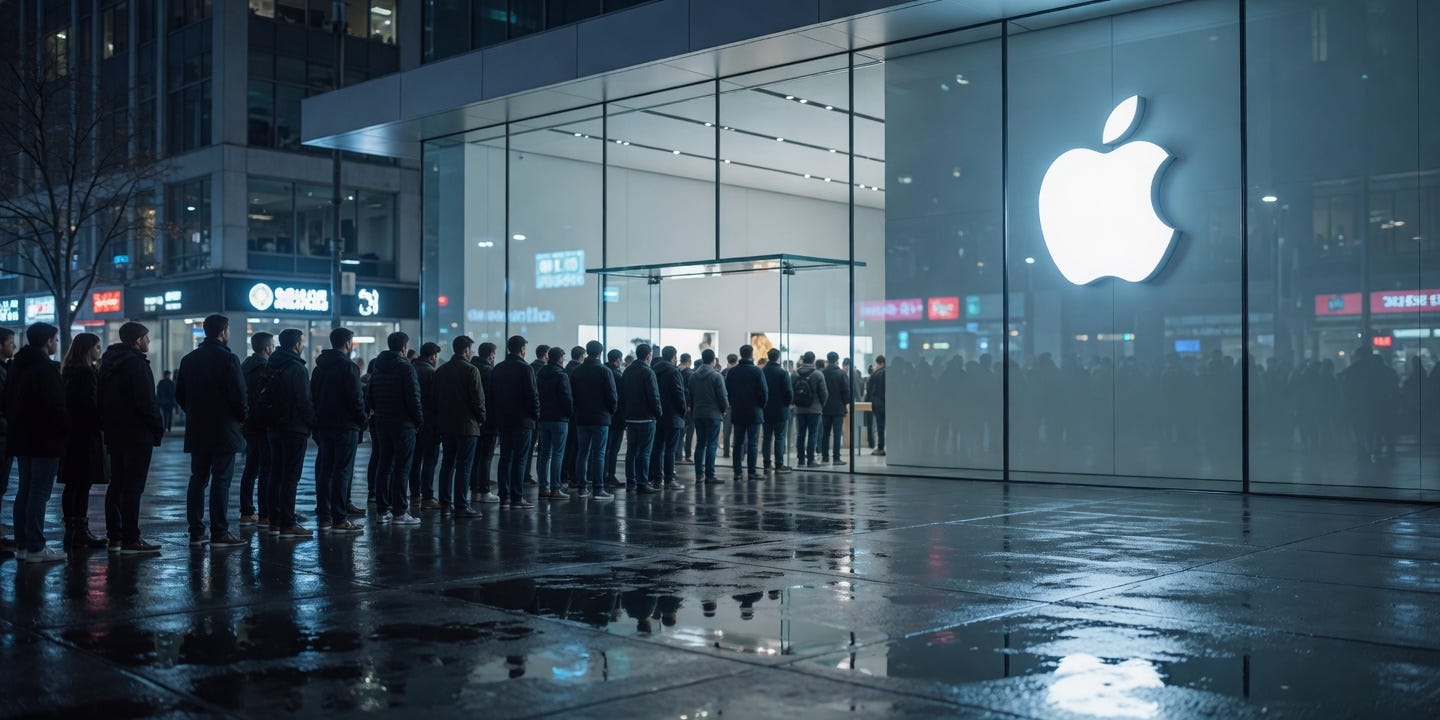
Walk into any Apple Store anywhere — Delhi, Dubai, New York — and the experience is the same. Clean white surfaces. Bright lighting. No clutter. Staff who look like they enjoy being there, which is rare in retail. The products are laid out like they’re exhibits in a design museum, not items you’re supposed to haggle over. There’s no pressure, no aggressive upselling, no “what’s your budget” conversation that makes you feel small. You just touch things and feel… elevated.
That’s not interior design. That’s behavioral engineering.
The pricing works as a signal too. When an iPhone 15 Pro costs ₹1,34,900, the person who buys it isn’t just getting a phone — they’re making a public statement. Android users will tell you that a OnePlus or a Samsung at half the price does 90% of the same things. They’re not wrong. But Apple has made the price itself part of the brand. If it were cheap, it wouldn’t work as a status object. Luxury brands figured this out a hundred years ago. Apple just applied it to consumer electronics.
And then there’s the hardware quality, which is genuinely good. The camera system on the iPhone 15 Pro Max is hard to argue with. The chip performance — the A17 Pro was way ahead of everything else in 2023, and even in mid-2025 it’s still beating most Android flagships in raw compute. When you spend that much money and the thing actually works beautifully, you trust it. And trust is how they get the next part to work.
The Ecosystem Lock-In
This is where Apple stops competing and starts controlling.
AirDrop works only between Apple devices. iMessage — with its blue bubbles and green bubbles and the very specific social embarrassment Apple has engineered around green bubbles in the US — works seamlessly only within Apple’s world. AirPods pair instantly with iPhones and show battery status on screen, but connect to Android and you lose half the features. iCloud integrates so deeply into iOS that moving your photos and contacts and notes out of it is a weekend project, not a five-minute job.
None of this is technically necessary. There are open standards for all of this. Apple chooses not to use them.
In 2022, the EU passed the Digital Markets Act and forced Apple to allow sideloading on iPhones in Europe by March 2024. Apple’s response was to comply technically while making the alternative app store process so complicated that almost no one uses it. They called their own reluctant compliance “genuine” while simultaneously making it as painful as possible. The EU is still going back and forth with them on this as of early 2025.
The AirTag situation is a good example of how this plays out in practice. It’s a ₹3,190 tracking tag that works perfectly inside Apple’s ecosystem — Find My is genuinely good — but good luck using it if someone in your family has an Android. You’d need a third-party app, and even then the experience is degraded. A Samsung SmartTag, same price range, works across both platforms. Apple chose not to. The exclusivity is the feature.
And it works. Once you have an iPhone, an iPad, AirPods, an Apple Watch, and a MacBook, the switching cost is not just money — it’s muscle memory, it’s habits, it’s your entire digital workflow. Switching to Android at that point feels like learning to drive in a different country. Technically possible, practically not happening.
What Warranty Actually Covers (And What It Doesn’t)
The standard Apple warranty is one year. AppleCare+ extends it to two years — or three, if you pay for the annual plan. On paper that sounds fine. In practice, the gaps are where it gets expensive.
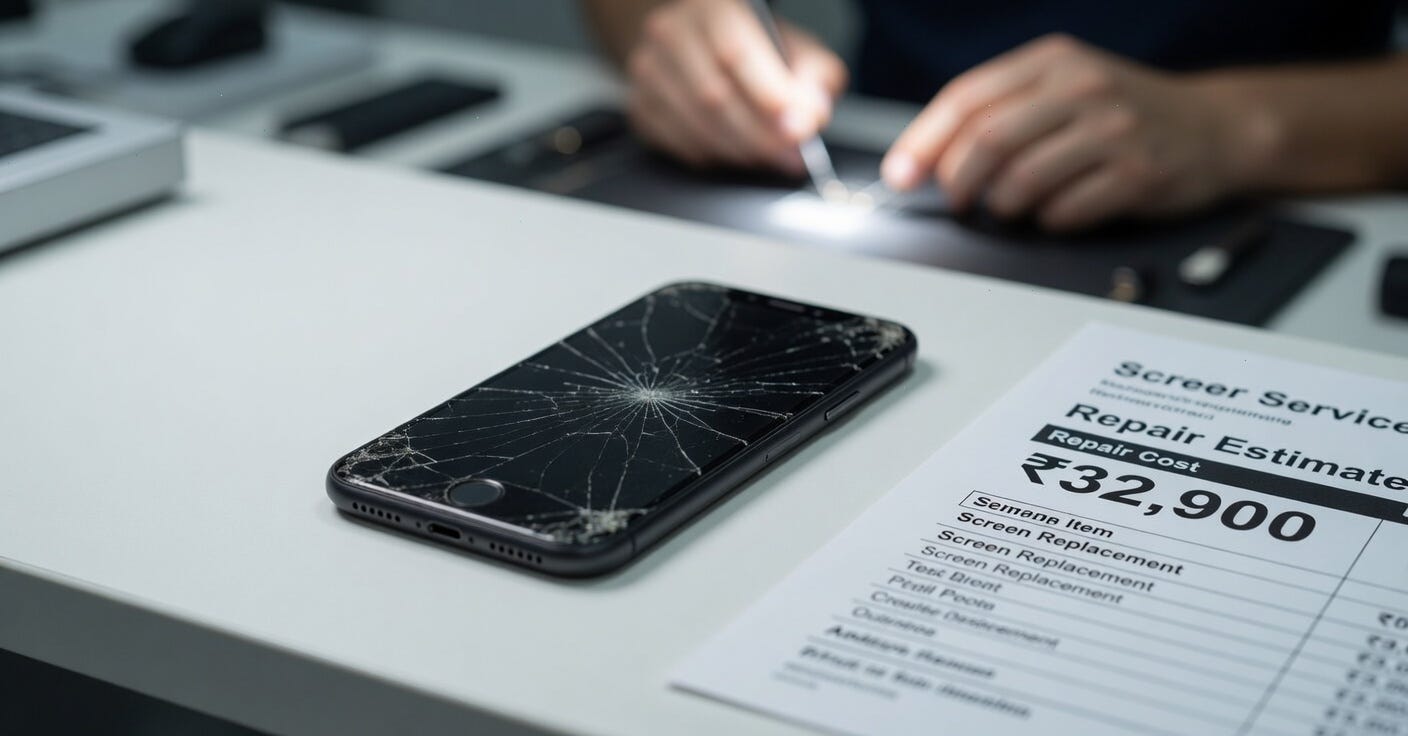
Physical damage is not covered under the base warranty. So if your iPhone screen cracks — and the glass on iPhones cracks, the same way glass always cracks when dropped, which is always — you’re paying out of pocket unless you bought AppleCare+. An out-of-warranty screen replacement for an iPhone 15 Pro Max at an Apple Authorized Service Centre in India is around ₹28,000 to ₹32,000. That’s not a typo.
Battery degradation is covered under AppleCare+ only if the battery holds less than 80% of its original capacity. Apple’s own software will show you your battery health percentage in Settings. If it says 81%, you don’t qualify, and you’re paying ₹6,000 to ₹8,000 for a battery replacement. People have reported that Apple’s service centres sometimes replace a phone outright instead of repairing individual components — which sounds generous until you realize they’re replacing it with a refurbished unit, not a new one, and charging you accordingly.
The other thing nobody talks about clearly: Apple’s warranty is almost entirely voided if any third-party repair has ever been performed on the device. Even replacing a cracked screen at a local shop — not even a cheap fix, sometimes these cost ₹4,000 to ₹6,000 — can trigger an “ineligible for service” response at the Apple Store. The phone knows. It flags unauthorized components. There’s a feature called “Parts Pairing” that Apple introduced around 2017 and has expanded aggressively since, where replaced components that weren’t sourced directly through Apple trigger warning messages or reduced functionality. The EU and US Congress have both raised issues about this, and as of April 2025, the FTC in the US has made noise about investigating it — but nothing concrete has happened yet.
After Warranty Ends: The Real Price List
This is the part that should make you sit down.
Once your iPhone is out of warranty — typically after two to three years of use — you are now a captive customer who has no leverage whatsoever. You can’t repair it cheaply without voiding the software features. You can’t get parts easily. Local repair shops do exist and do good work, but Apple has made accessing genuine parts without authorization nearly impossible for independent repairers, especially outside major metro cities.
So your options are: pay Apple’s service prices, pay a third party and accept the software warnings, or buy a new phone.
Guess which one Apple is hoping you pick.
Apple launched its Self Repair Program in the US in 2022, which was supposed to let regular people buy genuine parts and repair their own phones. In reality, the equipment you need to rent to do a proper repair costs hundreds of dollars, the process is complicated enough that iFixit (the repair guide website) described it as “a nightmare,” and the program isn’t even available in India as of now. It exists mostly so Apple can say it exists.
The pricing structure after warranty is essentially a funnel. Minor repairs are expensive enough to make you think about upgrading. Major repairs — a broken screen on a Pro model, a motherboard issue, water damage — often cost more than 50% of a new phone’s price. At that point, Apple’s trade-in program conveniently appears, offering you maybe ₹30,000 to ₹40,000 for your three-year-old Pro model against a new purchase. You feel like you’re getting a deal. You’re actually just buying another iPhone.
The trade-in values drop sharply after the second year. An iPhone 13 that was worth ₹68,000 new is currently trading in at roughly ₹20,000 to ₹25,000 at Apple India. Samsung’s resale values drop faster in percentage terms, but Samsung service is also significantly cheaper, so the total cost of ownership math isn’t always as favorable to Apple as the brand positioning suggests.
Where This Is Hurting the Market
Apple’s practices have downstream effects that go well beyond Apple customers.
The repair industry in India — small local shops that do phone repairs, screen replacements, battery swaps — has been squeezed badly. Not just by Apple, but Apple is the most aggressive about parts access and software-level restrictions. An independent repair shop in a tier-2 city can’t get genuine iPhone components without going through Apple’s “Independent Repair Provider” program, which has its own requirements and limitations. Many shops work around this with gray-market parts from China, which work fine mechanically but trigger Apple’s software warnings to the customer. The customer then blames the shop. The shop gets a bad reputation. Apple’s authorized network benefits.
For competition, the problem is different. Apple’s ecosystem advantages mean a competitor can’t just build a better phone and win. They’d need to replicate an entire ecosystem — the Watch, the AirPods, the MacBook integration, the iCloud seamlessness, the brand perception — to offer a real alternative. Even Google, with a trillion-dollar company behind it, has not managed to make Pixel a mainstream competitor to iPhone in most markets. Samsung is closer, but their software ecosystem is still nowhere near as cohesive.
The EU’s Digital Markets Act is trying to chip away at this. Forcing Apple to allow third-party browsers as actual defaults (not just installed but actually used) in Europe has shown some market movement. But in markets like India, where regulatory pressure on Big Tech is lower, Apple operates with fewer constraints.
The App Store monopoly is its own whole story. Apple takes 15% to 30% of every transaction on the App Store. Every app you’ve ever bought, every in-app subscription — Apple took its cut. Epic Games sued over this in 2020. After years of court proceedings, Apple was ordered to allow some linking to external payment options in the US. The change Apple implemented was so minimal that Epic called it “a sham.” The case is still going through appeals.
Where Apple Is Actually Good (And Where It’s Pretending to Be)
Look, this isn’t entirely a takedown piece. Some things Apple does are genuinely better.
Privacy is one of them. Apple’s App Tracking Transparency, launched in 2021, forced apps to ask permission before tracking users across other apps and websites. Meta’s revenue took a hit. That’s a real consumer benefit. The Secure Enclave chip, which handles biometric data and payment information locally on the device rather than sending it to a server, is a genuinely good approach. The iPhone has never had a large-scale data breach the way Android malware incidents have happened. That matters.
Software update support is another area. Apple typically supports iPhones for 5 to 6 years with major iOS updates. The iPhone XR from 2018 got iOS 17 in 2023. Samsung has been catching up — the Galaxy S23 will get 4 major OS updates — but historically Android phones got abandoned after 2 to 3 years. If you’re paying a premium price and expecting it to remain functional and secure for several years, Apple delivers better here than most.
The chip performance is real. The A17 Pro that’s in the iPhone 15 Pro handles video editing, gaming, and multitasking at a level that genuinely does push past most Android alternatives. The M-series chips in MacBooks are legitimately good. This is one area where the premium is somewhat justified.
But then there’s the camera bump situation. The camera module on current iPhones sticks out so much that the phone can’t lie flat on a table. This isn’t a new problem — it’s been getting worse with each generation, and Apple hasn’t really fixed it because the sensor size keeps increasing. A case solves it, but then you’re adding bulk to a phone that was sold on being thin. This is a minor thing but it’s the kind of minor thing that reveals a prioritization problem — Apple cares more about the spec sheet than the actual usage experience in this case.
The USB-C switch in iPhone 15 was overdue by about four years. Android phones moved to USB-C in 2016 and 2017. Apple kept Lightning on iPhones until the EU forced the issue. And even then, the USB-C on the base iPhone 15 is USB 2.0 speeds — the same speed as the Lightning cable it replaced. You need the iPhone 15 Pro to get USB 3 speeds. That’s not a technical limitation. That’s a product tiering decision dressed up as a technical limitation.
What Needs to Change
Globally, regulators are more active on Apple than they’ve been at any point before. The EU’s DMA, the UK’s CMA investigation into the App Store, the US DOJ antitrust case filed in March 2024 — which directly argued that Apple maintains an illegal monopoly over smartphones — these are all happening simultaneously. The DOJ case is particularly interesting because it goes after iMessage specifically, calling out Apple’s blue bubble / green bubble dynamic as a deliberate anti-competitive practice.
But regulatory changes take years. Sometimes decades.
What would actually help: mandatory third-party parts access with software compatibility guarantees, App Store alternative payment methods without punitive fees, and iMessage opening to other platforms. Apple is fighting all three of these in various courts and regulatory bodies right now.
In India specifically, the Competition Commission of India has looked at Apple’s App Store practices. There was a 2023 CCI investigation that found some concerns, and Apple modified a few things about how it handles Indian App Store policies. But enforcement here has been slower than in Europe.
The most interesting developments are happening with RCS. Apple finally added RCS support in iOS 18, released September 2024. This means iPhone and Android can now exchange high-quality photos and read receipts across platforms, which reduces the blue-bubble / green-bubble social pressure slightly. It’s not iMessage opening up, but it does reduce one of the friction points that kept people from switching away from iPhone in the US. Whether that meaningfully changes buying behavior is something that’ll be clearer by late 2025.
The Honest Assessment
Apple is not a villain. It’s a company doing what companies do — maximizing returns by building the strongest possible competitive advantages. The ecosystem lock-in, the premium pricing, the controlled repair environment — these are all rational business decisions from Apple’s perspective.
But “rational business decision” and “good for consumers and markets” are different things. And right now, Apple’s market position is strong enough that it can impose costs on users that most of them accept not because they think it’s fair, but because leaving feels harder. That’s not a free market dynamic. That’s lock-in working exactly as designed.
The best thing that can happen is stronger regulation in more markets, and faster. Not to punish Apple, but to make the market work the way a market is supposed to — where your loyalty to a brand is earned by ongoing quality, not by how expensive you made the exit.
Until that happens, the next time you’re standing in that white, clean, perfectly lit Apple Store, thinking about upgrading for the third time in six years — just know what you’re standing in.
It’s not a store. It’s a funnel. A very, very good-looking one.