Lets say: it’s 1964, and a Soviet astrophysicist named Nikolai Kardashev is sitting at his desk trying to figure out how to spot alien civilizations hiding in the radio signals coming from deep space. Not the little-green-men kind of thinking the serious, mathematical kind. He needed a way to rank how advanced a civilization actually is. Not by their art, not by their philosophy, not by how many wars they’ve avoided. By one thing only: The Kardashev Scale: A Cosmic Report Card for Civilizations
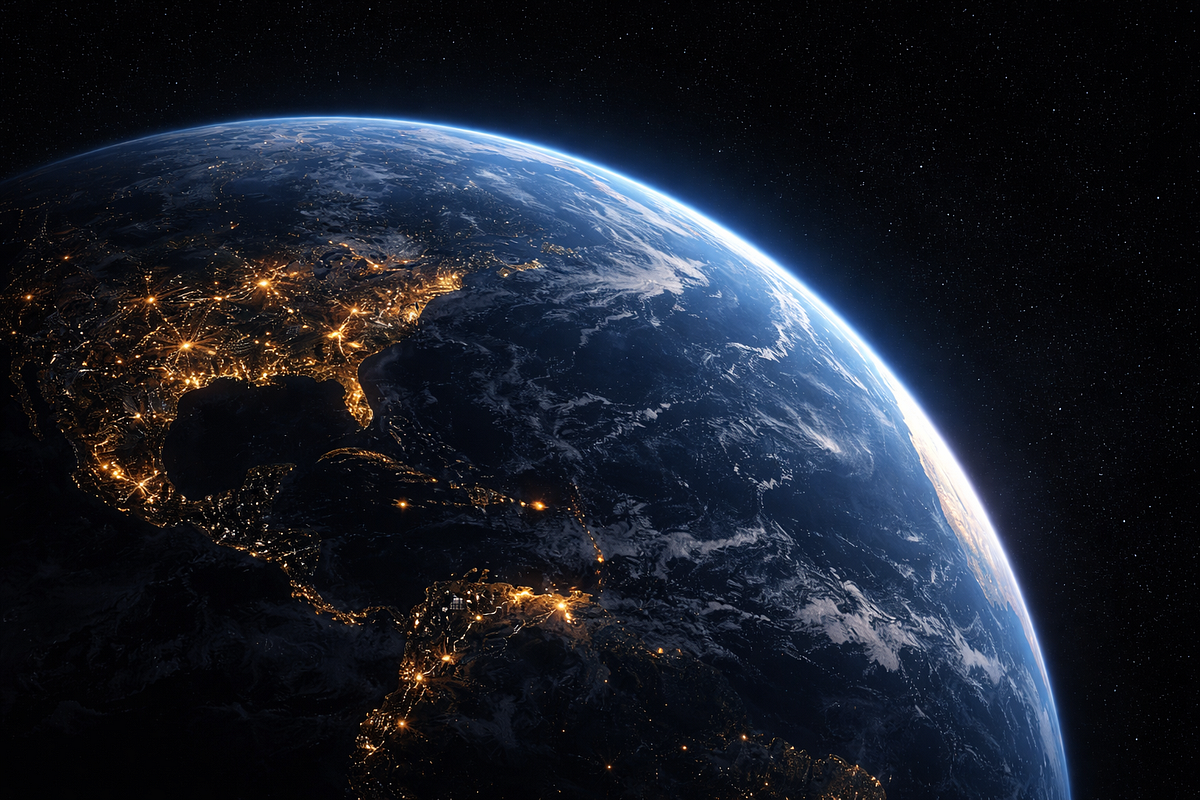
That's the Kardashev Scale. And once you understand it, you'll never look at a sci-fi movie the same way again.
It sounds like a dry science concept the kind of thing you'd skim past in a textbook. But here's the thing: it's actually one of the most humbling, mind-bending frameworks ever invented. Because when you place humanity on this scale, the answer is both fascinating and a little sobering. We're not even at level one yet.
Where Humanity Actually Sits Right Now
We like to think of ourselves as pretty advanced. Smartphones, space telescopes, the internet, nuclear reactors. Impressive stuff, no doubt. But the Kardashev Scale doesn't care about your gadgets. It measures energy consumption specifically, whether a civilization can control the total energy available to it from its home planet, its star, or its entire galaxy.
Right now, in 2024, humanity consumes around 18 terawatts of power globally. Earth receives about 174,000 terawatts of solar energy every single day. We're using less than one ten-thousandth of what's falling on us from the sun alone. On the Kardashev Scale, physicist Carl Sagan calculated we sit at roughly 0.73 a Type 0.7 civilization. Not even a full Type I.
That's not an insult. It's a starting point. But it does put things in perspective.
Think about it this way: the civilization in Interstellar the one that sends Cooper and his crew through a wormhole near Saturn represents humanity at roughly where we might be in a few centuries. Still scratching at the surface of what's possible, but reaching. Still Type I, maybe just crossing that threshold.
What a Type I Civilization Looks Like
A Type I civilization has done something most of us would consider miraculous today: it controls the full energy output of its home planet. Every earthquake, every hurricane, every ray of sunlight hitting the surface harnessed, redirected, used. Weather control isn't science fiction for a Type I society. It's Tuesday.
Michio Kaku, the theoretical physicist who's probably done more than anyone to popularize the Kardashev Scale for general audiences, estimates humanity could reach Type I status within 100 to 200 years. That's assuming we don't blow ourselves up first, which he cheerfully acknowledges is a real risk.
You've seen Type I civilizations in fiction, even if they weren't labeled that way. Think of Wakanda in the Black Panther films a society that has completely mastered vibranium, a planetary resource, and built an entire civilization around it. Not a perfect analogy, but the spirit is right: a civilization that has genuinely conquered its own world's resources rather than just skimming the top off them.
Or think about the Asgardians in the Thor films. They're more advanced than Type I, but in their early history before Odin's conquest and all that drama you'd imagine a society that first learned to control the energy of their home world before reaching across the cosmos. That's the step. That's the door you have to walk through.
The honest reality is that getting to Type I requires global cooperation on a scale we've never managed. Every nation, every government, every grid unified under one shared energy system. Whether that's inspiring or terrifying probably depends on your politics.
Type II: When a Star Becomes Your Power Plant
Here’s where things stop being extrapolation and start being genuinely hard to picture.
A Type II civilization doesn’t just control a planet. It controls a star. The entire output of its sun roughly 3.8 × 1⁰²⁶ watts in our sun’s case is available for whatever they want to do with it. Building. Traveling. Computing. War, if they’re still into that sort of thing.
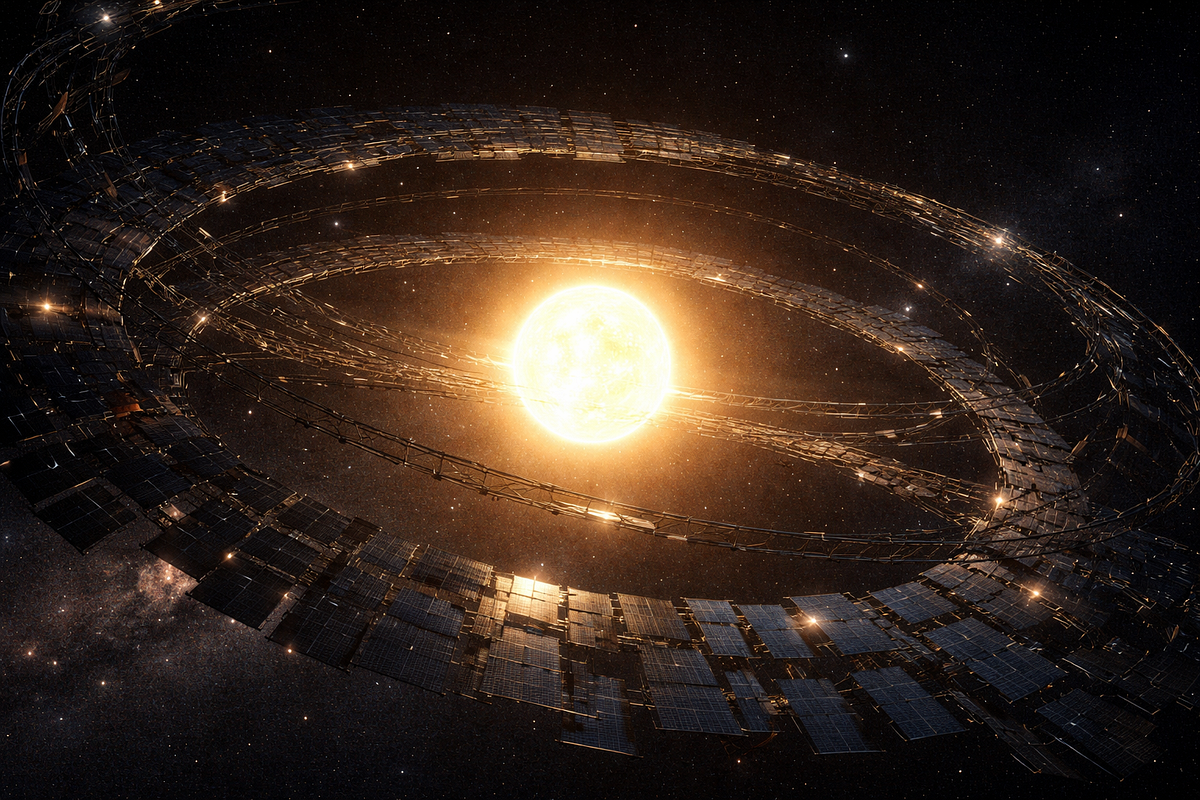
The main theoretical mechanism for doing this is called a Dyson Sphere, proposed by physicist Freeman Dyson in 1960. The idea is to build a massive structure not necessarily a solid shell, more likely a swarm of solar collectors that surrounds a star and captures its energy output. It sounds like pure fantasy. But the physics don’t prohibit it. The engineering is just… enormous.
The Death Star from Star Wars gets brought up a lot in this conversation, and it’s not entirely wrong. The Death Star is a structure that harnesses incredible amounts of energy to fire a planet-destroying weapon. That’s Type II thinking in a very militarized direction. But Dyson’s original vision was more like a civilization that has so much energy it can do basically anything not just destroy, but create on an almost incomprehensible scale.
A closer fictional match might be Coruscant itself, the planet-sized city from Star Wars. A world where every inch of surface has been built over, where billions of beings live in towers reaching above the clouds, where the infrastructure of an entire galactic government runs that’s what Type II energy abundance enables. You don’t run out of power. You don’t ration anything. Energy stops being a constraint entirely.
The sobering part? There may be real Type II civilizations in our galaxy right now, and we wouldn’t necessarily know. In 2015, astronomers noticed a star called KIC 8462852 quickly nicknamed Tabby’s Star dimming in bizarre, irregular patterns that no natural explanation fully accounted for. One hypothesis floated seriously was a Dyson Sphere under construction. It was almost certainly something else, probably clouds of dust and comets. But the fact that scientists considered it as a real possibility tells you something about how seriously the concept is taken.
Type III: Galactic Civilization — The Scale Gets Ridiculous
By the time you reach Type III, the gap between them and us is roughly the gap between us and an ant colony. Maybe bigger. A Type III civilization controls the energy output of an entire galaxy hundreds of billions of stars, the energy equivalent of around 10³⁶ watts. That number doesn’t even feel like a number anymore. It’s just an abstraction.
The Star Trek universe is the most famous attempt to portray something in this territory. The Federation spans hundreds of star systems. The Borg, frankly, are closer to Type III a collective intelligence that consumes and assimilates civilizations across entire sectors of the galaxy. The Q Continuum, those nearly omnipotent beings who keep showing up to mess with Picard, are essentially what Type III-plus looks like: beings for whom energy and matter are playthings.
What does a Type III civilization do all day? Genuinely hard to say. Their concerns and motivations would be so far removed from ours that trying to imagine their goals is like an ant trying to figure out what a human thinks about traffic. Fermi’s famous paradox “where is everybody?” — is partly so uncomfortable because it raises the question: if Type III civilizations exist, why haven’t they contacted us? Or consumed us? Or at least left obvious evidence of their existence?
One answer is that maybe they’re just not interested. Another is that they’re already here and we don’t have the instruments to detect them yet. A third, darker answer is that something happens to civilizations before they reach Type III. Some kind of filter. Some threshold most can’t cross.
Beyond Type III: The Extensions Nobody Planned For
Kardashev’s original paper only went up to Type III. He didn’t need to go further — the scale was meant as a practical tool for identifying radio signals from space, not as a cosmic ladder to infinity.
But others extended it anyway. Carl Sagan, as mentioned, added decimal points to make the scale more granular. Some theorists have proposed Type IV, which would control the energy of the entire observable universe. Type V would somehow transcend the universe itself, operating across multiple universes or across time. At this point, we’re in Doctor Strange territory — the kind of beings who sit calmly in the multiverse while realities collapse around them.
The Men in Black franchise actually toys with this idea in a weirdly casual way. That final shot in the first film pulling back to reveal that our universe is just a marble in an alien’s bag captures the Type IV/V concept better than most serious discussions of it. Scale keeps going. There’s always something bigger.
What Does This Mean for Us, Practically?
Here’s an honest observation that most Kardashev explainers skip over: this scale has no moral component. A Type II civilization isn’t necessarily wise, kind, or good. They’re just energetically powerful. The Galactic Empire from Star Wars is arguably Type II. They have the Death Star. They’re not exactly a model civilization.
This matters because there’s a temptation to read the Kardashev Scale as a progress chart as if getting to Type I automatically means humanity has become more cooperative, more peaceful, more enlightened. It doesn’t. Energy mastery and moral maturity aren’t the same thing. We could hit Type I and still be at each other’s throats. Plenty of sci-fi explores exactly that scenario.
The more useful takeaway is probably this: the scale forces you to reckon with how young we are. How early in the story of the universe humanity actually appears. Intelligent life has presumably existed in other parts of the galaxy for billions of years longer than we have. If even a fraction of those civilizations made it to Type II or III, the universe is quietly full of beings for whom our current struggles energy shortages, climate change, geopolitical conflict would look like the problems of a toddler learning to walk.
That’s either deeply comforting or deeply unsettling, depending on your disposition.
A Scale Worth Knowing
The Kardashev Scale doesn’t answer any of the big questions about life in the universe. It doesn’t tell us if we’re alone. It doesn’t tell us if Type III civilizations are out there watching us. It doesn’t even guarantee that reaching Type I is survivable plenty of theoretical models suggest civilizations destroy themselves trying.
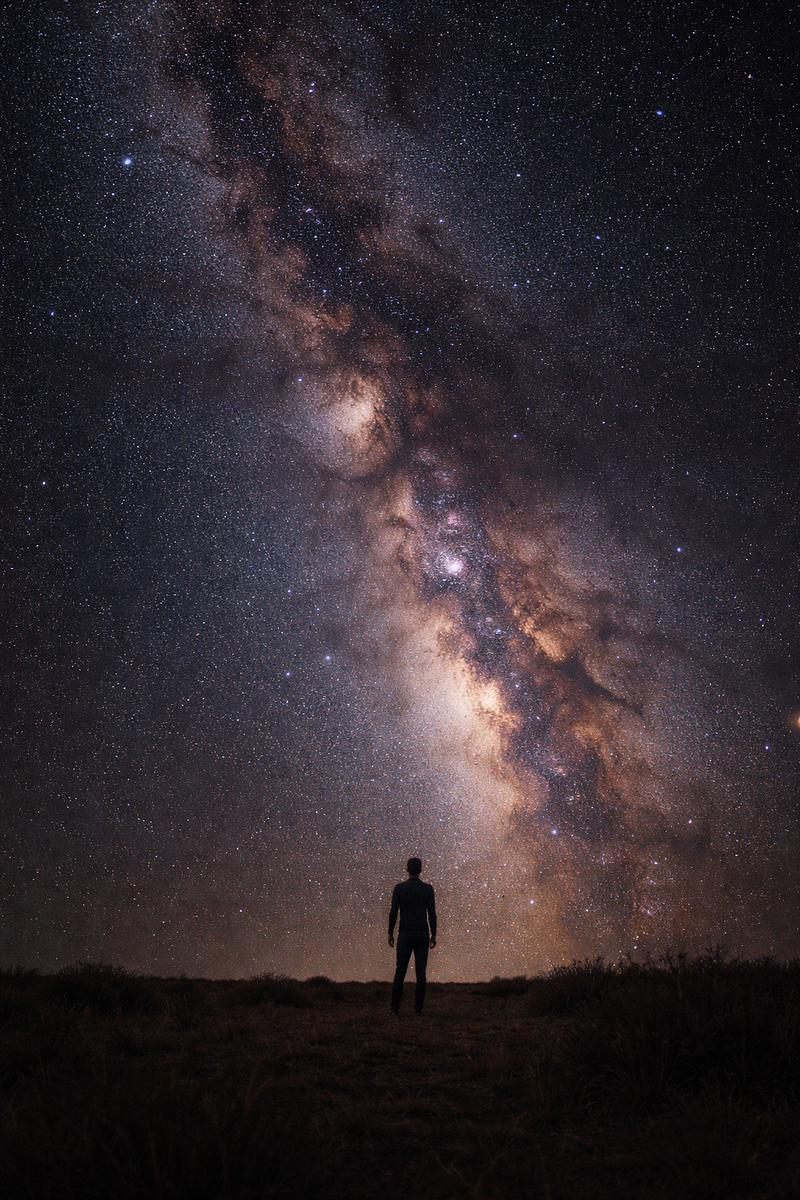
What it does do is give you a frame. A way to think about where we are in the larger story rather than just the day-to-day noise. When you look up at the Milky Way and realize there are roughly 400 billion stars in just our galaxy and that’s just one of at least two trillion galaxies in the observable universe the scale helps you ask the right questions instead of just feeling overwhelmed by the numbers.
We’re a Type 0.7 civilization with Type I ambitions. That’s not embarrassing. That’s actually kind of exciting. We figured out the scale we’re on. We can see the next rung. Whether we reach it is a different question entirely, and honestly, that’s the most interesting part of being alive right now.