There is a version of this story where the headline is “Google Updates Its Maps App” and you scroll past it without blinking. Updates happen. Apps add features. Nothing is new under the sun. But what Google announced on March 12, 2026 is not that story. What Google announced is a quiet but significant reframing of what a digital map is allowed to be, and the implications of that reframing reach well beyond whether your next navigation experience looks prettier on a phone screen.
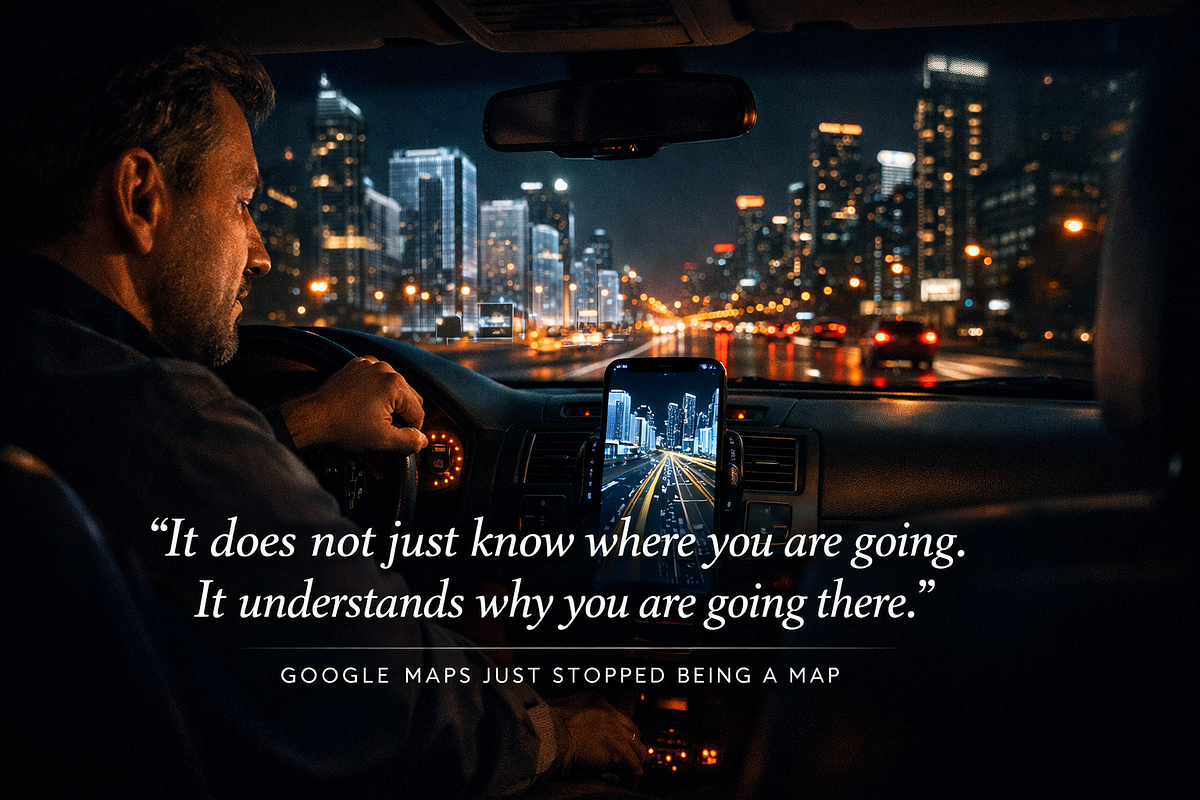
Google Maps just received what the company itself describes as its biggest update in over a decade. The app used by more than two billion people worldwide. The platform that generates over five million traffic updates every single second. The service so embedded in daily life that people genuinely forget it is software they chose, not infrastructure they were born into. That product got redesigned from the ground up, and the design choice at the center of it is AI, not cartography.
This is the full story of what changed, why it matters, and what it tells us about where navigation, local discovery, and digital geography are heading.
The Decade That Passed Between Major Updates
Before getting into what is new, it is worth pausing on how long ten years actually is in technology terms. The last time Google considered a Map update to be generationally significant was around 2013 to 2015, when the company introduced real-time traffic, Google Street View improvements, and offline maps. In tech terms, a decade is an eternity. Smartphones grew from 4-inch novelties to 6.7-inch pocket computers. 4G gave way to 5G. Artificial intelligence moved from academic curiosity to the most consequential engineering frontier of the century.
And yet Google Maps looked, functionally, the same. A flat, color-coded map. A blue line for your route. A disembodied voice reading off street names. Helpful, certainly. Functional, absolutely. But not particularly transformed, even as everything else around it evolved rapidly. The question of why Google waited this long to fundamentally redesign the navigation experience is actually an interesting one. The answer is probably data. For any of the new features to work well, Google needed the kind of data density that only comes from years of Street View coverage, billions of user interactions, and a machine learning infrastructure capable of reasoning about physical space the way a human would. The company spent a decade collecting that. Now it is spending it.
Ask Maps: The Feature That Makes the Whole Category Feel Outdated
The most conceptually significant addition to Google Maps is not the visual redesign. It is a small icon labeled Ask Maps.
Tap it and you are no longer using a map in any traditional sense. You are talking to something that knows everything about everywhere and can reason across all of it simultaneously. The new Ask Maps feature lets users pose complex, real-world questions using natural language, such as asking where to charge a dying phone without waiting in a long coffee queue, or finding a public tennis court with lights available tonight.

Read those examples slowly, because they reveal something important. Neither of those queries can be answered by a traditional map. A traditional map shows you what exists. Ask Maps is being asked to reason about a situation, cross-reference real-time conditions, filter for your specific constraint, and return a useful answer. That is not navigation software. That is a planning agent.
The technical foundation makes this possible. Gemini’s recommendations draw upon a database spanning more than 300 million places and reviews from more than 500 million contributors accumulated since Google Maps debuted more than twenty years ago. When Ask Maps answers a question about which cafe near you has a short wait time right now, it is not guessing. It is reasoning across two decades of structured geographic and behavioral data, weighed against real-time signals from the community actively using the app. No other company on earth has that dataset, and that asymmetry matters enormously.
The trip-planning dimension is where Ask Maps becomes genuinely exciting. Someone planning a multi-stop road trip to the Grand Canyon, Horseshoe Bend, and Coral Dunes can ask for recommended stops along the way, and Maps will generate directions, ETAs, and insider tips from real contributors, including details like how to find a hidden trail or secure a free entry ticket. Previously, assembling that information required a separate Google search, three open tabs, a Reddit thread, and a note-taking app. Now it happens inside a single conversation with a product that already knows where you are going.
The one question Google executives declined to answer is whether the company plans to sell ads that boost businesses’ chances of appearing in Ask Maps recommendations. That silence is meaningful. The monetization question is real, and if sponsored results appear in Ask Maps without clear labeling, the integrity of the conversational format becomes compromised in ways that traditional search ads never quite managed to achieve, precisely because conversational answers carry an implied trust that list results never did.
Immersive Navigation: The Driving Experience That Feels Like a Different Decade
If Ask Maps is the feature that changes what you do before you drive, Immersive Navigation is the feature that changes what you see while you do.
The flat 2D map that Google Maps has used for driving directions since its inception is gone. In its place is a vivid 3D view that reflects the buildings, overpasses, and terrain around you as you drive. Google Maps will highlight lanes, crosswalks, traffic lights, and stop signs, helping drivers make turns or merge more confidently. Buildings become transparent ahead of tricky turns, so you can see the road geometry behind them rather than losing spatial context behind a rendered wall.
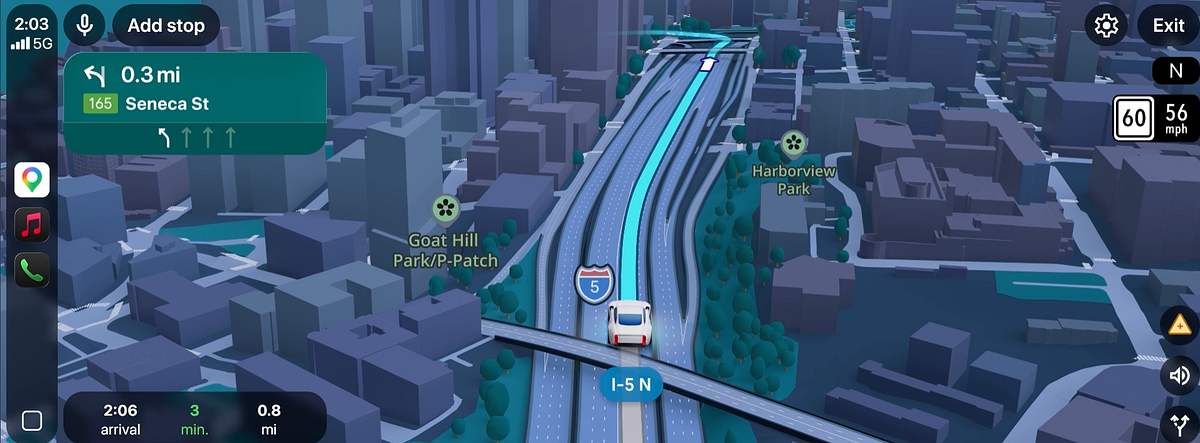
This spatial understanding is made possible by Gemini models analyzing fresh, real-world imagery from Street View and aerial photos. Every building you see rendered in 3D as you navigate was not manually modeled by a designer. It was assembled by an AI system that looked at Street View imagery and understood the physical structure well enough to recreate it at scale. The fact that this is now possible at the resolution needed for real-time navigation represents a genuine engineering achievement.
The voice guidance has also been overhauled, and the change is subtle but significant in daily use. Instead of the clipped, robotic instructions that have characterized GPS navigation since the 1990s, the new voice guidance sounds more natural and contextual, providing directions in phrases like telling you to go past this exit and take the next one for a specific road. That shift from coordinate-based instruction to spatial reasoning instruction sounds minor until you realize it is the difference between a system that tells you where to turn and a system that helps you understand where you are.
Google describes it as guidance that sounds like a friend navigating with you. That comparison is more precise than it might seem. A friend giving you directions in a car does not say “in three hundred feet, turn right.” They say “go past the gas station and turn at the Walgreens.” The new voice system is attempting to reason about landmarks and spatial relationships the way a human passenger would.
The Arrival Problem Nobody Had Fully Solved
There is a specific kind of stress that every person who has used GPS navigation knows. You have been following a blue line for forty minutes. The voice has said you have arrived. But the destination is a complex in a block of identical buildings, or a hospital with six entrances, or an office park where every building looks the same. The navigation got you to within fifty meters of where you needed to be and then abandoned you.
Google has now addressed this directly, and the solution is more thoughtful than simply making the final pin more accurate.
Before starting a journey, users can preview the destination and its surroundings with Street View imagery and get recommendations for where to park. As drivers approach the destination, Maps will highlight the building’s entrance, nearby parking, and which side of the street to be on, so the journey goes from the last turn to the front door with real confidence. The tool also receives more than ten million community contributions every single day about real-time disruptions including road construction, crashes, and hazards, and now communicates alternate route trade-offs explicitly, explaining whether a different path is longer with less traffic or faster but with a toll.
Every second, Maps incorporates over five million updates to traffic around the world. That figure is worth sitting with. Not per day, not per hour. Per second. The data infrastructure required to ingest, process, reason about, and surface that volume of real-time signal in a coherent navigation experience is staggering. The new update does not just inherit that capability; it exposes more of it to users than any previous version of Maps has done.
Where It Is Available Right Now and What Comes Next
Both features launched on March 12, 2026, with initial availability on mobile in the United States and India. The rollout then expands over the coming months to eligible iOS and Android devices worldwide, as well as Apple CarPlay, Android Auto, and vehicles with Google built-in. Desktop support for Ask Maps is also coming.
The in-car expansion is particularly significant. Drivers spend more time in their vehicles with navigation active than almost any other context in which they use Google Maps. Getting Immersive Navigation onto in-car screens transforms the driving experience for a much larger population than smartphone-only users. The Android Auto and CarPlay integration also means the update reaches people who do not think of themselves as Google Maps users specifically, simply because the map they use most is the one their car defaults to.
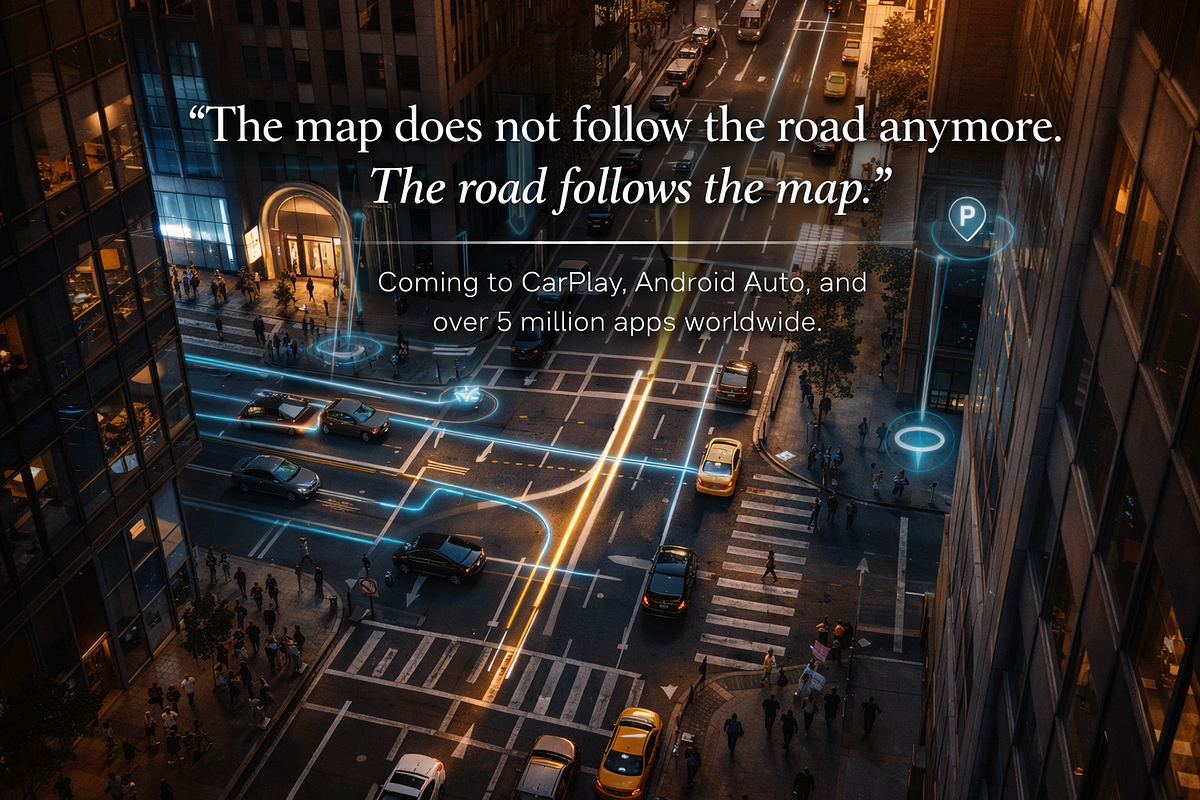
For developers and businesses, the implications of Ask Maps are considerable. Google Maps operates over five million active apps and websites using its API, and the behavioral change in how users find places through conversational queries rather than keyword search will reshape the map between what a business does online and how customers discover it. A business that previously focused on having the right Google Maps category and correct business hours now needs to think about the signals that Gemini weighs when answering questions like “where should I grab dinner that is not too loud and has good vegetarian options?” That is a different optimization problem, and it is one most small business owners are not yet thinking about.
The Competition: Where Apple Maps and Waze Stand Now
Understanding what this update means requires understanding the competitive landscape Google is operating in, because the gap between Maps and its nearest alternatives has both widened and narrowed in interesting ways.
Google Maps commands over 67 percent of the US navigation market, with more than one billion monthly users globally. The navigation app sector generated twenty-one billion dollars in revenue in 2024, with Google Maps leading the charge. Apple Maps holds approximately 25 percent of the US market and has closed the quality gap considerably since its disastrous 2012 launch, but its structural limitation remains that it exists only within Apple’s ecosystem. There is no Android version, and there is unlikely ever to be one. That ceiling limits how much competitive pressure Apple Maps can place on Google regardless of how good the product becomes.
Waze, which Google has owned since acquiring it for 1.3 billion dollars in 2013, holds around 8 percent market share in the US but punches above its weight in community-driven traffic intelligence. In Europe, Waze’s popularity is growing, and for drivers in congested urban environments, Waze’s crowdsourced hazard reporting and speed trap notifications remain features where it has a genuinely different approach from Google Maps. Users consider Waze around 30 percent more effective than Google Maps for speed trap warnings specifically, which tells you something about the depth of its community engagement in that specific use case.
The honest competitive picture is that neither Apple Maps nor Waze is close to matching what Google just announced. Apple Maps’ 3D city experience was genuinely impressive when it launched, and it introduced building-level navigation and Look Around, which is its answer to Street View. But Apple’s pace of development has slowed noticeably. Its incident reporting has poor adoption because the user base that makes crowdsourcing work requires volume, and Apple Maps simply does not have the volume to sustain it outside its strongest markets.
TomTom, HERE, and Sygic remain relevant in enterprise and automotive contexts, particularly for manufacturers who prefer not to depend on Google or Apple for navigation in connected vehicles. But none of them have the consumer-facing AI layer that Google has just deployed, and building that layer requires the kind of data accumulation that takes decades and billions of active users to achieve.
The Questions the Update Does Not Answer
Being honest about what this update does not clarify matters as much as celebrating what it delivers.
The monetization of Ask Maps is the largest open question in the product. Google built a two-trillion-dollar company on the principle that people searching for things are people ready to spend money, and advertising against that intent is extraordinarily lucrative. The conversational format of Ask Maps is, in a sense, even higher-intent than a Google search. If you ask Ask Maps to find you a restaurant for a special dinner tonight, you are not browsing. You are almost certainly going to spend money somewhere. The temptation to monetize that intent through promoted placements is enormous, and the consumer trust cost of doing so poorly is real.
The privacy dimension is also worth naming. Ask Maps by design draws on a user’s activity and past searches to personalize its recommendations. That personalization is what makes the product useful. It is also a significant data footprint that Google accumulates about where you go, what you search for, and what decisions you make afterward. For users who have been cautious about Google’s data practices, the conversational interface of Ask Maps generates richer behavioral signals than keyword search ever could.
Finally, the quality gap between Ask Maps demos and Ask Maps in daily use by hundreds of millions of people is an open empirical question. Google’s AI features have occasionally launched impressively and degraded noticeably under real-world conditions at scale. The 300 million place database is deep, but community-generated reviews are uneven in quality, and Gemini’s ability to synthesize conflicting or incomplete data into useful conversational answers will be tested much more aggressively in production than in any controlled demonstration.
What This Update Is Really Arguing For
Strip away the feature list and what Google is actually making an argument about is what a map is for.
The traditional answer is orientation: a map tells you where things are and how to get between them. The entire design philosophy of flat maps, turn-by-turn directions, and searchable pins is built around that definition. You know what you want. The map helps you find it.
Ask Maps is built around a different definition of what a map is for. Sometimes you do not know what you want. You know your situation, your constraints, and the kind of experience you are looking for. You know your phone is dying and you need coffee and you cannot wait in a line. A traditional map cannot help you. A product that understands situations rather than queries can.
That shift from answering questions to understanding situations is the most important thing Google announced on March 12, 2026. It is also the design direction that will reshape local commerce, urban movement, and how people make thousands of small decisions about where to go and what to do every single day.
Google Maps has spent twenty years becoming the most comprehensive geographic database ever assembled. What just launched is the interface that finally does justice to it.
What This Means If You Are a Casual User, a Business, or a Developer
For the casual user, the practical change is that the question “where should I go?” now has a genuinely useful place to go. You will stop opening four apps to plan an evening out. You will stop feeling abandoned by GPS when you arrive at a complex address. You will start noticing that the map feels less like a lookup tool and more like something that helps you think through a situation.
For small business owners, the urgency is in understanding how Gemini decides what to recommend in conversational queries. Having accurate information in Google Business Profile was always important. Now it is critical. The signals Gemini weighs when answering a natural-language question are not identical to the signals a keyword search algorithm weighs. Recency of reviews, specificity of information, quality of photos, and clarity of attributes like noise level, parking availability, and wait times are likely to matter more in conversational recommendations than in traditional map search. Getting ahead of that shift before your competitors do is a concrete business advantage.
For developers building on the Maps API, the behavioral shift in how people discover and navigate to places means that the map integration in your app or website needs to evolve. Users who have become accustomed to conversational discovery in the native Maps app will expect something more intelligent than a standard map embed in third-party products. The pressure to build smarter local discovery experiences into apps and services is going to increase as the baseline expectation rises.
The Closing Thought: Twenty Years of Data, Finally Put to Work
Google Maps launched in 2005 as a website that let you look at a street map and get directions. It was remarkable at the time. It is still remarkable to think about how much has been built on top of that original premise over two decades.
Five million traffic updates per second. Ten million community hazard reports per day. Three hundred million places indexed. Five hundred million contributors. More than ten million miles of Street View road coverage. This is an infrastructure project of almost incomprehensible scale, quietly assembled while billions of people used the product to find parking, navigate airports, and argue about the fastest way to get somewhere.
The March 2026 update is the moment when all of that accumulated infrastructure finally gets an interface capable of accessing it fully. The flat blue line was the best interface available for twenty years. Gemini-powered conversation, 3D spatial navigation, and situational awareness are the best interface available now.
The map has not been replaced. But the act of using one has changed permanently.