On the evening of March 21, 2026, Elon Musk walked onto the stage of a defunct power plant in downtown Austin, Texas, and announced what he called “the most epic chip building exercise in history by far.” The venue choice felt almost theatrical — a dead industrial relic, repurposed to announce something that’s supposed to resurrect American manufacturing at a scale the world has never seen.
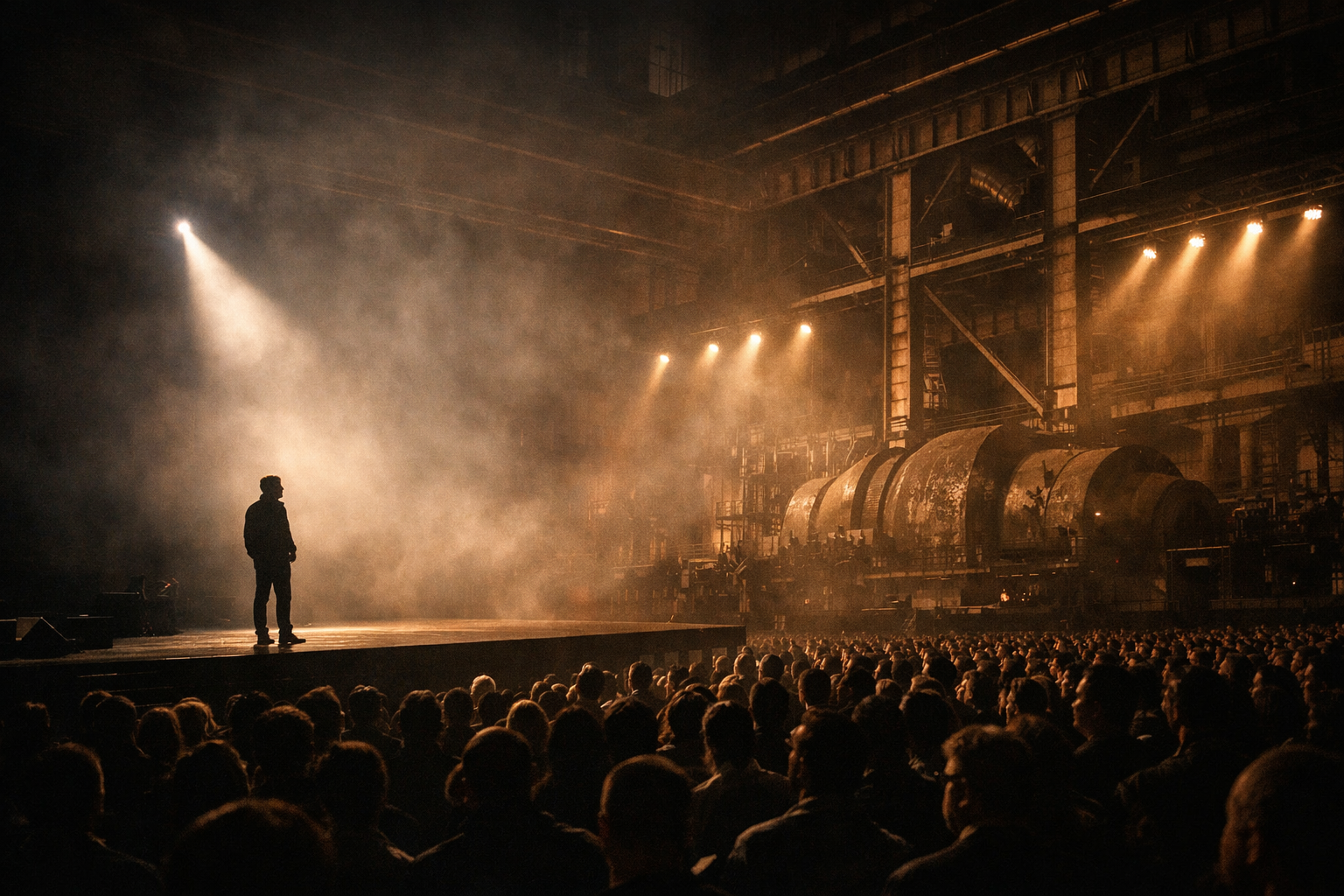
This is Terafab. A joint venture between Tesla, SpaceX, and xAI, priced between $20 and $25 billion, designed to produce one terawatt of AI computing power every single year. To put that in perspective: TSMC, the Taiwanese company that makes chips for Apple, Nvidia, and essentially every major tech firm on Earth, produces roughly 1.4 terawatts of compute capacity globally across all its facilities. Musk wants to match a substantial slice of that, from one building, operated by companies that have never fabricated a chip.
Whether you find that thrilling or alarming probably says something about how you’ve been following Elon Musk’s career. Both reactions are completely reasonable.
What Exactly Is Terafab?
The name isn’t subtle. “Tera” refers to the terawatt compute target, and “fab” is shorthand for fabrication facility — the industry term for a semiconductor factory. What makes Terafab different from a typical chip factory isn’t just its size; it’s the scope of what Musk wants to bring under a single roof.
Most fabs in the world specialize. TSMC handles logic chips. Micron handles memory. Advanced packaging — the process of stacking and connecting different chips together — often happens at a third facility. Terafab’s stated goal is to do all of it. Logic processing, memory production, and advanced packaging in one vertically integrated operation, located near Tesla’s Giga Texas campus on the north side of Austin.
The facility will produce two distinct chip families. The first is called AI5, an inference chip built for terrestrial use — primarily to power Tesla’s Full Self-Driving software, the Cybercab robotaxi program, and the Optimus humanoid robots that Musk expects to eventually outnumber Tesla’s car production by a factor of ten to one hundred. The second chip, designated D3, is engineered for space. It’s a radiation-hardened processor designed to run inside the satellite-based AI data centers that SpaceX has been planning since January, when it filed a request with the Federal Communications Commission to launch one million data center satellites into low Earth orbit.
Musk framed the whole thing as non-negotiable. Current suppliers — Samsung, TSMC, and Micron — are running near capacity. At Tesla’s Q4 2025 earnings call, he told investors that external chip production would hit a hard ceiling within three to four years, and that even in the best-case scenario for supplier expansion, it wouldn’t come close to what Tesla and SpaceX need. His exact words from the Austin event sum it up cleanly: “We either build the Terafab or we don’t have the chips.”
The Numbers, and Why They’re Staggering
Let’s sit with the scale for a moment, because it’s easy to let big numbers wash over you.
Terafab’s initial production target is 100,000 wafer starts per month. That’s comparable to a large TSMC facility — Samsung’s nearby Taylor, Texas fab, which cost roughly $17 billion to build, operates at a similar scale. So the starting point is ambitious but not ludicrous. The full-scale ambition, however, is 1 million wafer starts per month. That would represent somewhere around 70% of TSMC’s entire current global output. From one building.
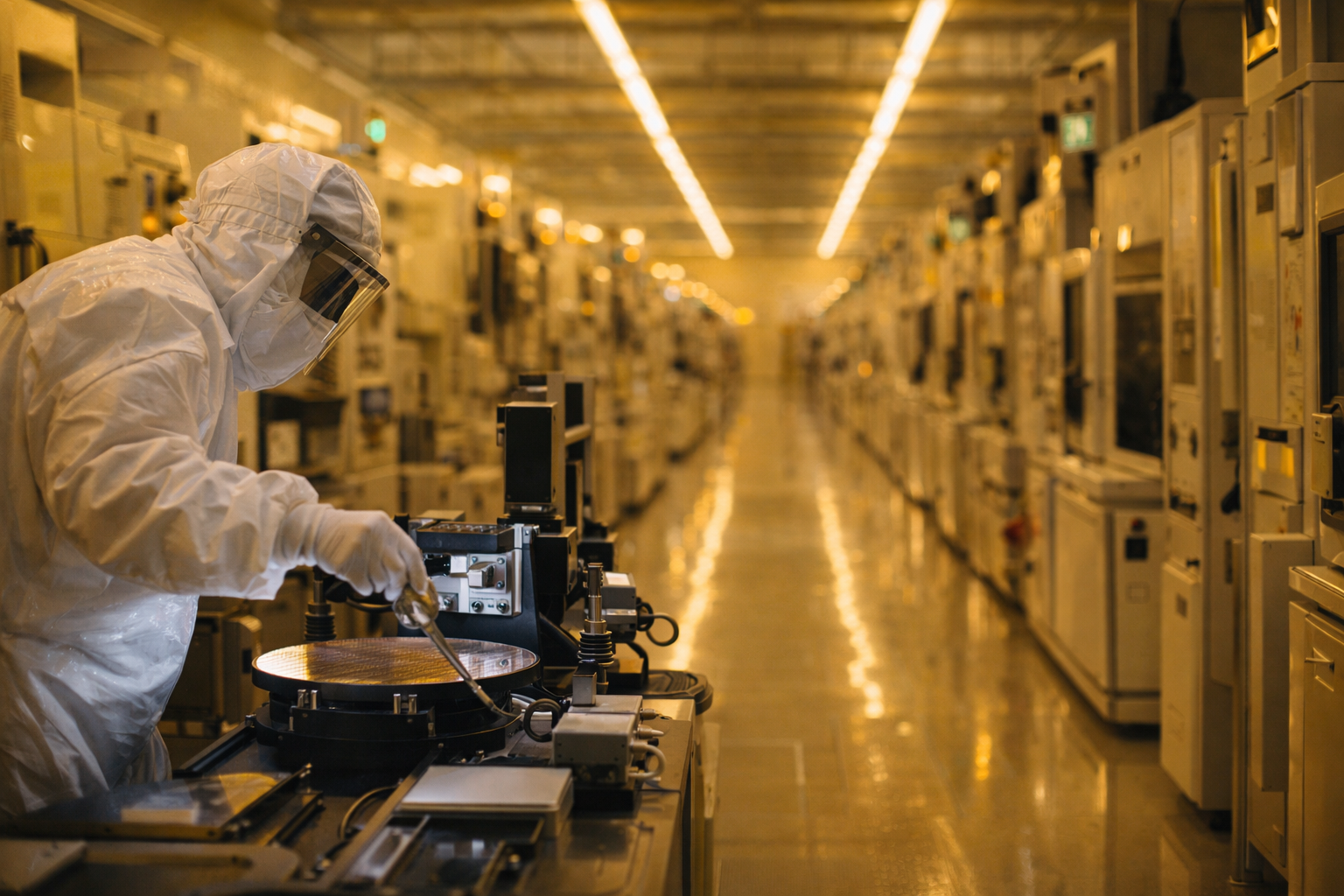
The cost estimate sits at $20 to $25 billion for the Terafab facility itself. That’s on top of Tesla’s already-announced capital expenditure plan for 2026, which exceeds $20 billion and, as Tesla’s CFO acknowledged in January, does not yet include the full Terafab cost. Tesla ended 2025 with $44 billion in cash. The math gets tight fast.
For a process technology comparison: TSMC spent $165 billion and several years building six fabs in Arizona, and those facilities won’t reach 2-nanometer production until 2029. A single 2nm fab with 50,000 wafer starts per month costs roughly $28 billion and takes about 38 months just to construct in the United States. Terafab, if it reaches its full production ambition, would require capital and construction timelines that don’t yet have public estimates attached to them.
Musk gave no specific timeline during the Austin presentation. He mentioned 2nm as the target process node in earlier statements but didn’t repeat the figure on stage. That ambiguity is worth paying attention to.
The Honest Case For Skepticism
Here’s where intellectual honesty matters. Terafab is being announced by a man with an extraordinary track record of bold visions and a mixed track record of actually delivering them on schedule.
In September 2020, Musk stood on a different stage and promised a manufacturing revolution with Tesla’s 4680 battery cell. Production would ramp to 10 gigawatt-hours within a year. Costs would drop by 50% through a new “dry electrode” process. Five and a half years later, the 4680 program has been revised six or seven times, the dry electrode process took far longer than promised, and Tesla’s own top battery supplier publicly said Musk doesn’t fully understand how to make battery cells. The terawatt battery target Musk mentioned for 2030 remains a distant aspiration.
Chip fabrication is considerably harder than battery manufacturing. TSMC took decades and hundreds of billions of dollars to develop the institutional knowledge, the tool calibration expertise, the yield optimization techniques, and the supply chain relationships that allow it to produce 2nm chips reliably. Tesla has zero semiconductor fabrication experience. SpaceX has designed chips for space applications, but designing and fabricating are two entirely different disciplines.
That said, dismissing Terafab entirely would also be a mistake. Musk has a habit of saying things that sound impossible and then building something that gets partway there — sometimes far enough that it reshapes an industry anyway. Tesla didn’t invent the electric car, but it forced every major automaker to rethink their entire product roadmap. SpaceX didn’t invent rockets, but it made reusable launch vehicles standard practice when the industry said it couldn’t be done. Terafab doesn’t need to hit every target Musk described on stage to matter.
What This Really Means for the AI Supply Chain
The broader context here is a chip supply crunch that isn’t hypothetical — it’s already happening. Every major AI company is competing for access to the same fabrication capacity at TSMC and Samsung. Nvidia’s H100 and B200 GPUs have faced allocation shortages since 2023. Microsoft, Google, Amazon, and Meta are all designing their own AI chips partly because they can’t get enough of anyone else’s.
Musk’s situation is more acute than most because his compute requirements come from three directions at once. Tesla needs chips for vehicles and robots. xAI — now a wholly owned subsidiary of SpaceX following a February 2026 acquisition — operates the Grok AI system and continues expanding its training infrastructure, with a Memphis facility already running at two gigawatts and a third building under construction. SpaceX needs space-hardened processors for its satellite constellation ambitions at a scale that no existing supplier makes in volume.
If Terafab produces even a fraction of its stated capacity, it would reduce the company’s exposure to TSMC pricing, geopolitical risk around Taiwan, and the simple reality that chip suppliers have their own competing customers to serve. Vertical integration at this scale would give Tesla-SpaceX-xAI a chip supply that responds to their priorities alone — which, for a company building autonomous vehicles, humanoid robots, and orbital data centers simultaneously, isn’t a trivial advantage.
The Wildest Part of the Announcement
People are understandably focused on the terrestrial factory, but the most genuinely strange part of the Terafab event was what came after it.
Musk showed a rendering of a “mini” AI data center satellite — a compact spacecraft capable of 100 kilowatts of continuous computing power, fed by solar panels with constant sunlight exposure in low Earth orbit. He said future versions could reach the megawatt range. And then, almost as an aside, he mentioned establishing an industrial base on the Moon to eventually unlock petawatt-scale computing — one thousand times greater than the terawatt target for Terafab on Earth.
You could read that as grandiose showmanship. You could also read it as a coherent long-term thesis: that space-based computing, powered by uninterrupted solar energy and with launch costs falling as SpaceX’s Starship becomes fully reusable, will eventually be cheaper than building and powering data centers on the ground. Musk explicitly argued that point, noting that low Earth orbit provides constant solar exposure that terrestrial facilities simply can’t match.
Whether that’s visionary or speculative probably depends on your time horizon. Over ten years, it’s speculative. Over forty years, it might be the most logical infrastructure bet anyone is making right now.
What Comes Next
Terafab is officially launched. What that means in practical terms is that plans exist, land near Giga Texas has been identified, and Musk has publicly committed Tesla, SpaceX, and xAI to the project. Samsung’s Taylor, Texas facility has confirmed it will produce Tesla’s AI5 chips as part of the supply strategy while Terafab is built — with volume production expected in late 2027.
What doesn’t exist yet: a construction timeline for the main Terafab building, a confirmed equipment procurement plan, a partnership with a lithography vendor like ASML (whose extreme ultraviolet machines are required for 2nm production and cost roughly $400 million each), or a public accounting of how the $20–25 billion will be funded across three companies.
The next twelve months will tell us whether Terafab is a serious infrastructure project or an extremely expensive press release. Ground needs to break. Equipment needs to be ordered. And Tesla’s core auto business — which saw its second consecutive annual sales decline in 2025 — needs to stop bleeding market share long enough to fund all of this.
If it works, Terafab could give Musk’s companies a chip advantage that no competitor can easily replicate. If it doesn’t, it will join the long list of announced projects that were quietly revised into something smaller, slower, and less epic than the stage presentation suggested.
Either way, the ambition is real. And ambition, whatever else you say about it, tends to move industries — even when the original plan falls apart.