The fluorescent lights of the data center still hum, but the meaning of that sound has changed over time. What once represented confidence and stability now carries a more complex emotional weight. In earlier years, that hum signaled that systems were operating smoothly, users were unaffected, and the invisible machinery of software delivery was quietly doing its job. For many engineers, it became the background soundtrack of progress.
DevOps engineers learned to interpret that sound with instinctive precision. Long before dashboards confirmed it, they could sense when something was drifting toward failure. Their expertise was not born from theory or certification but from production incidents, migrations, and moments when documentation ended and judgment took over. Over time, this deep operational understanding made them some of the most trusted individuals within an organisation.
That trust, however, came with an unspoken cost.
When Progress Begins to Feel Heavy
By 2026, infrastructure is more automated than at any previous point in the industry’s history. Continuous deployment pipelines run with minimal human intervention. Autoscaling responds instantly to demand. Infrastructure that once required weeks of planning can now be provisioned and destroyed in minutes. From a distance, this appears to be an unqualified success.
Yet the lived experience of many engineers tells a different story. Alerts arrive constantly, often stripped of meaningful context. Incidents cascade across services that were never designed to fail together. Engineers find it increasingly difficult to disengage, even outside of working hours, because the systems they support feel perpetually fragile.
This exhaustion is not a sign of failure or incompetence. It is the result of success layered upon success. Automation removed manual effort, but it also accelerated change. Systems now evolve faster than human intuition can comfortably follow, increasing responsibility rather than reducing it.
The Hidden Cost of Extreme Flexibility
Modern cloud infrastructure is extraordinarily flexible. Teams can choose from countless configuration options, deployment patterns, networking models, and security policies. This flexibility enables experimentation and innovation, but it also introduces a constant stream of decisions that must be made correctly.
Each configuration choice introduces uncertainty. Each uncertainty introduces risk. As systems scale, those risks compound in ways that are difficult to predict. A small misconfiguration in one service can ripple outward and impact dozens of others, often in unexpected ways.
DevOps engineers gradually became the people who understood these hidden interactions. Through experience, they learned which combinations were safe and which were dangerous. This knowledge was rarely written down, because it was difficult to articulate and constantly changing. Organizations came to rely on this implicit expertise without ever fully acknowledging how much cognitive load it required to maintain.
The Ceiling of the Generalist Era
DevOps emerged with a powerful promise of shared responsibility. Developers would understand operations, and operations would understand development. Silos would dissolve, and teams would move faster through collaboration rather than handoffs. For a time, this vision worked remarkably well.
However, as systems grew larger and more interconnected, the expectation that individuals could understand everything began to collapse under its own weight. The breadth of required knowledge expanded faster than any single person could realistically keep up with. Generalism, once empowering, began to feel overwhelming.
Engineers were forced to constantly switch contexts. One moment required debugging a networking issue, the next optimising a CI pipeline, followed by a security review or a cloud cost analysis. Each task demanded a different mental model, and none allowed for sustained focus. Productivity declined not because engineers lacked skill, but because attention itself became fragmented.
Cognitive Load as the True Bottleneck
A modern developer is now expected to write application logic while also understanding container orchestration, cloud networking, identity and access management, observability pipelines, security baselines, and cost implications. Each of these domains evolves rapidly and demands continuous learning. Combined, they create a constant background pressure that is difficult to ignore.
DevOps teams attempted to mitigate this pressure by building abstractions. Scripts automated common workflows. Templates standardized deployments. Documentation attempted to capture institutional knowledge. Each effort reduced friction in isolation, but none addressed the underlying issue.
Complexity was not eliminated. It was redistributed and concentrated around the engineers who built and maintained the abstractions. When assumptions broke or edge cases emerged, those engineers became the only ones capable of resolving the issue. Over time, they became accidental gatekeepers, not because they wanted control, but because the system required it.

Platform Engineering as a Structural Correction
Platform Engineering emerges as a response to this imbalance. It does not reject DevOps principles; instead, it completes them. It acknowledges that infrastructure has become too critical and too complex to be managed through informal heroics and ad hoc support models.
The fundamental shift is conceptual. Infrastructure is treated as a product rather than a service. Products have users, interfaces, and guarantees. They are designed intentionally, tested continuously, and improved based on feedback.
An Internal Developer Platform creates a clear boundary between intent and execution. Developers express what they want to build, and the platform determines how that intent is realized safely within organizational constraints. This separation allows autonomy to coexist with consistency, restoring sustainability without sacrificing speed.
Making Infrastructure Invisible Without Removing Power
Platforms are not about hiding capability; they are about hiding unnecessary detail. Developers still deploy services, provision databases, Dand expose APIs, but they no longer need to understand every underlying mechanism to do so safely.
Frameworks like Backstage make internal capabilities discoverable and standardized instead of relying on tribal knowledge. Infrastructure tooling such as OpenTofu preserves declarative control while reducing drift and ambiguity. Orchestration systems like Kubernetes remain foundational, but they fade into the background of daily work.
The platform becomes the primary interface, while infrastructure becomes an implementation detail that supports it rather than dominates it.
How Treating Infrastructure as a Product Changes Behavior
When infrastructure is treated as a product, the definition of success changes. Reliability remains important, but it is no longer sufficient. Developer confidence, consistency, and velocity become equally meaningful indicators of platform health.
Platform engineers begin to think about onboarding friction, error clarity, and recovery paths. They invest in sensible defaults that guide behavior naturally instead of relying on policies that punish mistakes after they occur. Security and compliance become built-in features rather than separate review processes.
Cost awareness also shifts left into everyday workflows. Engineers understand the implications of their decisions at the moment they make them, rather than discovering surprises weeks later. The system itself encourages responsible behavior without requiring constant oversight.
The Golden Path as a Trust Mechanism
The Golden Path is often misunderstood as a restriction imposed by centralized teams. In practice, it functions as a trust mechanism between platform engineers and developers. The platform provides a safe, well-observed path that reflects collective experience and organizational risk tolerance.
Developers are free to deviate when necessary, but doing so makes ownership explicit. This balance preserves autonomy while reducing uncertainty. Most teams choose the Golden Path because it removes decision fatigue and allows them to focus on solving meaningful problems rather than infrastructure puzzles.
Trust increases because the platform consistently delivers on its promises.
Releasing the Hero Identity
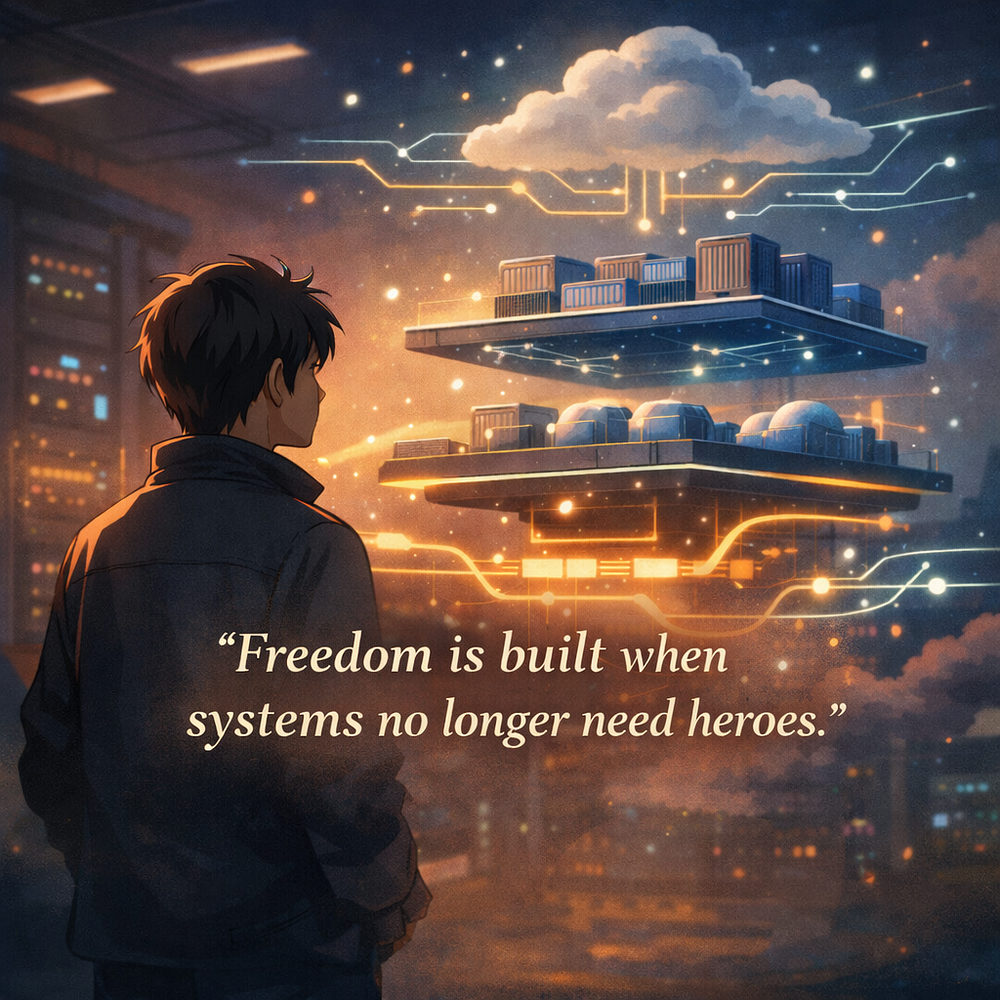
For many senior engineers, the hardest part of adopting platform thinking is psychological rather than technical. Hero culture has long been rewarded in infrastructure work. Being the person who saves production creates recognition and a sense of personal value.
However, heroism does not scale. It creates fragile systems that depend on individuals and fragile people who never fully disengage from work. Platform engineering asks engineers to trade visibility for leverage, shifting focus from dramatic recoveries to quiet prevention.
This transition does not diminish an engineer’s importance. It amplifies their impact by allowing their decisions to shape systems rather than moments.
AI as an Amplifier of Intent
By 2026, platforms increasingly incorporate intelligent systems that observe behavior and respond automatically. Failures are predicted before alerts fire. Resources are optimized continuously. Logs are translated into explanations that humans can understand and act upon.
These capabilities do not replace engineering judgment. They depend on it. Platform engineers define the policies, boundaries, and intent that guide automation safely. AI reduces repetitive toil while allowing human attention to focus on design and long-term thinking.
The result is not less responsibility, but responsibility applied at a larger and more sustainable scale.
The Market Has Already Shifted
The industry is quietly reflecting this evolution. Generalist automation skills are becoming standardized and widely available. At the same time, organizations struggle to hire engineers who can think in terms of platforms, products, and human systems.
Internal developer platforms are now strategic assets. They influence developer retention, security posture, delivery speed, and operational cost. Engineers who design and maintain them shape the long-term resilience and adaptability of the organization.
This shift is already underway, whether it is formally acknowledged or not.
From Firefighter to Architect
The highest form of engineering is not the most visible. It is the work that allows others to create without fear, friction, or constant intervention. It is the work that turns infrastructure into a stable foundation rather than a daily concern.
DevOps does not end at the platform. It matures there. Engineers who make this transition are not abandoning their past contributions. They are completing them by moving from reaction to intention, from heroics to architecture.
In doing so, they become architects of freedom.