Last week I was comparing three chatbots side by side, mostly out of curiosity, not because I doubted Claude. My laptop fan was working overtime with all those tabs open. And somewhere in that mess of tabs, Kimi kept coming up in Reddit threads as “the free Chinese one that’s suddenly good.” I ignored it for two days. Then I actually tried it.
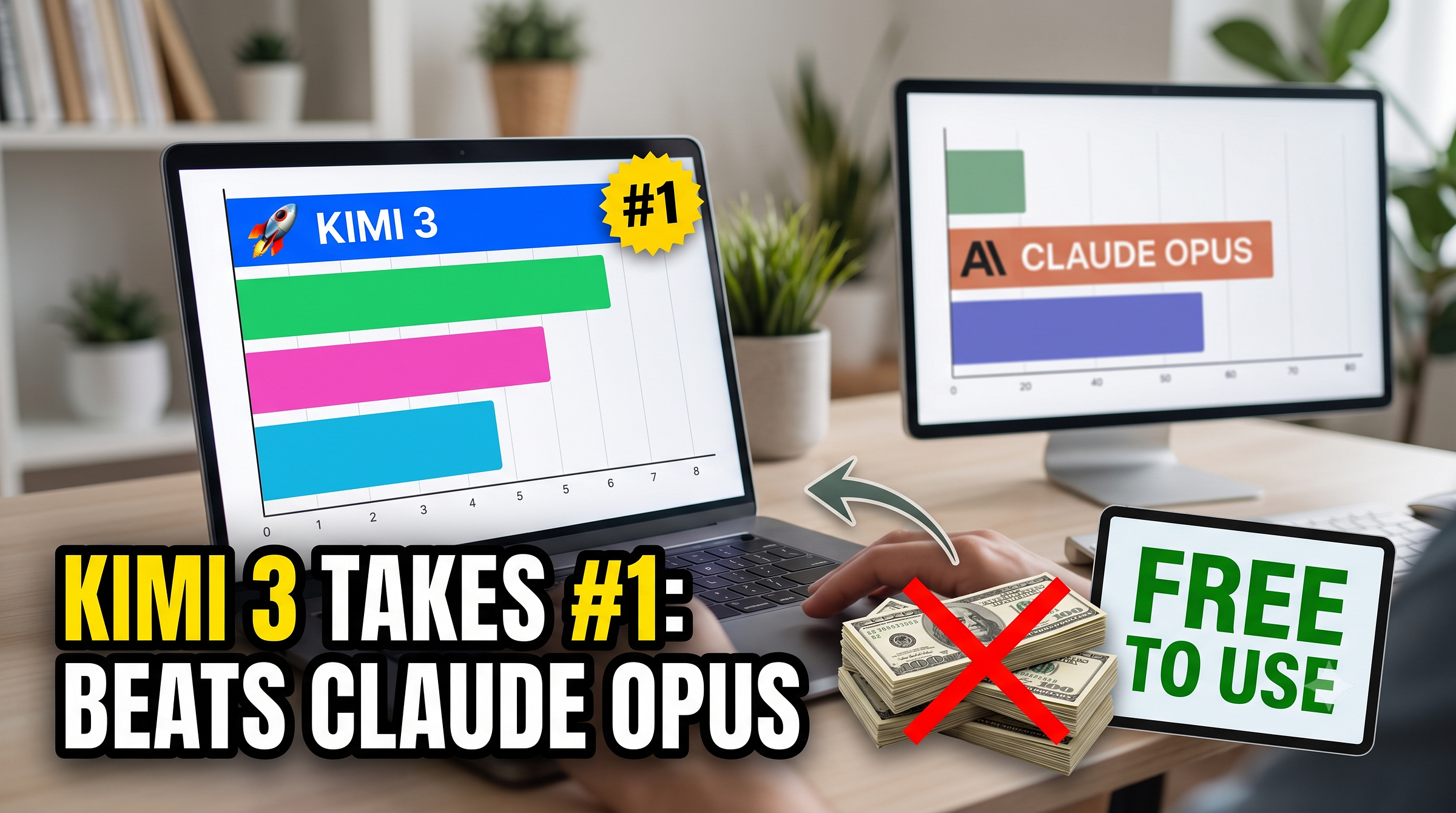
That’s basically why I’m writing this. On July 16, 2026, Moonshot AI, a Beijing startup most people outside China had never heard of two years back, released a model called Kimi K3. And within about 24 hours, independent testers were putting it ahead of Claude Opus 4.8 on several benchmarks. Not tied with it. Ahead of it. That’s a big claim, so let’s slow down and actually look at what’s true, what’s marketing, and whether you should bother switching anything over.
Wait, what is Kimi K3 exactly
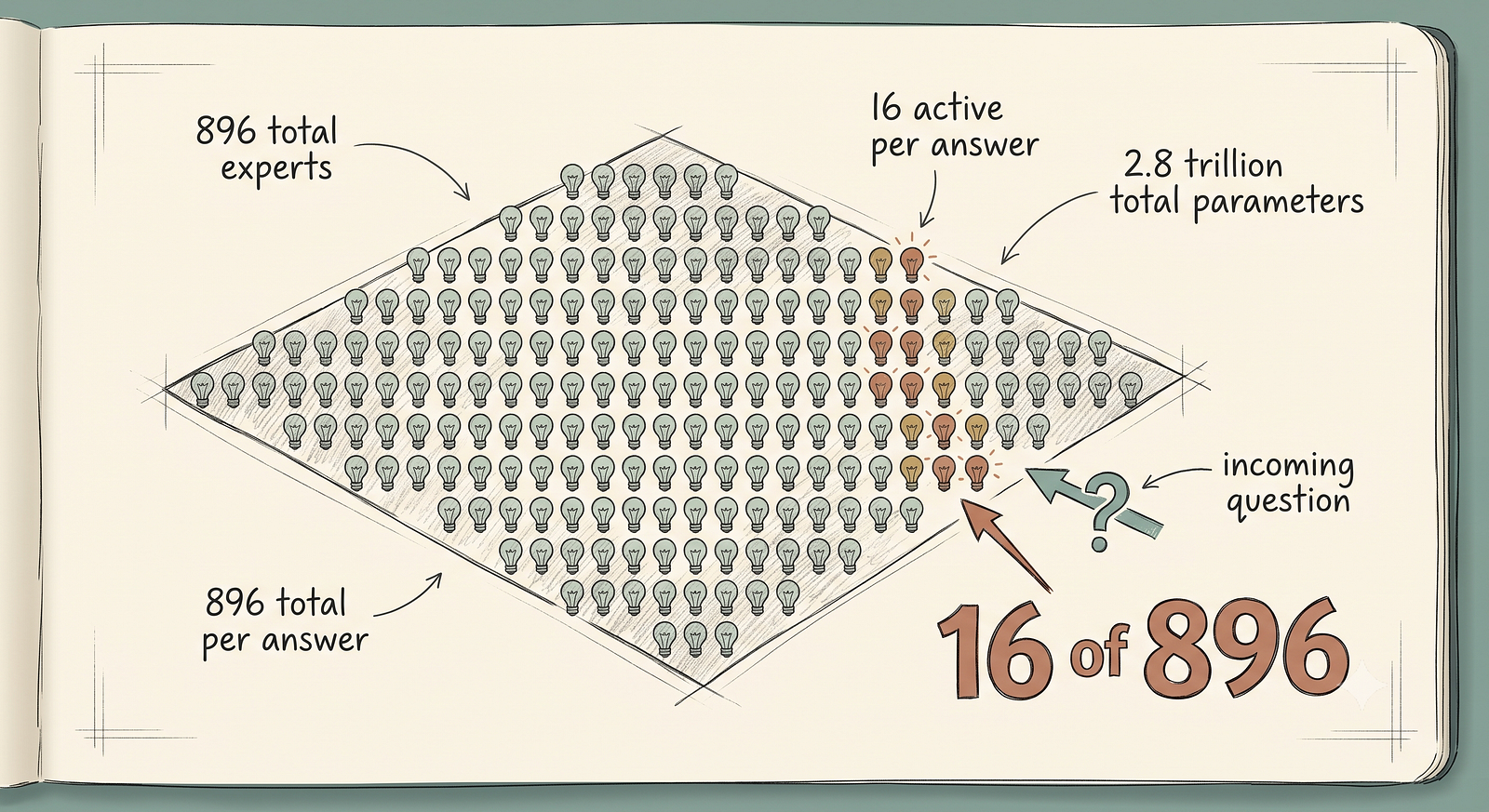
Kimi K3 is a large language model, similar in job to Claude or ChatGPT, built by Moonshot AI. It has 2.8 trillion total parameters, which as of this week makes it the largest open weight model anyone has released. But total parameters is a bit of a misleading number, because K3 uses something called mixture of experts. Only 16 out of 896 “experts” actually switch on for any single response. So the real compute cost per answer is much lower than 2.8 trillion would suggest.
It also has a 1 million token context window, can read images (not just text), and runs with “thinking mode” always turned on, meaning it reasons before answering, similar to how Opus or o1 style models work. You cannot turn thinking off in K3 right now. Moonshot says lighter reasoning modes are coming later.
Here’s the part that got everyone’s attention though. On the Artificial Analysis Intelligence Index, a fairly respected independent benchmark that many labs actually trust more than vendor’s own numbers, K3 scored 57. Claude Opus 4.8 scored 56. Claude Fable 5 scored around 60, and GPT-5.6 Sol scored around 59. So K3 sits fourth overall, just ahead of Opus, just behind Fable 5 and GPT-5.6 Sol. Fourth place among 189 tracked models, for a model that came out of nowhere basically overnight, is not a small thing.
On LMArena’s Frontend Code Arena, where real developers vote blind on which AI writes better website code, K3 actually took the number one spot, beating Claude Fable 5 in 76% of head to head matchups. That’s the specific stat that’s been all over Twitter and Hacker News this week.
But it’s not a clean win, and I don’t want to oversell this
Here’s where I need to be realistic, because a lot of the coverage I’ve read online is doing exactly what I don’t want to do, which is picking the one chart that makes the headline and ignoring the rest.
Out of 14 published benchmarks comparing K3 directly against Claude Fable 5, Fable 5 wins 8 of them and K3 wins 6. Fable 5 is still clearly stronger on things like reading charts and dashboards (CharXiv, 93.5 to 91.3), on economically weighted agent work like GDPval, and on tricky multi file code repair where it holds around a 5 point lead.K3’s wins are concentrated in web browsing research tasks, frontend code, and long horizon agent runs where it edges out Opus 4.8 by a couple points on something called SWE Marathon (42.0 versus 40.0).
So the real one line summary is this: Kimi K3 is now solidly ahead of Claude Opus 4.8 on independent tests, and it’s competitive with, but still behind, Anthropic’s actual best model right now, Claude Fable 5. If someone tells you K3 “beats Claude” without saying which Claude, they’re being loose with the truth.
There’s also a weird rumor floating around, which I’ll mention just because you’ll see it if you go looking. Some researchers on X have speculated that Moonshot may have trained K3 partly using outputs from Claude and other closed models, a process called distillation. Moonshot hasn’t confirmed this and it’s not proven. I’m mentioning it because you’ll run into it, not because I can verify it either way.
Is it actually free though
This is where things get a bit confusing, and I spent way too long untangling it before writing this section, honestly.
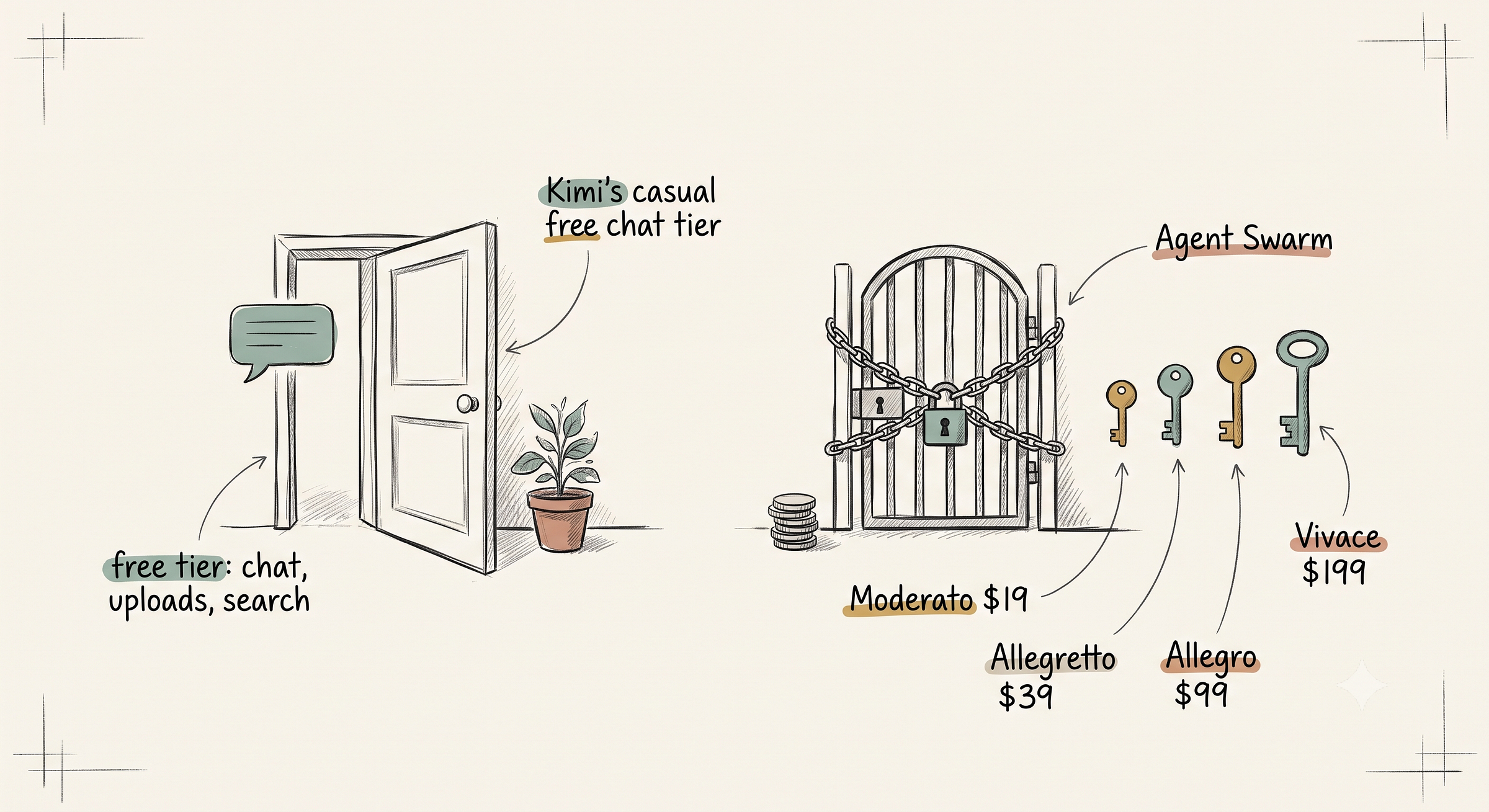
Kimi as an app, at kimi.com, has always had a genuinely free tier called Adagio. You don’t need a credit card. You get chat access, file uploads, and web search. Right now that free tier gives you access to K3 in the chat interface too, though Moonshot doesn’t publish an exact daily quota, so your mileage will vary depending on load.
Where it stops being free is anything heavier. Paid Kimi plans run Moderato at $19 a month, Allegretto at $39, Allegro at $99, and Vivace at $199. These unlock things like Agent Swarm (Kimi’s version of letting hundreds of sub agents work in parallel), Kimi Code credits, and the full 1 million token context (the free tier caps you lower).
Then there’s a separate thing entirely: the developer API, for people building apps or tools on top of K3. That’s billed per token, at $3 per million input tokens, $0.30 per million on cached input, and $15 per million output tokens. That’s roughly Claude Sonnet pricing, not the throwaway pricing Kimi K2.6 used to have last year, where it cost about a sixth of what Claude charged. Moonshot raised prices about 5x on this generation. Worth knowing if you were expecting the old bargain rates.
So: free to chat with, casually. Not free if you’re building a product on it or running it hard through the API.
Should you drop Claude and switch to Kimi
I get why people ask this, and I’ll give you my honest take rather than a “it depends on your needs” cop out.
For everyday chat, writing help, or general questions, Kimi K3’s free tier is genuinely worth having open in another tab. There is no real downside to trying it alongside whatever you already use.
For serious coding work, especially frontend and web app generation, K3 is a real contender right now, maybe even the better pick for pure UI generation tasks going by the Arena numbers.
For anything involving reading dashboards, screenshots, complex multi step agent work with real stakes, or work where you need the single most reliable model regardless of cost, Fable 5 (or even Opus 4.8, which still beats K3 on some agent evals) is probably still your safer bet. I use Claude daily for actual client work and I’m not switching that over on the strength of one launch week’s benchmarks.
Give it a few months to see how K3 holds up outside the launch hype, because vendor numbers on day one and reality three months later don’t always match. Remember K2.6 last year? Big launch, then quietly not as reliable in production as the charts suggested.
Running Kimi K3 on your own machine
If you’re picturing downloading K3 and running it on your gaming PC tonight, I have some bad news for you. You can’t. Not yet, and probably not ever, not on a single machine anyway.
Two separate problems here. First, the open weights for K3 aren’t even out yet as I write this. Moonshot has committed to publishing them by July 27, 2026, along with a technical report. Until then, you access K3 only through the app or the API, full stop.
Second, even once weights land, the hardware math is brutal. For comparison, Kimi’s previous flagship, K2.7 Code (a 1 trillion parameter model, much smaller than K3), needs around 500 to 640GB of combined VRAM at INT4 quantization just to load. That’s something like 4 to 8 high end datacenter GPUs, or a home lab rig with four RTX 3090s and 256GB of system RAM if you’re patient and don’t mind slow output. A single RTX 5090 with 32GB VRAM isn’t even in the same universe, you’d need roughly 20 of them.
K3, at nearly 3x the total parameters of K2.7, will need considerably more. Moonshot’s own recommendation for serving K3 properly is at least 64 accelerators. Some early estimates put the full model’s file size around 594GB just for the download, before you even think about running it. So unless you’re running a small data center or renting cloud GPUs by the hour on something like RunPod or Vast.ai, this one stays in “look but don’t touch” territory for home users. If you genuinely want a Kimi model you can run at home today, K2.7 Code is the realistic option, and even that needs serious iron.
A quick history of Kimi, because it explains a lot
Moonshot AI was founded in March 2023 by Yang Zhilin along with two Tsinghua University schoolmates, Zhou Xinyu and Wu Yuxin. Yang did his PhD at Carnegie Mellon in just four years and co-wrote two papers, Transformer-XL and XLNet, that a lot of modern language models still owe something to. He named the company after Pink Floyd’s Dark Side of the Moon, his favorite album, and launched it on the record’s 50th anniversary. A small detail, but it tells you the guy running this isn’t just another spreadsheet founder.
Kimi, the chatbot, launched in October 2023 and got popular in China fast because of its long context window, it could read massive documents when most chatbots choked on a few pages. By early 2026 the company had raised something like $1.5 billion and was valued around $4.3 billion.
Then DeepSeek happened, in early 2025, and shook the entire Chinese AI scene, Moonshot included. For a while Moonshot looked like it might get left behind by cheaper, faster moving rivals. It responded by cutting some of its consumer ambitions and putting resources back into the core model. Kimi K2, released mid-2025, was the comeback, a genuinely strong open weight model that developers actually used. K2.5, K2.6, and K2.7 followed through 2026, each one chipping away at the gap with the big US labs. K3, at 2.8 trillion parameters and reportedly raising the company toward a $20 billion valuation with a Hong Kong IPO in the works, is the moment Moonshot stopped being “one of the promising Chinese labs” and became a name people outside China actually watch.
Why this matters for the bigger AI race, not just one model
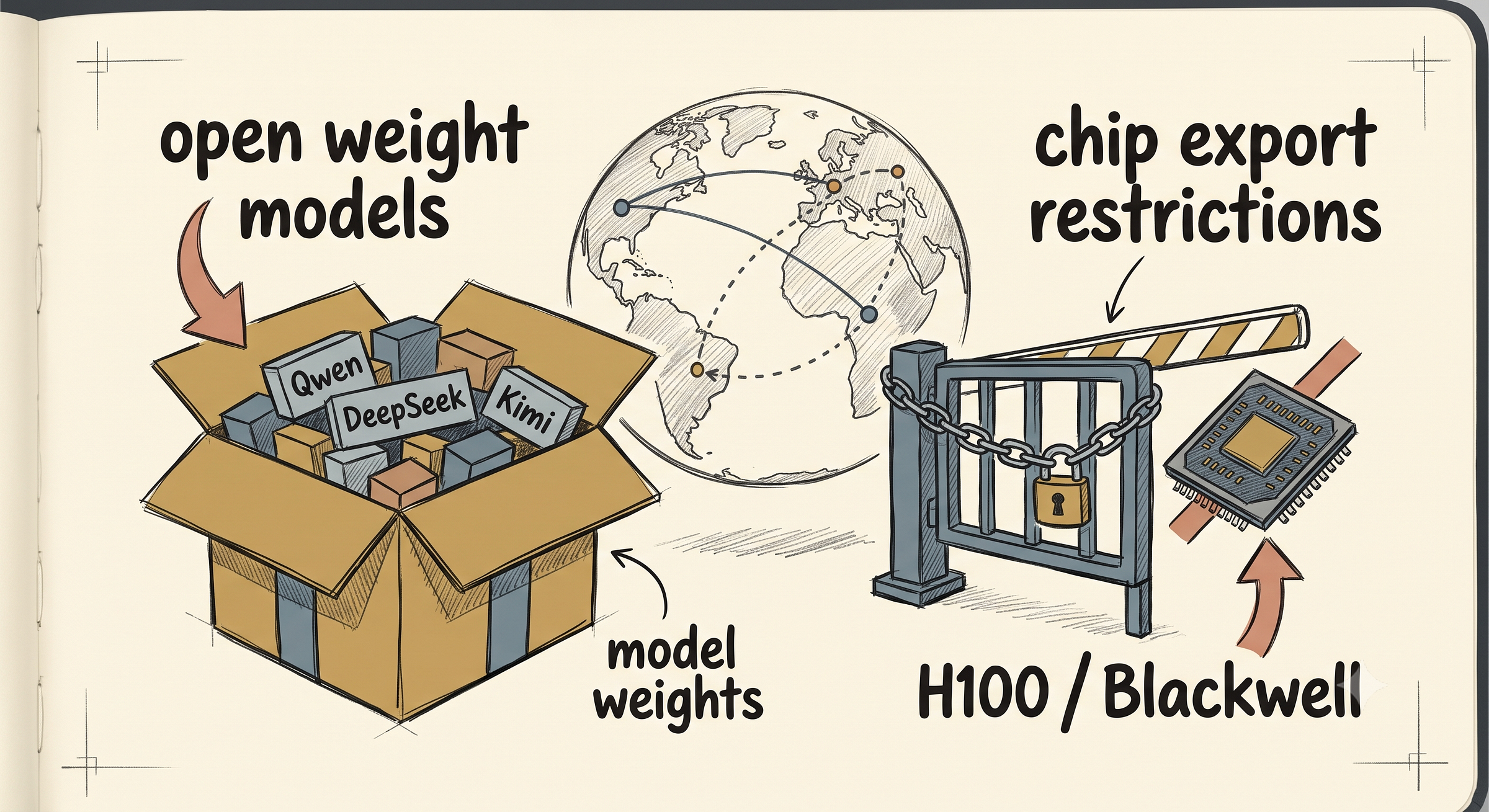
Here’s the thing people dont see when they only look at one benchmark chart. China’s AI strategy right now isn’t really about beating the US on raw intelligence scores model by model. It’s about giving away models for free, or near free, faster than anyone else, and letting the whole world build on top of them the way developers built on Nvidia’s CUDA for years.
Alibaba’s Qwen model family passed a billion cumulative downloads on Hugging Face by March 2026, more than every other lab combined some months. DeepSeek’s V4, released in April 2026, kept up the same open weight playbook. Moonshot, with K2 and now K3, is doing the same thing, just at a bigger scale than before. China’s government has openly called this strategy out loud, Premier Li Qiang said at Davos last year that China’s approach to AI is “open and open source.” That’s a deliberate policy stance, not an accident.
And this is happening while the US keeps tightening chip export controls. Nvidia’s most advanced GPUs, the H100, the newer Blackwell chips, are all restricted for sale into China. Chinese labs keep pushing domestic alternatives like Huawei’s Ascend chips, but the honest picture, based on reporting from outlets like the Council on Foreign Relations and Tom’s Hardware, is messier than either side likes to admit. DeepSeek reportedly tested Ascend chips for training and found them not good enough, then went back to smuggled Nvidia hardware for at least part of its training runs. So the “China trained a frontier model on zero American chips” story you sometimes see isn’t quite accurate. Training is still mostly tied to Nvidia silicon one way or another. Inference, running the model day to day, is where domestic chips are becoming more viable.
What K3 actually proves, regardless of who wins each individual benchmark this month, is that the gap between “open, freely downloadable” and “closed, expensive American frontier model” is closing faster than most people in the US tech industry expected even a year ago. That client project I mentioned at the start, by the way, ended up using both Claude and Kimi for different parts of the pipeline. That’s probably where most of us land eventually. Not one winner, just more good options than we had before.
If you’re curious, I’d say go try the free Kimi tier this week while it’s fresh. Worst case, you’ve spent twenty minutes.Best case, you’ve got a genuinely useful second tool sitting next to whatever you already pay for.