So WWDC 2026 happened yesterday June 8 at Apple Park and I think it’s worth actually sitting down and going through what was announced, because the coverage is all over the place. Some people are saying it’s Apple’s best keynote in years. Others are saying Siri is still playing catch-up. Honestly, both are kind of right.
This was also Tim Cook’s last WWDC as Apple CEO. He steps down September 1 and hands the reins to John Ternus, Apple’s head of hardware engineering. Cook ended the keynote with a short personal speech, and apparently wiped a tear — which, fair enough, he’s been doing this for over a decade. Ternus didn’t appear on stage during the keynote itself, but he showed up at Apple’s media dinner on Sunday night the day before and was, by all accounts, mobbed for selfies. So. That’s the vibe.
The short version of what was announced: a completely rebuilt Siri called Siri AI, powered by a custom version of Google’s Gemini model; iOS 27 and all the other “27” software updates; macOS 27 officially named Golden Gate; a bunch of performance improvements that your current phone will actually feel; expanded parental controls; and the end of Intel Mac support. No hardware. No foldable iPhone. No AI glasses. Just software, and a lot of AI.
Siri AI — The Big One
Apple has been promising a smarter Siri since WWDC 2024. At that event, they showed off this vision of a personal, contextual Siri that could do things across your apps. And then basically nothing shipped. At WWDC 2025, Craig Federighi actually said on stage that the new Siri “needed more time to reach our high-quality bar.” Apple then launched Liquid Glass to distract everyone, and it kind of worked iPhone sales were fine. But developers and tech press didn’t forget.
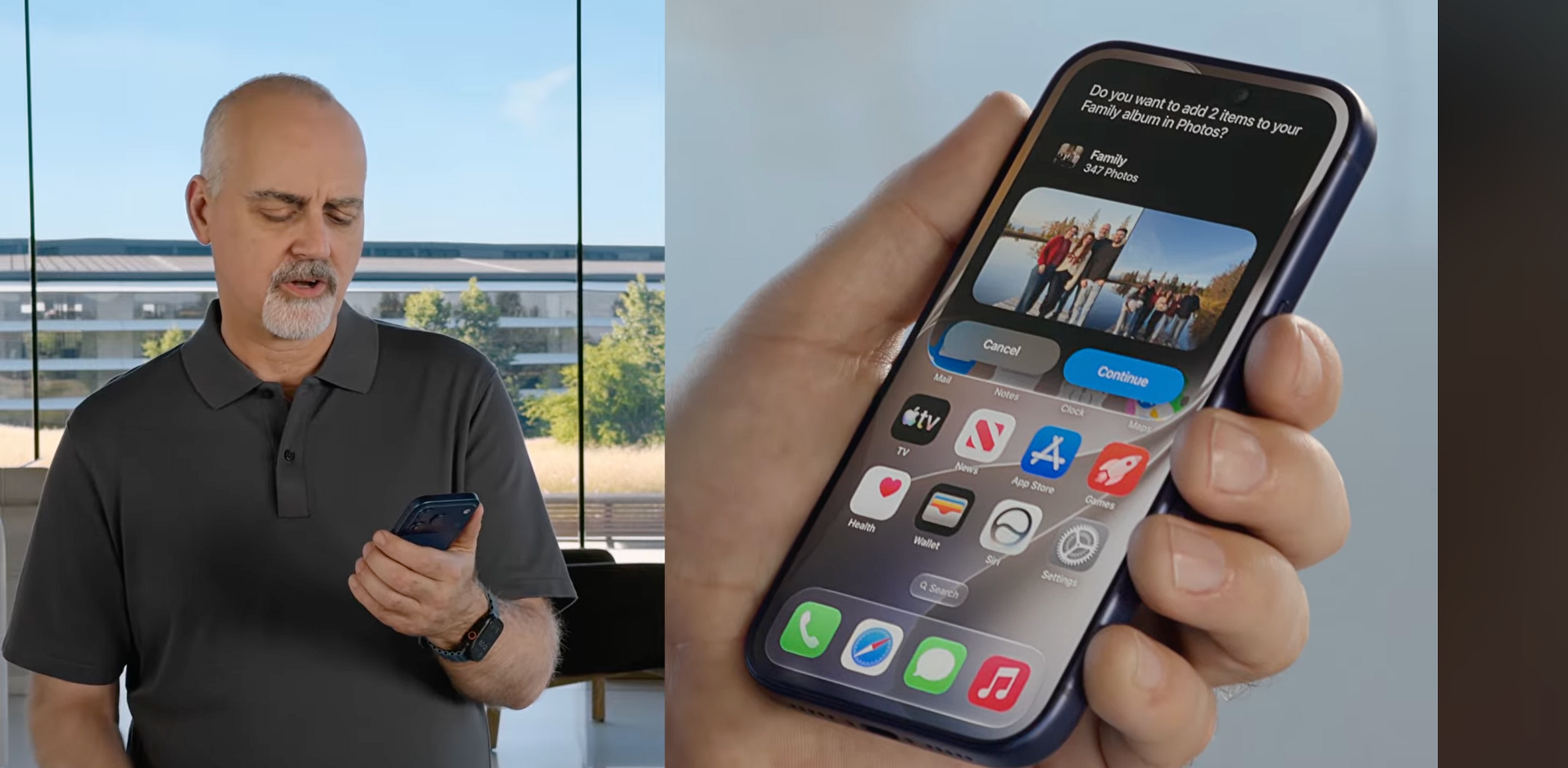
This year, they finally delivered it. The new assistant is officially called Siri AI, and it is genuinely different from the old Siri. It’s powered by a custom 1.2 trillion-parameter Gemini model that Apple is paying Google roughly $1 billion annually to use, which is a weird thing to say out loud at an Apple event — except Apple didn’t say it out loud at all. Google got zero mention on stage, even though Gemini is literally running under the hood. The model is called Apple Foundation Models Cloud Pro internally, and it runs on Nvidia GPUs in Google’s cloud. So yes, Apple’s big AI push is partly running on Google’s infrastructure. I find that kind of funny.
What does Siri AI actually do? A few things. It can now have full back-and-forth conversations you don’t have to phrase things in one shot anymore. It has what Apple calls “onscreen awareness,” meaning it can see what’s on your screen and help you with it. You can ask it to read a message your kid sent in Messages and then ask it to write a follow-up email about that same thing. It chains actions across apps, which is what people have wanted Siri to do for years. There’s also a standalone Siri app now, on iOS 27, iPadOS 27, and macOS Golden Gate. Think of it like having ChatGPT but baked into your phone at a system level.
Voice customization is new too you can adjust how expressive Siri sounds and how fast it speaks. And on iPhones with a Dynamic Island, the Siri animation now appears there when it’s processing a request, rather than the glow at the bottom of the screen. Small thing, but it looks much better.
There is a catch, though. A significant one. To get the full Siri AI experience specifically the most advanced features like improved dictation and expressive voices you need an iPhone 17 Pro, iPhone 17 Pro Max, or iPhone Air. The iPhone 16 Pro, which Apple marketed heavily around Apple Intelligence last year, doesn’t make the cut for the highest tier. People on MacRumors were furious about this and honestly I don’t blame them. If you bought a 16 Pro specifically because Apple was selling it as the AI phone, finding out the really good stuff needs a 17 Pro is annoying.
The basic Siri AI features work on iPhone 15 Pro and newer, plus iPhone 16 models and above, iPad with M1 or later, and Apple Watch Series 10 or later when paired with a compatible iPhone.
And then there’s the EU situation. Apple confirmed that Siri AI will not be available in the European Union on iPhone or iPad when iOS 27 launches in the fall. The reason is the Digital Markets Act the EU’s regulation that governs how big tech platforms operate. Under the EU’s reading of the DMA, Apple would have to give any third-party AI assistant the same deep system access that Siri gets, including the ability to read messages, make purchases, access files, and take actions across any app. Apple says it proposed multiple solutions, including something called a “Trusted System Agent” model and an 18-month phased rollout, and EU regulators rejected all of it. Federighi said Apple was “deeply disappointed” about it. EU users will still get Siri AI on Mac and Apple Watch, just not on the two devices most people actually use. There’s no timeline for when it might come to EU iPhone and iPad. China is also excluded at launch.
Is Siri AI as good as Gemini or ChatGPT? From what people saw live, reviewers at TechRadar were saying it looks like Apple has “caught up to the competition” rather than leaped ahead of it. That’s… fine? Catching up after two years of promises isn’t exactly inspiring. But it’s real, it works, and it does things the old Siri genuinely couldn’t do.
iOS 27 and All the Performance Stuff
Here’s what I actually think is the most underrated part of this WWDC. Apple made some real under-the-hood improvements to iOS 27 that will matter to people who aren’t chasing AI features.
Apps launch up to 30% faster. Photos show up in your camera roll up to 70% faster after you take them. AirDrop transfers are 80% faster. Apple rewrote the CPU scheduler, and they say it benefits older devices too. iOS 27 supports every iPhone that ran iOS 26 so iPhone 11 onwards. Apple also rebuilt the search infrastructure that powers Spotlight, Mail, and Photos. Stacey Ford, VP of OS Program Management, said they basically rebuilt the foundation of how search works across the OS. The new system indexes your device’s content almost immediately after you update.
These are the kinds of improvements that don’t make a good YouTube thumbnail but make your phone feel noticeably snappier on day one. I think people will actually appreciate this more than another new color option or whatever.
Liquid Glass is back, but it’s been adjusted based on feedback there were a lot of complaints that it made text harder to read in iOS 26. Now you can adjust the transparency with a slider, which is what a lot of people were asking for. App icons got updated too, with more glass layering and better contrast. The overall design isn’t changing dramatically, just getting tuned.
AirPods get custom EQ, finally. This has been requested for years. You’ll be able to adjust the sound profile directly on your iPhone when iOS 27 ships in September. Small feature, but it’s the kind of thing that seems obvious in retrospect.
Search got a full rebuild. Mail, Spotlight, Photos all getting a new search backbone that’s supposed to actually find things reliably. Apple has always had clunky search compared to Google’s Android, so I’m curious how well this holds up in practice.
iCloud Shared Albums can now accept contributions from Android and Windows users with full resolution. Useful if your family is mixed-platform, which a lot of families are.
Health app now tracks perimenopause and menopause in cycle tracking, which is an overdue addition.
macOS Golden Gate
MacOS 27 is named Golden Gate, continuing Apple’s tradition of California landmarks. It drops Intel Mac support completely. If you’re on an Intel Mac, you’ll still get security updates through 2029, but macOS Golden Gate won’t install. Apple’s silicon transition started in late 2020, and this is basically the official close of the door on the old chip era. Most Macs sold in the last four years run Apple silicon, so for most people this doesn’t matter. But if someone is still running a 2019 Intel MacBook Pro and wondering if they can skip the upgrade another year — the answer is no.
For Apple silicon Macs, the big additions are Siri AI baked into Spotlight, which means you can start a full Siri conversation right from the launcher. There’s a new Siri field that even appears when you right-click on files in Finder. Visual Intelligence the point-at-something-and-ask feature — comes to the desktop too. Maps gets better Flyover for select cities. The overall performance improvements apply here too.
Compatibility for Apple Intelligence and Siri AI on Mac requires M1 or later, but some of the more demanding Siri features need M3 or later with at least 12GB unified memory. Apple’s been quietly creeping up the requirements for AI features, which is worth keeping in mind if you have an M1 or M2 MacBook with 8GB.
The Parental Controls Update
This was a bigger announcement than I expected. Apple spent a lot of time on it, and the timing is interesting the UK actually gave Apple and Google a three-month deadline the same day as the WWDC keynote to introduce device-level controls that stop children from seeing or sharing explicit images. The US Congress is also pushing the Kids Online Safety Act.
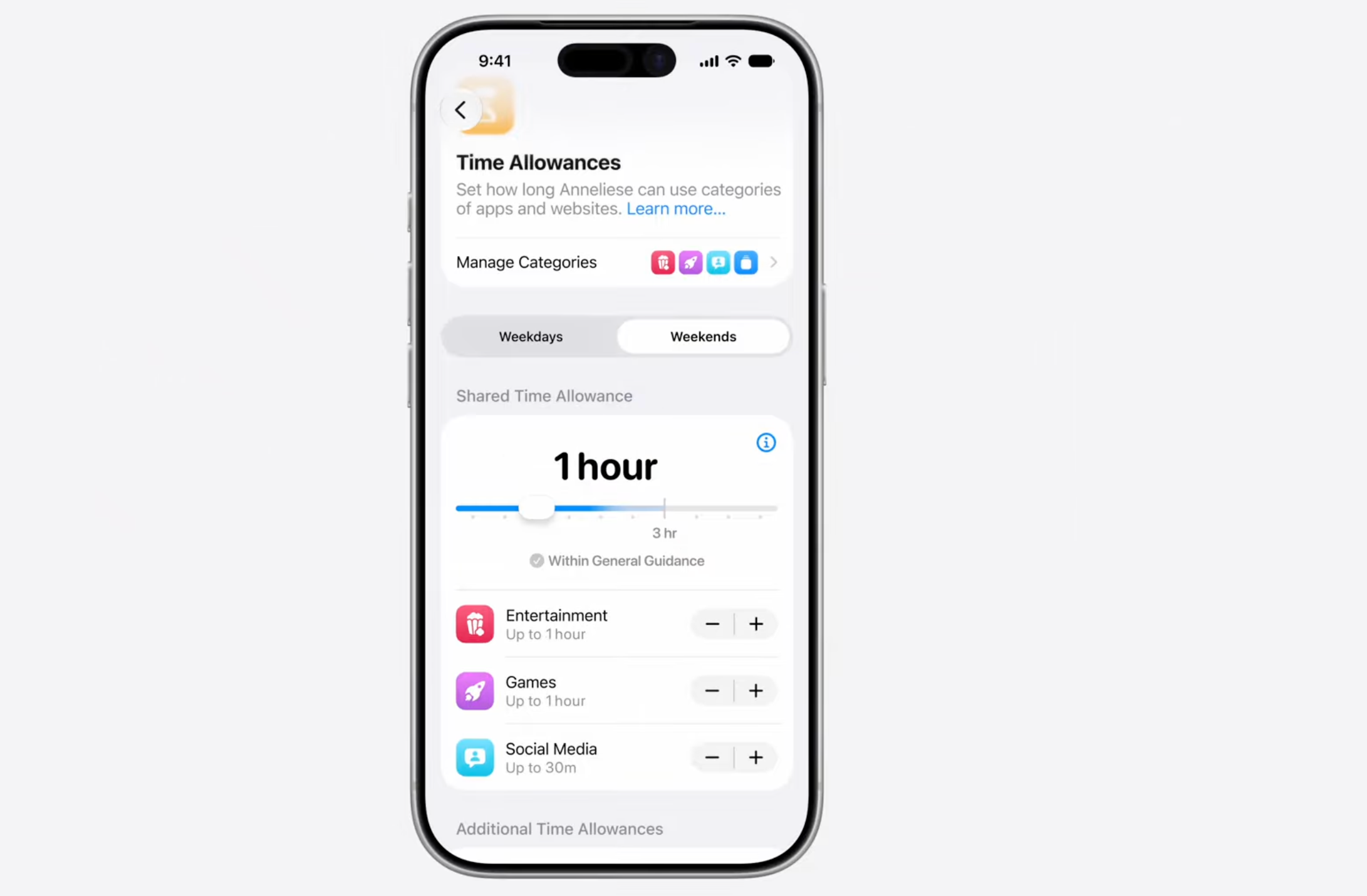
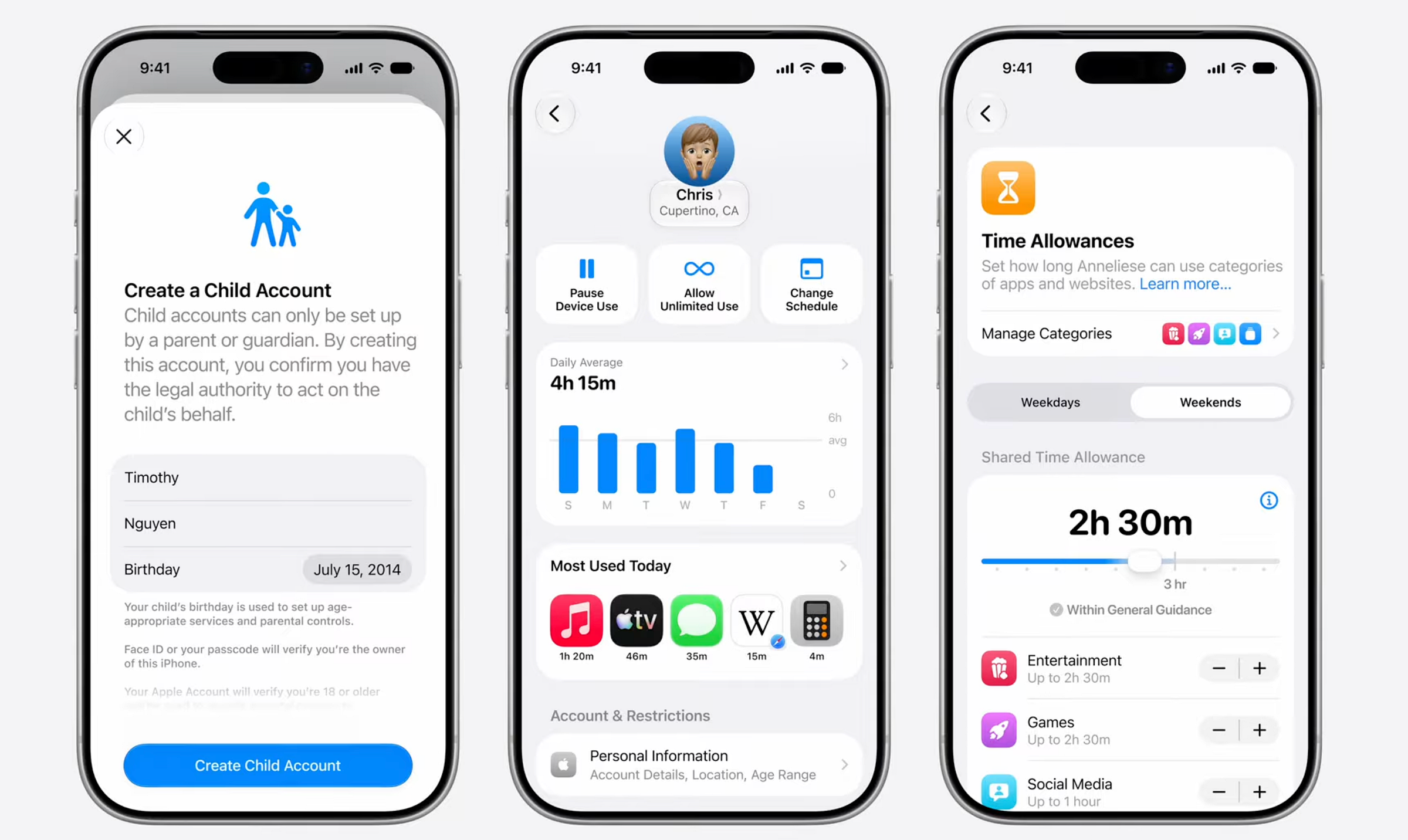
The new Screen Time in iOS 27 is a complete redesign. Parents get a dashboard showing which apps their kids use most and average daily screen time. There’s a new feature called Time Allowances that lets you set daily limits per category — so one hour for games, 30 minutes for social media, that sort of thing. Apple says the suggested limits are based on expert research, though they didn’t specify which experts. You can also set schedules, so an app is unavailable during school hours but accessible in the evenings.
Ask to Browse is new kids have to request permission before visiting a new website in Safari. Ask to Buy already existed for app purchases; this extends the concept to web browsing. Communication Safety, which already blurred nudity in Messages, now also blocks gore and violent content in shared images and videos for users under 18.
Setting up a child account when first configuring a device for a kid now enables age-appropriate protections automatically, so parents don’t have to hunt through settings. That part seems genuinely useful the old setup was confusing enough that a lot of parents just didn’t bother.
watchOS, Vision Pro, and the Rest
watchOS 27 drops support for Apple Watch Series 8, Ultra 1, and SE 2. Series 9 was mistakenly left off the compatibility list initially Apple has since corrected this. The new version brings a dynamic app grid, gesture controls, better sleep tracking, and Workout Buddy upgrades. Heart rate tracking improvements are coming too, according to Bloomberg’s Mark Gurman.
Vision Pro gets panorama-to-spatial-scene conversion, so you can take a panorama photo and turn it into a full personal environment in the headset. Siri AI shows up as a floating orb you can talk to, which is very Vision Pro of them. Visual Intelligence — point at something and ask about it — also comes to the headset, which makes sense given that it has cameras pointed at the real world.
tvOS 27 drops support for two older Apple TV models. Nothing groundbreaking there.
What Wasn’t There
No hardware. The foldable iPhone, which has been leaked so many times it might as well be official, was not on stage.
Apple’s AI glasses have reportedly been pushed to late 2027. The Gemini partnership got zero direct acknowledgment during the keynote.
John Ternus, the incoming CEO, didn’t appear in the presentation at all, which was noted by a lot of people. He’s a hardware guy who’s never done a public keynote that’s going to be an interesting adjustment.
Comparing to Last Year — and Why It Matters
WWDC 2025 was primarily a design year. Liquid Glass across all platforms was the big story. AI was largely absent. Apple ‘s software VP Craig Federighi admitted Siri needed more time.
WWDC 2026 is almost the mirror image. The design story is refinement, not revolution. The AI story is finally here. That’s not a coincidence — Apple spent 2025 buying time with a visual redesign while their AI team was presumably trying to figure out how to make Siri not embarrassing. The Gemini partnership, which Bloomberg’s Mark Gurman has been reporting on since January, turned out to be more than just a rumor. Apple is paying Google $1 billion a year for this. That’s a significant strategic bet.
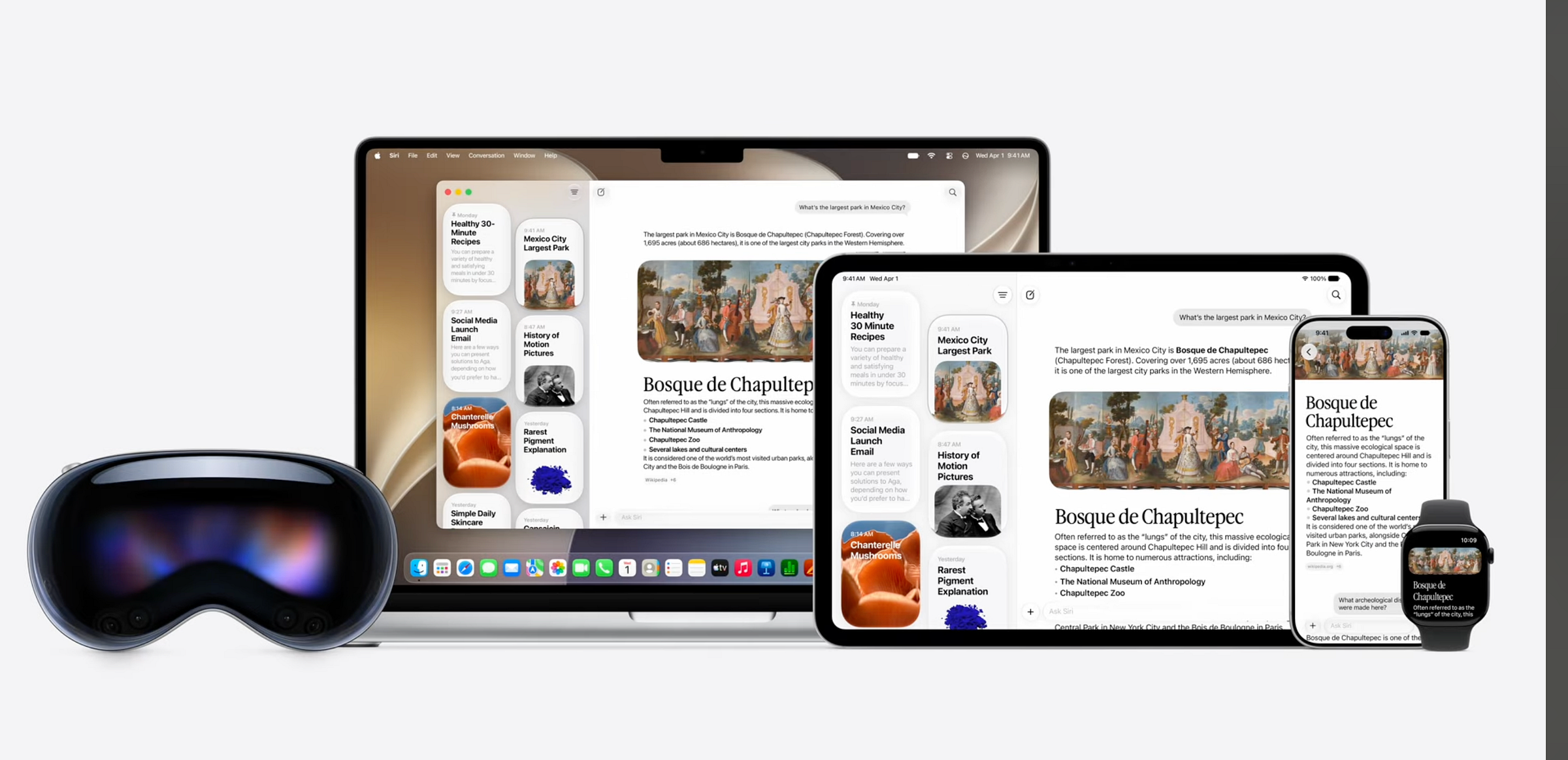
What it means for Apple’s future is actually a bit complicated. The next CEO is a hardware guy. The foldable iPhone is coming. Apple’s AI glasses are being developed. So we’re looking at a year — maybe 18 months — where the software foundation that was laid at WWDC 2026 is supposed to support whatever hardware launches come. Siri AI in CarPlay, on AirPods, on Apple Watch, inside Spotlight on Mac Apple is trying to build an AI layer that runs through every device they make.
Whether that layer is actually better than what Google and Samsung are doing right now is still an open question. As of today, reviewers seem to think it’s competitive but not ahead. For a company that was genuinely behind 18 months ago, that’s progress. Whether it’s enough progress is something we’ll probably only know when the iPhone 18 ships alongside iOS 27 in September.
The Siri beta label is worth noting. Even the new Siri AI launches with a beta flag. Two years of promises, a $1B/year Google deal, and it still ships as a beta.
I’m going to wait and see how it actually performs before calling it a victory.