And It happened. On April 20, 2026, Apple announced that Tim Cook, the guy who’s been running Apple for almost 15 years, is stepping down as CEO. He’ll hand over to John Ternus, the company’s head of hardware engineering, on September 1. Cook isn’t leaving completely though. He’s becoming executive chairman of the board, which basically means he’ll still be around, just not running day-to-day stuff anymore.
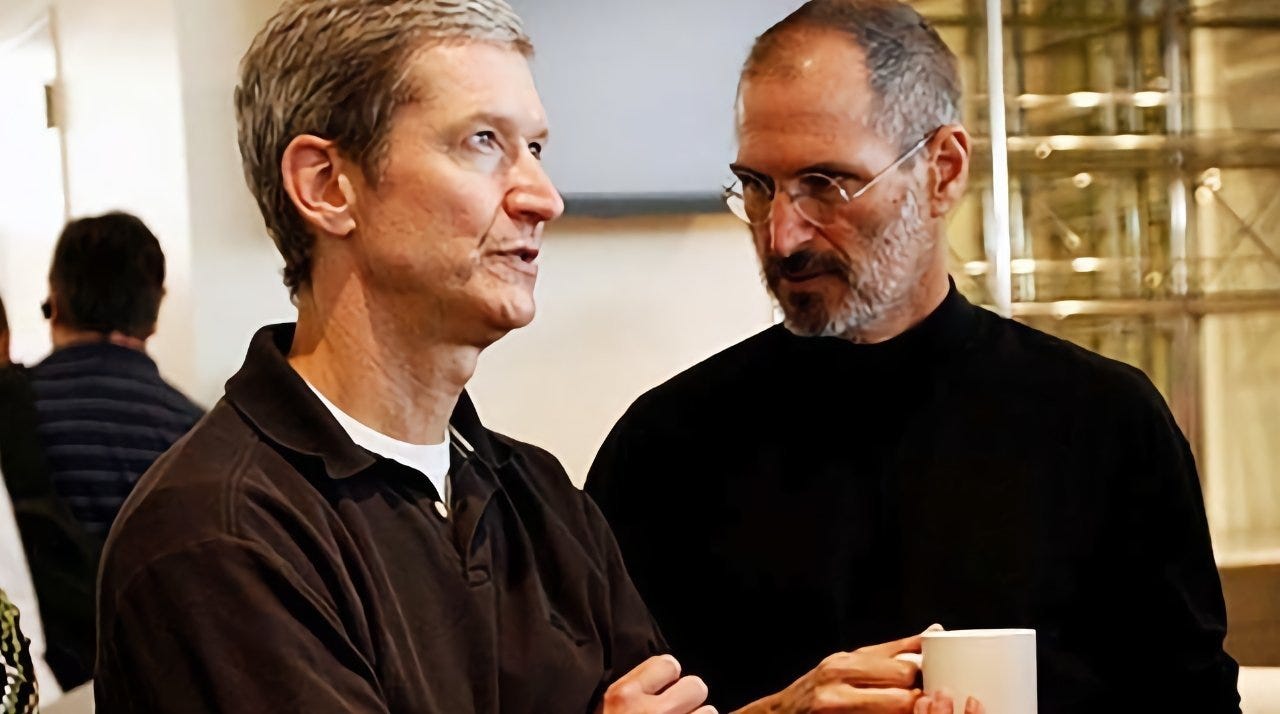
Honestly? Nobody was really shocked. The stock barely moved. Rumors had been floating around for months, andTernus had been getting more stage time at Apple events for a while, which is usually a sign that someone is being prepared for something bigger. Still, this is a real changing of the guard, and it’s worth sitting down and actually thinking about what Tim Cook did during his time there, who this Ternus guy is, and what all this might mean going forward.
What Tim Cook Did That Most People Don’t Fully Appreciate
People always compare Cook to Steve Jobs and say he wasn’t as exciting or creative. And okay, fair. Cook is not a product visionary in the way Jobs was. He would be the first to tell you that. But here’s the thing: Apple didn’t need another Jobs after Jobs. It needed someone who could take everything Jobs built and make it last. And Cook did that, honestly better than a lot of people expected.
When Cook took over in August 2011, Apple was worth just under $350 billion. By 2025, that number hit $4 trillion. Let me just say that again. Four trillion. That’s tenfold in about 14 years. The company also went from about $14 billion in net income to $112 billion by fiscal year 2025, an increase of around 699%. Whatever you think about his style or personality, those numbers are hard to argue with.
But the money isn’t even the whole story. What Cook really did was change what kind of company Apple is.
The Big Shift: From Selling Devices to Selling Everything Around Them
When Jobs died in October 2011, Apple was basically a hardware company. It made iPhones, Macs, iPads, great stuff obviously, but the revenue came from selling you the device and that was mostly it. Cook figured out that wasn’t sustainable long-term. You can only sell so many iPhones. So he built Apple into a services company on top of the hardware company, and that is honestly his biggest single contribution that doesn’t get talked about enough.
iCloud, Apple Pay, Apple Music, Apple TV+, the App Store fees. All of that grew massively under him. By the time Cook stepped back, Apple’s services business alone was generating more revenue than most Fortune 500 companies. And the best part from Apple’s perspective is that services revenue keeps coming every month, unlike hardware where you sell one device and wait two years for the next upgrade cycle.
The New Products He Actually Launched
This is the part that surprises people when you list it out. Cook gets dismissed as the “operations guy” but look at what actually launched under his watch.
Apple Watch (2015) was probably the most underrated launch of the Cook era. It launched in 2015 and at first people made fun of it. I remember reading comments saying it was pointless and overpriced. Now it has blood oxygen monitoring and ECG features and millions of people rely on it for health tracking. Doctors actually recommend it. That whole product category, a health and fitness computer on your wrist, did not exist before Cook. Jobs never shipped a watch. Cook did.
AirPods (2016) were genuinely laughed at when they were announced. The jokes about losing them were everywhere. But AirPods basically invented the modern true wireless earbuds category. Before AirPods, wireless earbuds were clunky and had terrible audio sync. After AirPods, every company from Samsung to random no-name brands started making their own version. AirPods became a cultural product in a way that few Apple products have since the iPhone. College campuses, gyms, offices, the subway, just look around.
Apple Silicon (2020) is maybe the most technically bold thing Cook approved. Apple had been using Intel chips in Macs since 2006. In 2020, they decided to design their own chips and move the entire Mac lineup over. This was genuinely risky. The transition took about two years and developers were nervous. But the M1, M2, M3, and M4 chips turned out to be so fast and so efficient that they basically embarrassed every Intel and AMD chip at the same price point. A MacBook Air on Apple Silicon gets 15 to 18 hours of battery life. That wasn’t possible before. This decision changed the Mac’s competitive position completely.
Apple TV+ (2019) is often overlooked but it’s a real business now. Ted Lasso won multiple Emmys. Severance became a genuine pop culture moment. The F1 film in 2025 was a mainstream hit. Cook bet that Apple could compete in streaming and so far it’s working, though they’re still spending a lot to get there.
Apple Pay (2014) came out when everyone was skeptical that people would pay with their phones. Now it’s just normal. Tap to pay at a coffee shop, on a subway turnstile, on a website. Cook pushed Apple into financial services in a way that quietly became part of daily life for millions of people.
The one thing that didn’t land the way Cook hoped was the Apple Vision Pro. The mixed-reality headset that he championed as the company’s next great platform was largely ignored by consumers not willing to pay several thousand dollars to strap a computer to their face. The product isn’t dead, but it’s nowhere close to what he hoped. The thing weighs a ton, costs a ton, and most normal people have no idea what to do with it.
The Supply Chain Thing That Kept Apple Running
He joined Apple in 1998 and was the person credited as the brains behind Apple’s global supply chain even before he became CEO. That’s important to understand. Cook’s big skill, the thing he came to Apple for in the first place, was operations. Making sure parts arrived on time, factories ran correctly, suppliers were kept in line. Under Jobs, Cook had basically built the machine that allowed Apple products to get from design to store shelf efficiently and at huge scale. As CEO he kept doing that, just for a bigger, more complex version of the company.
That supply chain obsession helped Apple in ways that weren’t always visible. During COVID for example, while other companies were struggling badly with chip shortages and supply issues, Apple handled it better than most. Not perfectly, but better. That’s not luck. That’s Cook’s background showing up in the company’s DNA.
His relationship with China was also complicated. Cook expanded Apple’s reach in China significantly and for years that was a huge part of the growth story. But it also left Apple exposed when U.S.-China tensions started rising. That’s an unresolved problem that Ternus is inheriting. Not a solved one.
Who Is John Ternus and Why Should You Care
Most people outside the Apple nerd world have never heard of Ternus. And that’s fine. He’s spent most of his career building products, not giving press interviews or going on podcasts.
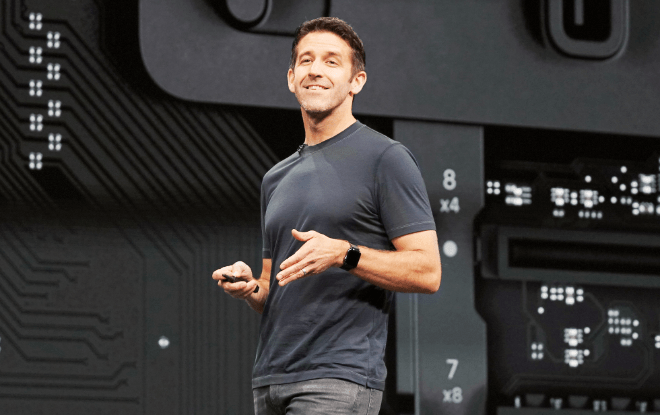
He joined Apple’s product design team in 2001 as only his second job out of college, his first being at a small maker of virtual reality devices called Virtual Research Systems. So he’s been at Apple for 25 years. He was a VP of hardware engineering by 2013 and was promoted to senior vice president in 2021.
Throughout his time at Apple, Ternus has overseen hardware engineering across every product category: iPhone, iPad, Mac, Apple Watch, AirPods, Vision Pro. His fingerprints are on basically everything Apple has shipped in the past decade. He played a big role in the Mac’s transition to Apple Silicon, which as I mentioned above worked out really well. Ternus was central to that decision getting executed properly.
He’s also 51. That mirrors Cook’s age when he became CEO in 2011, positioning him for potentially a decade or more of leadership. The board clearly wasn’t looking for a two-year transition. They want someone who can run the company for a long stretch.
Bloomberg described him as “charismatic and well-liked.” He doesn’t appear to have an X account, which in this current climate is almost refreshing. In a 2024 commencement speech at the University of Pennsylvania, Ternus said, “Always assume you’re as smart as anyone else in the room, but never assume that you know as much as they do.” That’s a pretty grounded thing to say. Whether he actually operates like that internally is something we’ll find out.
Supply Chain CEO vs. Hardware Engineer CEO: Will You Notice the Difference?
This is honestly the most interesting part of all this.
Cook came from operations. His entire way of thinking about business was built around efficiency, consistency, predictability. Under him, Apple shipped products reliably, maintained margins, kept the supply chain tight. The products themselves were mostly iterative: better cameras, faster chips, new colors, slightly different shapes. Not exactly boring, but not “throw everything out and start over” either.
Ternus is a hardware guy. He thinks about physical products, how things are built, what they’re made of, what they can do that they couldn’t do before. According to Bloomberg’s reporting, Apple’s leadership sees Ternus as someone who can inject more decisive, product-focused leadership. The thinking is that under Cook, major decisions were often debated and refined by a broader group of executives, and the bet is that Ternus will make bolder, faster calls on product direction.
So will you see more adventurous products? Maybe. A Forrester analyst named Dipanjan Chatterjee wrote that Ternus being a hardware engineer “signals that Apple will seek differentiation in its physical products even as it looks to reframe the device as a substrate for intelligent experiences.” Translation into normal language: expect Apple to push harder on making the hardware itself special again, not just the apps running on it.
There are already some hints of this. Most recently, Ternus was involved in the MacBook Neo, a more affordable laptop that uses an iPhone chip to keep costs down. That’s a surprisingly creative hardware decision: using a phone chip in a laptop to hit a lower price point. It’s the kind of thinking that comes from someone who’s been inside the manufacturing and engineering process for years.
And then there’s the AI question. Apple has been late to the AI race compared to Google and Microsoft and the whole ChatGPT wave. Apple Intelligence launched in late 2024 but the Siri improvements were honestly not that impressive at first. As CEO, Ternus will have to steer Apple through its challenge to catch up in AI and figure out what to do with the underlying tech behind Vision Pro. There’s apparently a major Siri redesign coming in iOS 27, based on WWDC 2026 teasers that leaked this week. That’s something to watch.
But I want to be honest here: there’s also a real possibility that not that much changes immediately. Ternus has been inside this company for 25 years. He didn’t come from outside. He’s not going to walk in on September 1 and flip the table. The culture is the culture, the same people are there, the same processes exist, the same roadmaps are mostly already set for the next year or two. The bigger changes, if they come, will probably show up in 2028 or 2029 when products he had real creative control over from the start actually ship.
What Cook Does From the Board
Cook isn’t disappearing. He’s becoming executive chairman, which is a real job. Part of his role will include engaging with policymakers around the world. Given the current political environment, tariffs, China tensions, government scrutiny of big tech, that’s actually a pretty important job. Cook built genuine relationships with governments globally over the past decade. That access doesn’t just evaporate.
So in practice: Ternus runs the company and makes the product and business decisions. Cook sits at the board level, helps with big-picture strategy, and flies around talking to presidents and prime ministers when needed. It’s a reasonable split honestly. You’re not throwing away 15 years of relationships just because someone new is running daily operations.
Whether Cook will actually stay quiet and let Ternus lead, or quietly still be the most influential voice in the room, is something we won’t know for a while. That’s the thing nobody can really answer right now.
So What Actually Changes for You
If you’re just someone who buys Apple products and doesn’t follow tech news obsessively, practically speaking, not much changes right away. Your iPhone still gets iOS updates. The MacBook lineup still exists. The App Store still takes 30%.
But over the next three to five years, if Ternus leans into his background, you might start seeing Apple take bigger swings on hardware design and product categories. Maybe new form factors. Maybe more aggressive pricing (the MacBook Neo thing is interesting here, a cheaper Mac is unusual for Apple). Maybe a Vision Pro 2 that’s actually light enough for people to use. Maybe an AI integration into hardware that feels like it was designed from the beginning rather than bolted on.
The AI stuff is genuinely where the pressure is. Google has Gemini deeply embedded in Android. Microsoft has Copilot everywhere. Apple has been behind and the next CEO basically has to fix that or Apple starts losing its “premium experience” edge. That’s the real test of the Ternus era, more than any individual product launch.
For now, Cook handed over something most people would dream of handing over. A company that went from $350 billion to $4 trillion, with loyal customers, massive cash reserves, and products people argue about on the internet every single day. Ternus gets to decide what he does with all that.
That’s not a bad starting position.