My cousin visited us last month after almost two years. We used to talk for hours when we were kids, stupid arguments about cricket, gossip about relatives, random plans we’d never actually do. This time, I noticed something. Every time there was a small silence, he picked up his phone. Not to check anything specific. Just picked it up, looked at it for a few seconds, put it down. Then did it again maybe four minutes later. I don’t think he even realized he was doing it. And honestly, I probably do the same thing. We all do.
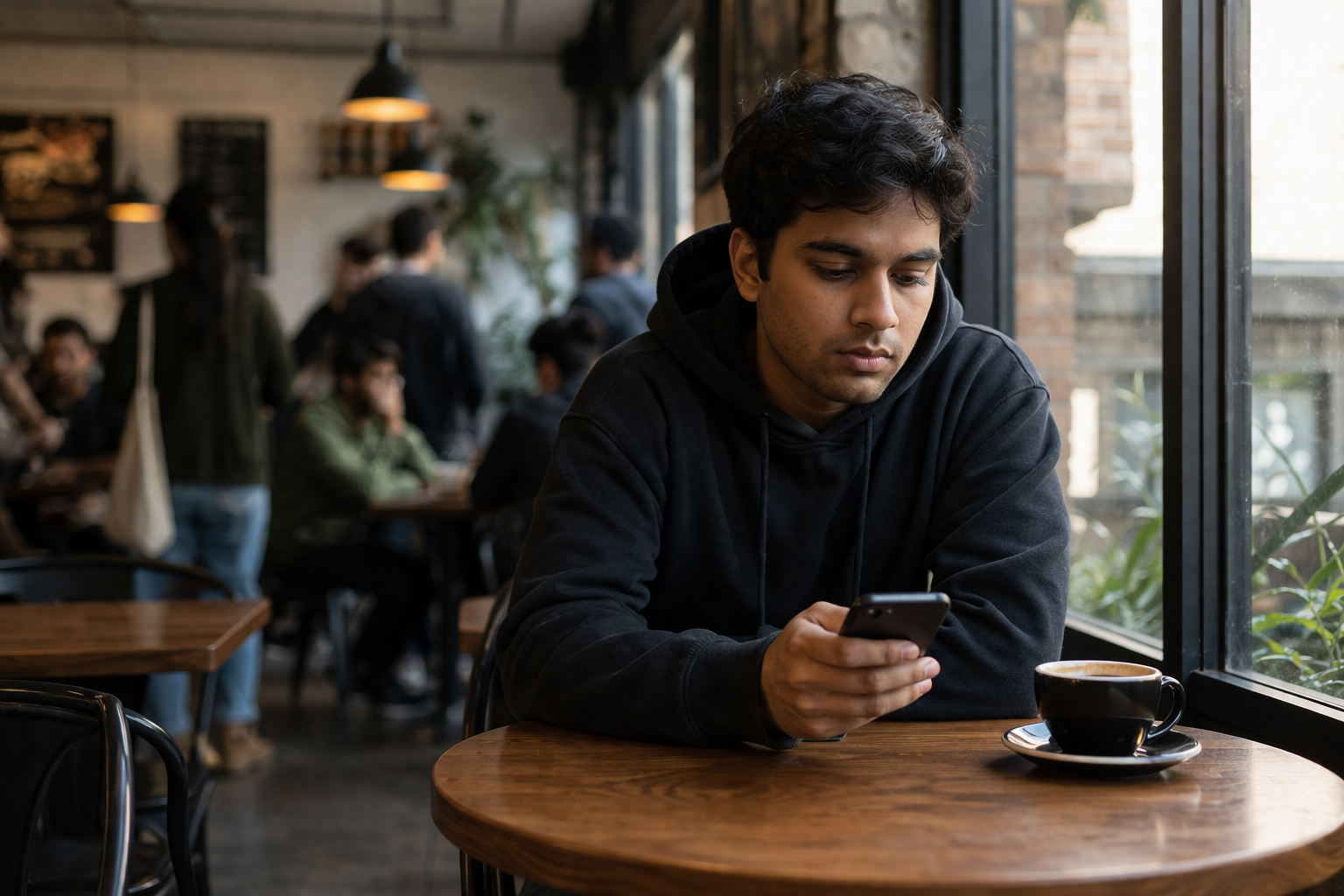
That visit stuck with me because it made me think about how much has quietly changed. Not in some dramatic, visible way. But in the small ways we behave, think, react, and feel. Something is different about us now compared to, say, 2013 or 2014. The phones were already there back then, but something shifted, and COVID made it a lot worse.
This is my attempt to figure out what actually happened to us.
The Attention Thing Is Real, and It’s Getting Worse
There’s a stat that went around a few years ago saying humans now have a shorter attention span than a goldfish, eight seconds or something. That specific number is probably made up, but the direction is right. We are genuinely worse at staying focused than we used to be.
The reason is pretty simple. Our brains are wired to pay attention to things that are new and moving and potentially important. That made sense when we were in forests worrying about predators. Now we’ve built entire industries — social media, news, streaming — that exploit exactly that wiring. Every notification, every autoplay, every infinite scroll is basically telling your brain: “New thing! Could be important!” Your brain responds every single time. It can’t help it.
So what happens is, the more you train your brain to switch attention fast, the harder it gets to stay on one thing slowly.Reading a long article becomes uncomfortable. Watching a movie without checking your phone feels weird. Sitting in a meeting without doing something else feels almost impossible. I am not exaggerating, I rewatched a movie I loved in 2015 recently and found myself reaching for my phone during scenes I used to think were the best parts. That scared me a little.
The research on this is actually pretty solid. A 2023 paper from the University of California San Diego found that the average screen focus time dropped from about 2.5 minutes in 2004 to around 47 seconds by 2020. Forty-seven seconds. That’s not a small change.
Anxiety Went from Rare to Background Noise
I don’t remember people talking about anxiety the way they do now. Ten years ago, if someone said they had anxiety, it felt like a specific medical thing. Now it’s just… everywhere. Almost everyone I know has some version of it.
Part of this is awareness we’re better at naming it now, which is good. But part of it is that anxiety is actually more common. And social media is a big reason.
Here’s what I think happens. You open Instagram. You see a friend’s trip to Bali. You see someone’s new apartment. You see someone announcing a promotion. Your brain, without you telling it to, starts comparing. Not consciously, like you’re sitting there thinking “I am worse than this person.” Just a low hum of something. A slight feeling that your own life is somehow behind schedule.
Do this fifty times a day for five years, and something changes in you. Psychologists at University of Pennsylvania did a study in 2018 they limited students to 30 minutes of social media per day and found significant drops in loneliness and depression after three weeks. Three weeks. That’s how fast the effect was.
COVID made all of this worse because suddenly the only window to the outside world was the phone. We lost the casual, low-effort social contact that kept us sane running into a colleague in a corridor, eating lunch with someone, having a conversation that just happened without planning it. All of that disappeared, and it got replaced with structured calls, reels, and endless scrolling. Our brains didn’t get the kind of social contact they actually needed, so anxiety and loneliness filled the gap.
The Problem With Having Everything at Your Fingertips
Okay so this is the thing I think about the most, and it doesn’t get talked about enough.
There used to be a whole experience around not knowing things. You’d watch a movie and have a debate about who that actor was. You’d get into a car and actually have to figure out a route. You’d try to fix something broken and spend an afternoon pulling it apart and guessing. You’d be bored and just… sit with the boredom until you came up with something to do.
All of that is basically gone now.
The answer to everything is 30 seconds away. And in one way, that’s good. I’m not going to pretend it isn’t convenient. But something is also lost, and I don’t think we talk about it honestly enough. The process of searching, getting lost, being wrong, trying again — that process was actually doing something for us. It was building problem-solving instinct. It was building patience. It was building the ability to stay with difficulty without immediately escaping it.
Now, the moment something is hard, the phone is right there. The moment you’re bored, the phone is right there. The moment you don’t know something, the phone is right there. So we never really practice being uncomfortable. And discomfort, it turns out, is kind of important for growing as a person.
I noticed this with my younger cousin (different cousin — I have a large family). She’s 16. When her laptop was giving her trouble last year, she waited maybe 90 seconds before calling her dad. Not because she was lazy. She just had no sense that she might be able to figure it out herself, and no patience to sit with not knowing. That felt normal to her. But when I was 16, troubleshooting my own computer for two hours before asking anyone felt completely normal to me.That gap in experience is not small.
Sleep Is Broken for a Lot of Us
This one is more physical but it’s connected to everything else.
The blue light from screens messes with melatonin. That’s not a theory it’s pretty well established at this point. But beyond the light thing, there’s also the content thing. You lie down, you’re supposed to relax, but then you’re reading about something upsetting, or watching a video that got you worked up, or looking at something that made you feel bad about yourself. And then you expect your brain to just switch off. It doesn’t work like that.
Sleep deprivation does something to mood, focus, and decision-making that most people underestimate. You don’t feel dramatically sleepy — you just feel slightly foggy, slightly more reactive, slightly less able to deal with stress. If that’s your baseline most days, it changes who you are over time. And for a lot of people, that’s exactly what’s happening.
The Dopamine Loop Nobody Talks About
Here’s a thing I didn’t fully understand until maybe a year ago. All these apps Instagram, YouTube, TikTok, even WhatsApp are designed using what basically amounts to behavioral psychology research. The variable reward system. It’s the same thing that makes slot machines addictive.
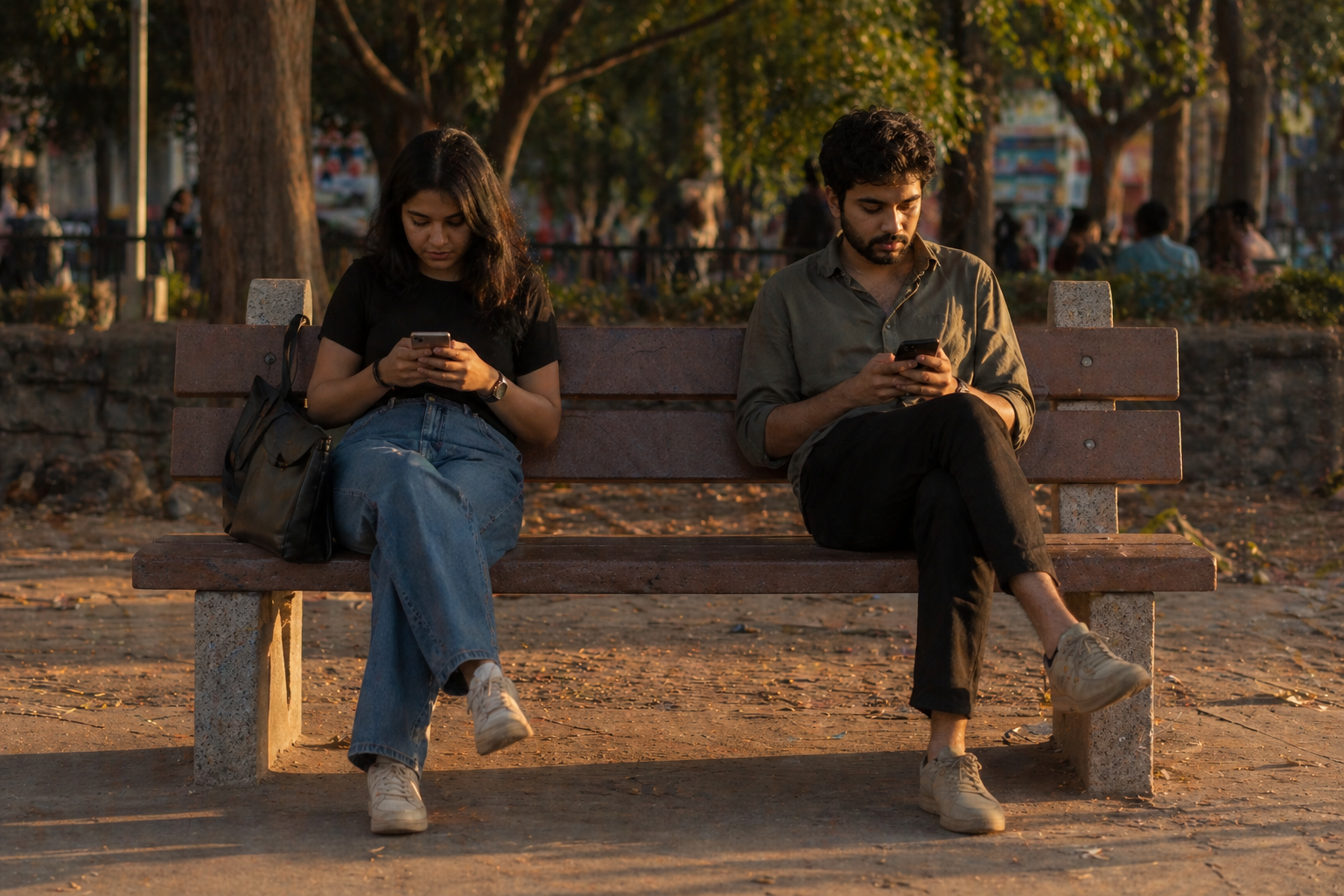
You open the app, you don’t know what you’ll find. Sometimes it’s boring, sometimes there’s something interesting, sometimes there’s a message from someone you like. The uncertainty is the point. Your brain releases dopamine not when you get the reward, but when you’re anticipating a possible reward. So the not-knowing is actually more addictive than the knowing.
This is not an accident. A lot of these features were built by people who knew exactly what they were doing. Former employees from Facebook and Google have publicly said this. Sean Parker, who was Facebook’s first president, said in 2017 that the platform was built to “consume as much of your time and conscious attention as possible.” His words.
So when people say “just put your phone down, it’s not that hard,” they’re talking about the phone like it’s a book. It’s not. It’s a slot machine with infinite pulls and zero cost per pull. Our brains are not equipped to resist that without effort.
What COVID Did
I said this earlier but I want to come back to it. COVID was like a fast-forward button for all of this.
Before 2020, the digital world and the physical world were blended but still separate. You went to the office. You met friends in person. You went to shops. There was a rhythm to your day that got you out of your head and into your body and into actual space with other humans.
Then suddenly all of that collapsed. Work, socializing, entertainment, shopping — everything moved to a screen. For many people, the only non-screen part of the day was sleeping and maybe going for a walk. And a lot of people stopped doing even the walks.
What this did was break the natural rhythm that kept our digital use in check. Before, you couldn’t scroll Instagram during a work meeting in the office social pressure prevented it. You couldn’t check your phone through a dinner with friends without it being awkward. Those small social constraints were actually doing a lot of work.
COVID removed them. And even after things reopened, many of those habits didn’t come back. We kept the social media time, kept the late night screen use, kept the delivery apps and streaming marathons but without the enforced offline hours that used to balance things out. The average daily screen time went from about 3.5 hours pre-COVID to over 6 hours in 2021. Some of that came back down, but not all the way.
What This Might Look Like Going Forward
So where does this go?
I don’t want to be dramatic about it. Humans are adaptable. We’ve survived a lot of changes in how we live. But I do think we’re in the middle of something that’s going to have longer-term effects than most people are accounting for.
The attention thing worries me most. If the next generation grows up genuinely unable to focus on one thing for more than a few minutes, that has consequences for learning, for problem-solving, for the ability to sit with hard problems long enough to actually solve them. A lot of the most important things understanding a complicated situation, building something from scratch, having a difficult conversation require sustained attention. If that skill keeps degrading, I’m not sure what fills the gap.
The social anxiety thing is also real. There are studies now showing that teenagers who grew up with smartphones have higher rates of depression and anxiety than any previous generation we have data on. Jean Twenge, a psychologist at San Diego State, has been tracking this for years she found a sharp increase starting around 2012, which is when smartphone adoption crossed 50% among American teens. The data from other countries shows similar patterns. This is not a coincidence.
There’s also something quieter happening around our sense of self. When you’re constantly consuming other people’s edited, curated, best-moment versions of their lives, your own unfiltered experience starts to feel lacking. Not dramatically not like you’re sitting there in despair. Just a low-level dissatisfaction with ordinary things that used to feel fine. The ordinary Tuesday evening that’s perfectly okay but somehow doesn’t feel like enough. That feeling is new. And I think it’s going to keep getting worse as the platforms get better at showing you things that make you feel like you’re missing out.
Comparison can be your biggest enemy unless you are doing it in constructive manner.
Can We Do Anything About It?
This is where I’ll be honest, I don’t have a clean answer. The “just use your phone less” advice is real but insufficient. The apps are too good at pulling you back. Individual willpower is not a reliable solution to something that has billion-dollar engineering teams working against it.
What actually seems to help, from what I’ve seen and read, is environmental changes. Leave your phone out of the bedroom. Delete the apps you don’t need to have on your phone. Put the phone face-down when you’re with other people. Make it physically harder to access, not just mentally harder. These things work not because you’re stronger, but because you’re removing the trigger.
And the attention thing the only way to rebuild that is to practice sustained focus deliberately. Read actual books. Watch films without a second screen. Do things that are boring for a while. Let yourself be bored. Your brain will scream at you for the first few minutes. Then it calms down. Then you remember what it feels like to actually be somewhere, doing one thing.
I’ve been trying this for a few months with a rule that I don’t pick up my phone for the first 45 minutes after waking up. It sounds small. It’s not — that time has become the most clear-headed part of my day. I don’t know how I functioned before without it, except that I probably wasn’t functioning as well as I thought. Surely I have failed many times, but I keep on following it again and again.
We’re not helpless here. But we are in the middle of something, and pretending we’re not isn’t going to help anyone.