Something wild happened this week in the AI world. On April 21, Amazon committed $25 billion to a company called Anthropic. Four days later, on April 24, Google came in with another $40 billion pledge. That’s $65 billion in pledges to the same company in less than a hundred hours. If you haven’t heard of Anthropic before, you’re probably wondering — who are these people and how did they get so big so fast?
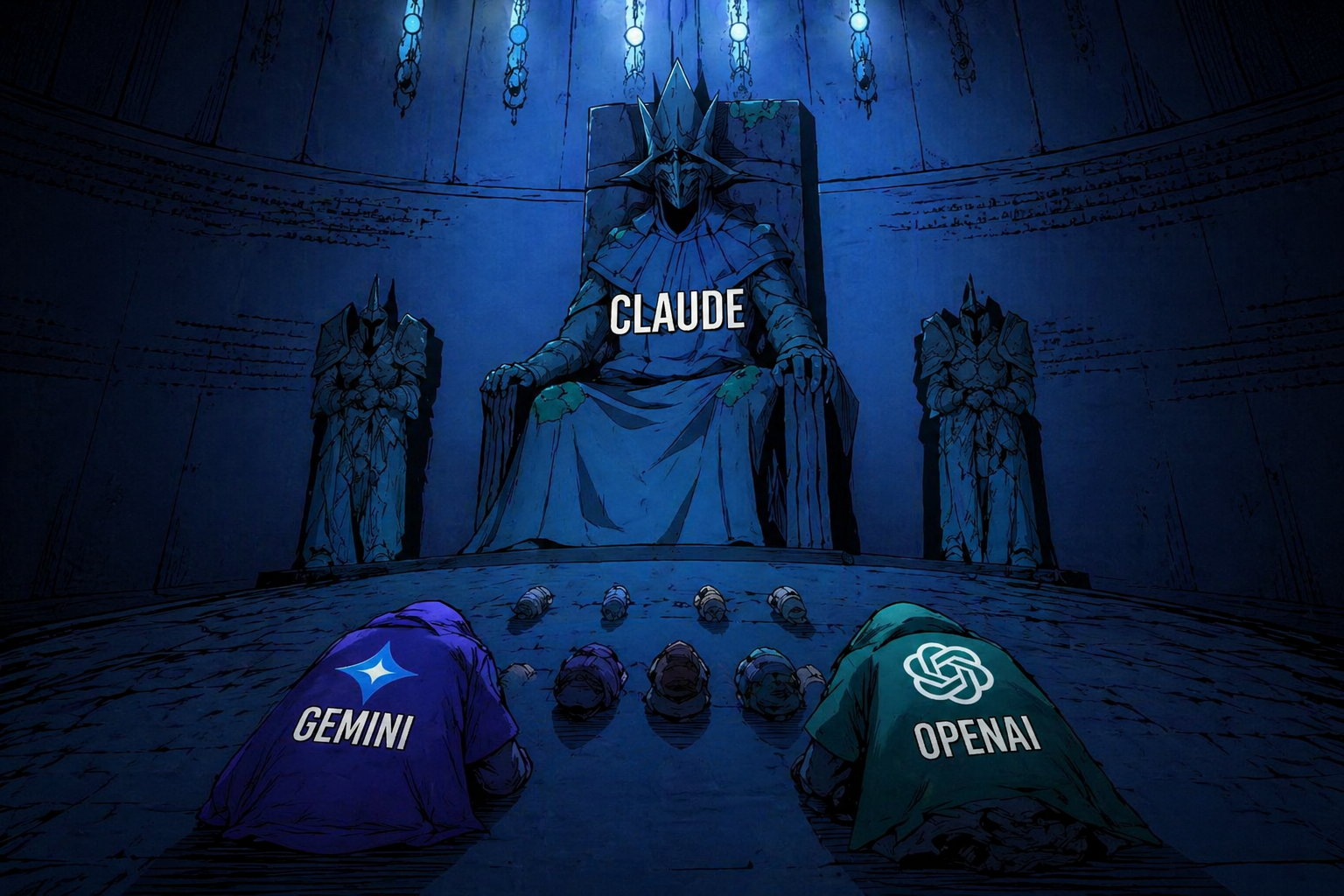
So basically, Anthropic is the company that makes Claude, the AI you might have used for writing emails, coding, or just asking random questions. The company was started in 2021 by Dario Amodei and his sister Daniela Amodei, along with several other people who left OpenAI. They had some disagreements about safety and direction, so they started fresh. Back then, nobody outside the AI industry was paying much attention. Now Google and Amazon are fighting over who gets to give them more money.
The numbers here are honestly a bit hard to believe. Anthropic’s revenue went from $1 billion annually in January 2025 to over $30 billion by March 2026. That’s a 30x jump in fifteen months. I don’t think I’ve ever seen a company grow like that, at least not in the companies I follow. And the valuation on secondary markets — where private investors buy and sell shares — has reportedly crossed $1 trillion, which would put it ahead of OpenAI.
What Google and Amazon Actually Did
Let me clear up the numbers because the headlines can be confusing. Google’s $40 billion is not all real cash right now.They’re putting in $10 billion immediately, at a valuation of $350–380 billion for Anthropic. The other $30 billion comes only if Anthropic hits certain performance targets that neither side will explain publicly. So when you see “$40 billion deal,” that’s the maximum number if everything goes well.
Amazon’s deal is similar. $5 billion is real, immediate money. The other $20 billion depends on commercial milestones. Plus Amazon gets Anthropic as a big cloud customer — Anthropic has committed to spending over $100 billion on AWS over the next decade.
This is the part that’s a little funny if you think about it. Google gives Anthropic $10 billion. Anthropic takes that money and buys computing power from Google Cloud. So Google is kind of giving money to itself through Anthropic. Same thing with Amazon. It’s not as crazy as it sounds — there’s real value being created, but it’s worth knowing how the loop works.
Before this week, Google had already invested roughly $3 billion in Anthropic and held about a 14% stake. So this is them tripling down on a bet they already made.
Why Is Claude Suddenly Everywhere?
If you’ve been in any tech or office job in the last year, you’ve probably heard people talking about Claude. The big reason for the growth is something called Claude Code, a tool that helps software developers write and manage code, launched in late 2025. It basically became the go-to assistant for professional programmers inside big companies.Fortune 500 engineering teams started using it heavily, and the revenue just exploded from there.
I tried Claude Code myself when it came out and honestly it was a bit confusing at first. Once you figure out the workflow, it genuinely speeds things up. My guess is a lot of developers went through the same frustrating learning curve but stuck with it because the output quality was better than alternatives.
Anthropic has also built a reputation for being the “safer” AI company. Their whole pitch from day one was that AI needs to be developed more carefully, with more focus on safety research. Whether you think that matters or not, it’s been a useful brand identity — especially for enterprise customers who are nervous about deploying AI internally.
So What About OpenAI and Google’s Gemini?
OpenAI is still a massive company. Their latest valuation is reportedly around $300 billion, though secondary market trading has Anthropic ahead of that now. And OpenAI has ChatGPT, which is still the most well-known AI product to the general public. Most people would have heard GPT but less people know about claude and claude code.
But in the professional and developer market, Anthropic has been eating OpenAI’s lunch in 2025 and 2026. Claude consistently scores higher in coding benchmarks, and developers I know who use both say Claude gives fewer confident wrong answers — which matters a lot when you’re relying on it for actual work.
OpenAI also sent a letter to shareholders earlier this month essentially bragging about how much computing power they have 30 gigawatts by 2030 — and specifically comparing it to Anthropic’s smaller compute budget. Which is kind of an odd thing to brag about if you’re winning. The letter felt like they were worried and trying to reassure investors. Maybe I’m reading too much into it, but that’s how it came across.
As for Google’s Gemini, Gemini has struggled to find its identity. It’s a good model. But Google keeps changing the branding, the product lineup, and the strategy so often that it’s hard to know what you’re actually getting. I remember when it was called Bard. Then it became Gemini. Then the models got renamed again. It’s confusing. And in the developer community specifically, Gemini just hasn’t built the same trust that Claude has. But Gemini is really showning great improvments in this models.
The interesting thing is Google is now betting on both sides. They have their own Gemini models competing in the market, and they’re also funding the company that’s beating Gemini. That’s not stupid — it’s actually smart risk management. But it does tell you that even Google isn’t sure Gemini will win.
What Does This Mean for Regular People?
If you’re not a developer or tech industry person, you might be wondering what any of this means for you. A few things worth knowing.
These big investment deals usually lead to better products faster. When a company has $10–25 billion in real cash to spend on computing infrastructure, they can train bigger models, serve more users without slowdowns, and hire more researchers. The bottleneck for AI companies right now is literally servers and chips you need massive computing power to run these things. So more money means Claude should get faster, smarter, and more available.
Prices for AI tools might actually go down. Right now all the major AI tools are fighting for users. That competition is good for consumers. You’re seeing free tiers, cheaper subscriptions, and more features being added constantly. As long as this competitive race continues, companies have to keep offering more for the same price.
But there’s also a less comfortable thing to think about. A handful of very large companies — Google, Amazon, Microsoft — are basically controlling who wins the AI race. The model that survives won’t necessarily be the best one. It’ll be the one that gets the most cloud compute deals, the best enterprise contracts, and the biggest checkbooks behind it. That’s how most industries end up working. It’s not a scandal, it’s just reality.
There’s also the question of what Anthropic’s “safe AI” mission means when you’re taking $65 billion from two of the biggest advertising and data companies in the world. Anthropic’s founders have always said they want to keep safety as the core focus. I think they probably mean it. But the pressures that come with this kind of money are real, and we’ll see over the next few years whether the mission stays intact or slowly gets diluted by commercial pressure. That part is still genuinely unclear.
What Happens Next
Anthropic has reportedly been working on a model called Mythos described as powerful enough that they haven’t released it publicly yet, and apparently Google gets special access to it as part of this deal. That detail alone is interesting. There are models being trained right now that the public hasn’t seen.
The AI race in 2026 is less about which company has the cleverest researchers and more about who can secure enough computing power. Compute — the server capacity to train and run these massive models — is the scarce resource. Every big deal this year has had computing infrastructure at the center. Amazon’s deal means Anthropic gets access to more AWS servers. Google’s deal means more TPU chips. OpenAI has Microsoft Azure. It’s cloud infrastructure wars dressed up as AI investment.
For Anthropic specifically, the immediate challenge is scaling without breaking. Their own CEO Dario Amodei said there’s been “inevitable strain” on their infrastructure from growing demand. More compute deals fix that. The question is whether the product quality can stay consistent as they scale to hundreds of millions of users.
So that’s where things are. A company that barely existed five years ago is now pulling in $30 billion a year in revenue, has two of the world’s biggest tech companies fighting to fund it, and is reportedly valued at over a trillion dollars in private markets. The AI space moves fast, and I still don’t think most people outside the tech industry have caught up to how quickly Anthropic went from “safety-focused AI startup” to one of the most valuable private companies in the world.
Whether that valuation holds, whether the safety mission survives the money, whether Claude Code keeps its lead over GPT and Gemini — all of that is still playing out. But right now, Anthropic is having a very good week.