Apple spent two years promising a smarter Siri. On June 8, 2026, at WWDC, it finally delivered one — and in the process, picked a public fight with European regulators that’s still going as this is published.
iOS 27 is Apple’s twentieth major release of its mobile operating system, and it’s the update the company has been building toward since it first teased an AI-powered Siri back in 2024 and then quietly shelved it. This time, the assistant is real, it’s called Siri AI, and it runs on a mix of Apple’s own Foundation Models and — in a partnership few saw coming — Google’s Gemini. Beyond Siri, the release touches nearly every corner of the phone: Safari, Photos, Messages, Maps, Wallet, and a redesigned set of parental controls that Apple is positioning as one of the update’s headline features in its own right.
The developer beta shipped the same day as the keynote. A public beta is expected in July, and the full release is expected in September, most likely arriving alongside the iPhone 18 lineup.
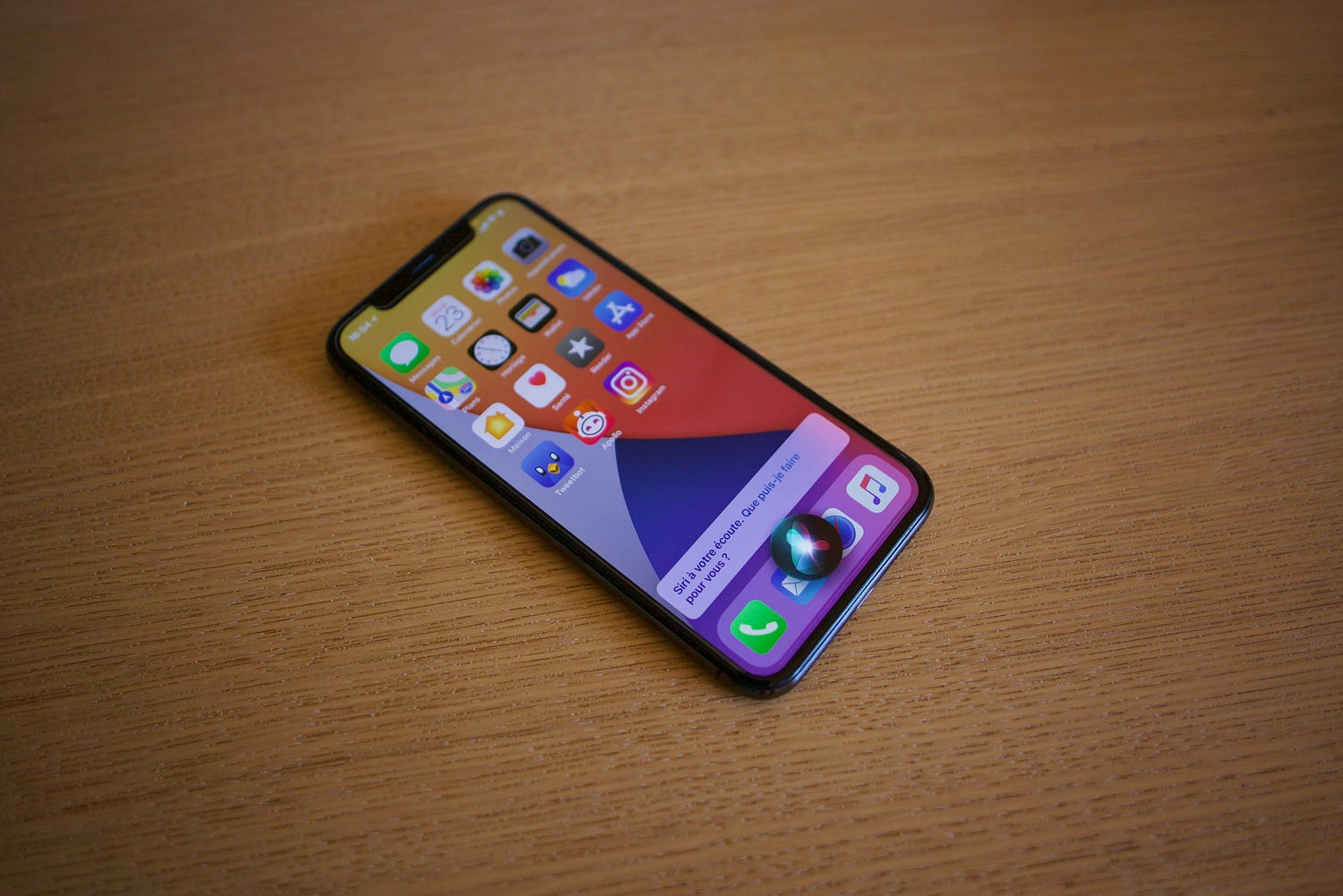
Siri AI: The Centerpiece
Siri AI is the reason most people will care about this update at all. Apple has rebuilt the assistant from the ground up, and for the first time, Siri can hold a real back-and-forth conversation instead of just responding to one command at a time. It lives inside the Dynamic Island now — say “Hey Siri” or swipe down from the top of the screen, and the pill expands into a glowing “Search or Ask” bar with a blinking cursor, the kind of interface iPhone owners have watched ChatGPT and Claude use for years.
What makes Siri AI different from the old version isn’t just the look. It can search across Mail, Messages, Notes, Reminders, and Calendar to actually find things for you, not just tell you it couldn’t find them — which, if you’ve used Siri any time in the last decade, was basically its signature move. The Phone app gets a Call Context feature that surfaces relevant information when you’re calling a business, like your flight number if you’re calling an airline. FaceTime picks up Dual Capture, letting you stream the front and rear camera at once.
Here’s the catch, and it’s a big one: none of this reaches Siri AI’s full potential unless you own fairly recent hardware. Apple Intelligence and the smarter Siri features need at least an iPhone 15 Pro. On-device processing for the improved dictation, plus a genuinely customizable Siri voice, is locked to the iPhone 17 Pro or iPhone Air. If you’re on an iPhone 11 through iPhone 15 (non-Pro), you’ll get iOS 27, but a lot of what’s actually being advertised won’t run on your phone.
What’s New Across the Rest of the OS
Apple Intelligence isn’t limited to Siri in iOS 27; it’s baked into Safari, Photos, Mail, Calendar, Maps, and Wallet too. Safari will automatically group your open tabs into topics and can now build a custom browser extension just from a plain-language description of what you want it to do. A new Notify Me feature watches a webpage for changes — restocks, price drops — so you don’t have to keep refreshing a tab yourself.
Photos gets three new AI editing tools bundled under a “Tools” button: an upgraded Clean Up that handles more complicated backgrounds, an Expand feature that fills in the area around a photo so a portrait can be reframed as landscape, and Spatial Reframing, which uses tech borrowed from Vision Pro to shift the angle of an existing photo. Apple describes it as being able to make an old photo look like you “went back in time” to reshoot it, which is a fairly bold claim for a fill-in algorithm, and one worth treating with some skepticism until it’s been tested on messy real-world photos rather than Apple’s own demo shots.
Messages, Mail, and Calendar all get the same underlying context-awareness — Calendar, for example, can create or edit events from a plain description and pick out contacts, locations, and details as you type. Maps adds a sharper Flyover mode and a new Local Lists feature for discovering trending restaurants and attractions, which looks like a fairly direct shot at how people currently use Google Maps, Instagram, and TikTok to find places to go. Apple Wallet can now scan a restaurant receipt, split it between friends, and settle it through Apple Cash — useful, assuming it correctly reads a receipt that’s been folded in someone’s pocket for three hours.
Liquid Glass, the design system Apple introduced with iOS 26, gets its first real refinement here rather than a replacement. iOS 27 improves contrast and adds a slider so users can choose how transparent the interface looks, addressing a common complaint that Liquid Glass sometimes hurt readability. App icons get sharper detail and more depth. None of this changes how the phone works, but it’s the kind of visible polish that tends to show up in every review screenshot.
Underneath all of it, Apple says the update focuses heavily on speed. App launch times are up to 30% faster, and photos are said to load into your library 70% faster — figures based on Apple’s own internal testing across a range of devices, including the iPhone 11 Pro Max, so real-world results will vary by device and usage.
Who Actually Gets What
Compatibility is more layered this year than usual, and it’s worth breaking down because the headlines tend to flatten it into a single yes-or-no answer. iOS 27 itself installs on any iPhone that currently runs iOS 26, which reaches back to the iPhone 11 family — so no phone is being cut off outright, which is unusual for Apple two generations after a hardware line launches. But installing iOS 27 and actually getting Apple Intelligence are two different things. The AI features require an A17 Pro chip and at least 8GB of RAM, which puts the floor at the iPhone 15 Pro. Even within that group there’s another tier: custom Siri voices and certain on-device processing need 12GB of RAM, which only the iPhone Air, iPhone 17 Pro, and iPhone 17 Pro Max currently have.
So in practice there are roughly three versions of iOS 27 depending on what you own. Older, non-Pro phones get the visual refresh, the performance gains, and the redesigned parental controls, but none of the AI layer. Mid-tier Pro phones (15 Pro through 17, non-Air) get most of Apple Intelligence and Siri AI, minus the newest voice customization. And the newest hardware gets the complete package Apple actually demoed on stage. None of this is disclosed clearly anywhere in Apple’s marketing copy — it’s the kind of detail that only shows up once you dig into the fine print on Apple’s own compatibility page.
Parental Controls Get a Real Rework
Screen Time is being rebuilt from the ground up in iOS 27, and it’s arguably as significant a change as Siri AI for families. Parents get real-time visibility into which apps and websites their kids are actually using, plus Time Allowances that let them cap categories like Games, Entertainment, and Social Media on separate schedules. Ask to Buy and Ask to Browse now require permission for every single app download and every new website visited in Safari — not just the first time, every time. Parents can also require approval before a child adds a new contact.
Communication Safety, which already screened for nudity in Messages and FaceTime, is being expanded to filter out graphic violence and gore as well. It’s a meaningful expansion, though how well an on-device filter distinguishes context — a violent video game clip versus something genuinely disturbing — is the kind of thing that only becomes clear once millions of kids are actually using it.
The Siri AI Fight With Europe
This is the part of the iOS 27 story that Apple didn’t put in its keynote highlight reel, and it’s arguably the more interesting one.
Siri AI will not be available on iPhone or iPad in the European Union when iOS 27 ships. Apple says the EU’s Digital Markets Act, as regulators are currently interpreting it, would require the company to give any rival AI assistant the same deep, autonomous access to a user’s device that Siri AI has — reading messages, making purchases, accessing files, acting across apps — without requiring the user’s ongoing say-so each time. <cite index=”12–1">Apple’s spokesperson has said the decision not to roll out Siri AI in the EU is Apple’s own, and the company was unable to develop interoperability solutions that meet EU privacy and security standards, according to European Commission statements.</cite> Apple, for its part, proposed something it calls a Trusted System Agent — a go-between that would theoretically let rival assistants use the same capabilities as Siri AI without exposing everything on the device. The European Commission turned it down, and according to Apple, rejected every version of the proposal the company brought forward over roughly 18 months of talks.
Both sides tell a pretty different story about who’s actually responsible. Apple frames this as regulatory overreach that puts user privacy at risk. The Commission’s position, relayed through spokespeople, is that Apple never actually offered a compliant solution — it asked for a blanket exemption from rules that don’t allow one. <cite index=”12–1">EU-based developers lose out too: they won’t be able to build or test Siri AI integrations at all while developers in the US and elsewhere have full access from day one.</cite>
Whatever the real cause, the effect is straightforward: EU users get iOS 27, but not its main selling point, at least on iPhone and iPad — Siri AI is still coming to Mac and Vision Pro in Europe, oddly enough, since those platforms fall outside the DMA’s gatekeeper rules. China is excluded too, though for an entirely separate reason: local law requires generative AI models to clear a government approval process before public release, and Apple hasn’t cleared that yet.
Apple’s marketing chief Greg Joswiak has since escalated the public framing of the dispute, calling it the most serious negative outcome yet of the DMA at a press briefing. The European Commission, for its part, has pushed back on that characterization directly, saying Apple didn’t offer a genuinely compliant interoperability solution — it asked for an exemption, which isn’t something the DMA allows for. Talks between the two sides are apparently continuing; MacRumors reported a “constructive” virtual meeting between Tim Cook and EU officials as recently as this week, though neither party has said what, if anything, actually moved. There’s also a reported wave of complaint emails EU officials received from ordinary consumers unhappy about being left out, according to the Financial Times — which suggests this dispute is landing with regular iPhone owners, not just industry analysts, even if most of them will never read the underlying DMA text themselves.
Pros
The honest upside here is that Siri finally behaves like the AI assistants people already use every day. Multi-app search, actual conversational memory, and integration with Mail, Notes, and Reminders bring Siri roughly in line with what Google Assistant and ChatGPT’s voice mode have offered for a while now. The privacy architecture — on-device processing plus Apple’s Private Cloud Compute for anything heavier — is a genuine point of difference from competitors that route more of their AI processing through standard cloud servers. Backward compatibility is also unusually generous this cycle: every iPhone from the 11 onward gets iOS 27, which is not something Apple has done in recent years.
The performance and quality-of-life improvements are also worth something on their own, separate from the AI headline. Faster app launches, quicker photo loading, and the option to set alarm volume independently of the rest of the system are small things, but the kind of small things that show up in daily use far more often than a flashy AI demo does. The parental control overhaul, too, is a legitimately substantial update on its own — it’s not just marketing dressing around the AI story.
Cons
The most obvious problem is fragmentation. A big chunk of what Apple is showing off in keynote clips simply won’t run on the iPhone most people are currently holding. Anyone on an iPhone 15 or older Apple Intelligence-incompatible model, or anyone in the EU or China regardless of hardware, is getting an iOS release that looks a lot better in a press release than it will in their own hands.
There’s also the question of whether Siri AI actually delivers in daily use once it’s outside a stage demo — every major AI assistant relaunch of the last few years has looked more impressive in a keynote than it has after a few weeks of real usage, and there’s no particular reason to assume this one breaks that pattern. Apple’s own performance claims, the 30% and 70% figures, come from company-run tests under specific conditions, not independent third-party benchmarks, so they’re worth treating as a starting point rather than a guarantee.
And the EU standoff isn’t just a footnote for European readers. It raises a real question about how Apple is going to keep building genuinely agentic AI features — the kind that can act across multiple apps on your behalf — inside a regulatory environment that increasingly wants that kind of access opened up to competitors. If Apple and Brussels don’t find a compromise, this could be the shape of every future iOS release: one product, two very different versions depending on where you live.
Where This Leaves Things
iOS 27 goes into public beta in July, with a full release expected in September alongside new iPhones. Between now and then, expect the usual run of bug fixes, tweaks to Siri AI’s behavior, and probably a few more skirmishes with EU regulators before this gets resolved one way or another. For most iPhone owners, the real test won’t be the keynote — it’ll be whether Siri AI still feels genuinely useful after the novelty wears off in October.