So last Tuesday night, Sam Altman walked into a Y Combinator event and basically dropped a bomb on the room. He offered $2 million worth of OpenAI API tokens to every single startup in the current YC batch. All 169 of them. In exchange for equity.
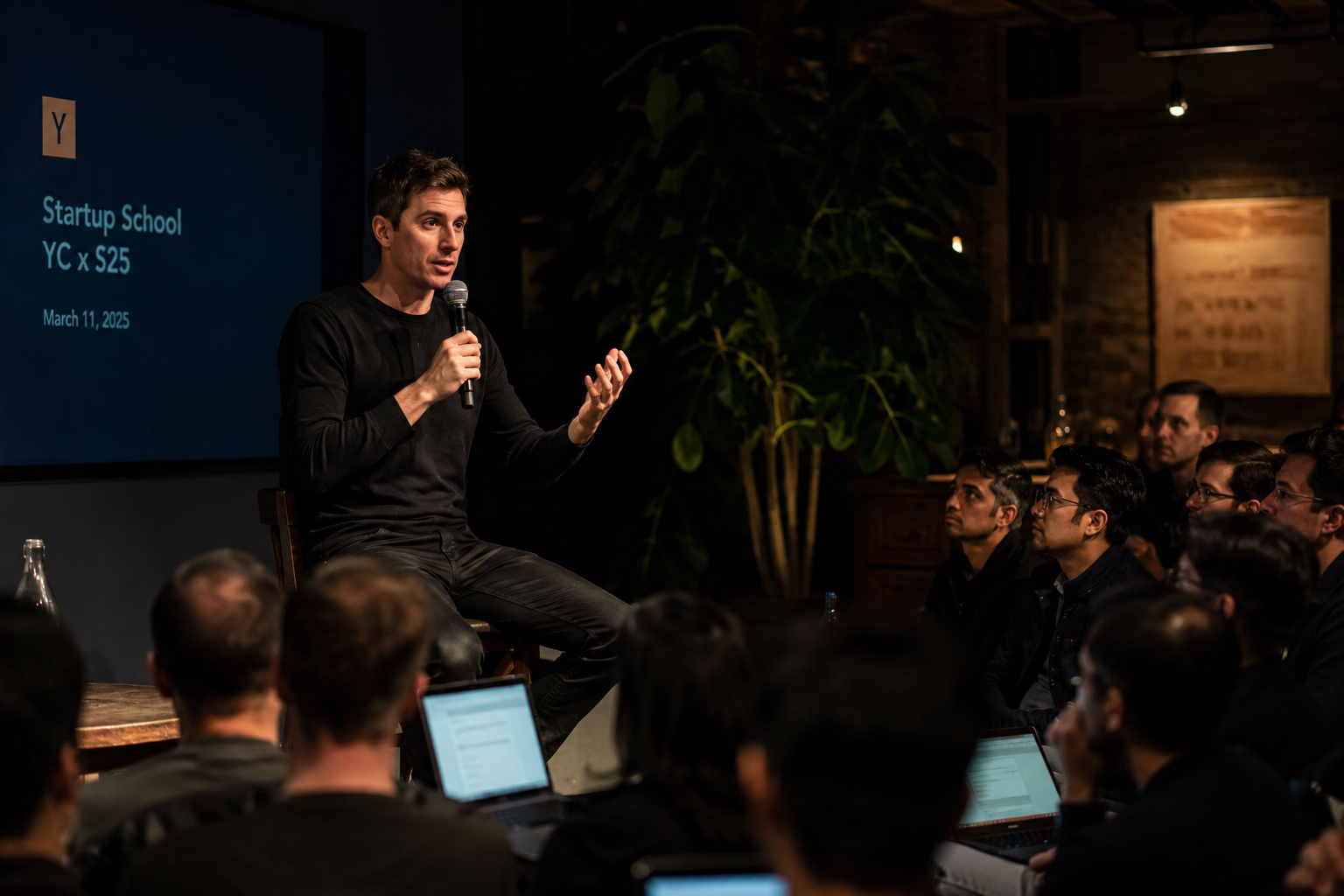
YC partner Tyler Bosmeny went on X and called it a “mic drop moment.” And yeah, I get why. On the surface it sounds like a pretty wild deal — free compute to build your company, and OpenAI gets a small piece if you succeed. Simple enough. But I’ve been thinking about this since the news broke and honestly the more I look at it, the more complicated it gets.
Let me try to break down what’s actually going on here, because most of the coverage I’ve seen is either uncritically excited or weirdly paranoid.
What the deal actually is
The structure is an uncapped SAFE. For those who don’t know, a SAFE — Simple Agreement for Future Equity — is how a lot of early-stage deals work. You don’t fix the valuation right now. Instead, the equity converts whenever the startup does its first proper priced round, which is usually the Series A. “Uncapped” means there’s no ceiling on the valuation at conversion.
This matters a lot. If your startup raises a Series A at a $100 million valuation, the general math floating around on X suggests OpenAI ends up with something like 2% equity. If you raise at $500 million, that percentage gets smaller. So there’s a scenario where this is genuinely a good deal for founders — you get $2 million in compute now when you most need it, and you give up a small slice later when you’re already doing well.
Jared Friedman, a managing director at YC, confirmed the structure to TechCrunch and said the SAFE will convert at the Series A. He also said, interestingly, that it won’t include a Most Favored Nation provision. This is actually pretty founder-friendly MFN means if you later give someone else better terms, the earlier investor automatically gets those terms too. Without MFN, OpenAI doesn’t get an automatic upgrade if you do a better deal down the road. YC’s own standard deal does include MFN, so this is actually a slightly softer deal in that one specific way.
Also worth noting: the deal runs through OpenAI as a company, not through Altman personally. He was clear about that on X.
Why OpenAI is doing this
This is where I think people are being a bit naive if they take the deal at face value.
For OpenAI, this is a two-for-one. They get equity stakes in 169 early-stage companies, which is basically running a micro-fund across an entire YC cohort for the cost of compute they already own. And they get 169 startups building deeply on OpenAI infrastructure from day zero. That second part is probably worth more to them than the equity.
Think about it this way. If you burn through $2 million in OpenAI tokens while building your product, you’ve built your entire stack around their API. Your team knows it, your product depends on it, and switching to Anthropic or Mistral or whoever later becomes a real project, not just a config change. OpenAI is essentially buying customer lock-in at scale, and getting equity on top of that. For them it’s a very efficient use of compute that costs them real money to produce but has high strategic value as a distribution mechanism.
Tom Blomfield, another YC partner, put it pretty bluntly on X: “OpenAI is willing to exchange $800m of compute for ~2% equity in 400 YC startups.” Which is a way of saying — yes, it’s generous, and OpenAI isn’t doing it out of charity.
The actual risk that nobody is saying clearly enough
Jason Calacanis went on X with a warning that I think is worth taking seriously, even though he has his own competing fund and accelerator so you have to adjust for that. His concern: if you take these tokens, OpenAI is now both your infrastructure provider AND an equity holder who is watching what you build. And if your product gets traction, there’s a real chance OpenAI could build it themselves and put it in their free tier.
The counterargument — which TechCrunch made and I think is correct — is that OpenAI can already do this. They already see what API customers are building. Taking equity doesn’t give them magic new access to your product roadmap. If they wanted to copy you, they could copy you whether they own 2% or 0%.
But here’s where I land on it: taking equity does change the relationship. Not because of legal access, but because of incentive. An investor with a stake in your success is supposed to help you. But an investor who also controls the infrastructure you depend on? That’s a different kind of investor. The conflict is subtle but it’s real. What happens when your product competes with something OpenAI is building internally? Will they keep your API costs the same? Will they deprecate a model endpoint you’re relying on? These aren’t hypotheticals — there have already been cases where OpenAI deprecated older API versions and some startups had to scramble.
I’m not saying the deal is bad. I’m saying the relationship becomes more complex.
What I’d actually think about if I were a YC founder right now
First: do you actually need this compute right now? $2 million in tokens sounds like a lot, but some heavy AI products burn through that in months. Uber apparently already used up their entire annual token budget this year — that’s a different scale, but the point is tokens go fast if you’re building something compute-intensive. If you’d blow through $2M and have nothing to show for it, this deal is bad.
Second: are you already planning to use OpenAI as your primary model provider? If yes, this is probably a fine deal. You’re getting subsidized costs for something you’d pay for anyway, and the equity you’re giving up converts when you’re already funded. But if you were considering mixing providers — maybe using Claude for some tasks, GPT for others, maybe trying a local model for cost control — this deal pushes you toward OpenAI by default.
Third: what stage are you at? The uncapped SAFE structure matters here. If you’re a hot company and you think you’ll raise your Series A at a huge valuation, the equity cost becomes very small. But that’s if you think you’re doing well. If your Series A valuation is modest, you’re giving up more.
And honestly, there’s a fourth thing I keep thinking about: what happens if a much better model comes out before your Series A and it’s not from OpenAI? You’ve spent your entire token budget on infrastructure that might not be the best option anymore, and you’ve already given up the equity. This is basically what the Hacker News comments have been going back and forth about since yesterday the deal is priced in today’s token rates, but model quality and cost changes fast.
The broader thing this signals
What I find more interesting than the deal itself is what it says about where we are.
The concept of “tokenmaxxing” Altman’s own word in his X post — is becoming a real operating strategy. Not just at the startup level. Meta apparently had an internal leaderboard tracking employee token usage that went viral internally and then got taken down. The idea that compute throughput = productivity is catching on in a weird way, and Altman is clearly betting that the startups who lean into heavy AI usage will be the ones that win.
So in a way this deal is also a bet on a specific theory of how software companies are going to work in 2026 and beyond. Build fast, burn tokens, use AI throughout your internal processes, not just in your product. Whether that theory is right is still an open question, at least in my view.
But OpenAI is clearly trying to be the platform that makes that bet easy to place.
So should they take it?
I think most founders who were already planning to use OpenAI heavily should probably take it. The equity cost is low if you execute well, and the compute access at this stage is real. The “platform risk” concerns are valid but not unique to this deal you face platform risk the moment you build on any external API.
The ones who should think more carefully are founders in spaces where OpenAI is actively building products, founders who want optionality to switch providers, and founders who worry about raising at a lower valuation and giving up more than they expected.
This deal is smart for OpenAI. That doesn’t automatically make it bad for founders. But going in without thinking through the actual math and the actual relationship dynamics — that’s the mistake to avoid.
As of right now the pilot covers both the Spring and Summer 2026 YC batches. We don’t know yet how many startups will sign, but given the reaction online, I’d guess most of them will.