A friend messaged me last week asking if he should sell his iPhone 15 Pro now or wait. I told him to wait. He came back with “but what’s even coming that’s new?” — and honestly, fair question. The iPhone 17 Pro didn’t exactly set the world on fire. So I spent a few days going through every leak, analyst note, and Weibo post that got translated into English and reshared seventeen times, and I think I have a real picture now.
The short version: the iPhone 18 Pro is shaping up to be one of the more interesting upgrade cycles Apple has had in a few years. Not because everything is new — it isn’t. The design is mostly the same. But a few things are genuinely different this time, and some of them matter more than the usual “15% faster chip” stuff Apple says every year.
A lot of this is still rumor territory. Apple hasn’t confirmed anything and won’t until September. These leaks come from Ming-Chi Kuo, Mark Gurman at Bloomberg, and several Weibo-based supply chain sources — a mix of very reliable and occasionally way off. I’ll flag where things are uncertain. Let’s go through all of it.
The Camera Change Nobody Else Has Pulled Off Yet
This is the one. Every iPhone so far has had a fixed aperture — the lens opening doesn’t change. Apple uses software tricks to fake depth of field and handle light in different situations, and honestly they do it pretty well. But it’s not the same as what an actual camera does.
The iPhone 18 Pro is reportedly getting a mechanical variable aperture on its main 48MP Fusion camera. Ming-Chi Kuo reported this first, and multiple supply chain sources have confirmed it since. The aperture works like a DSLR — open it wide in dark places to let more light in, close it down when there’s plenty of light and you want sharper edges and more controlled depth of field.
If you’ve shot with a mirrorless at f/1.8 versus f/8 — same subject, same scene, completely different photos — you know what this means. iPhones right now can only fake part of that. The 18 Pro would do it mechanically. In your pocket.
Does this matter if you’re photographing food? Probably not. But for portraits, street photography, or low-light shooting — this is a real, usable upgrade, not just a spec on a box.
And it’s not just the aperture change. Samsung is reportedly building a new three-layer camera sensor specifically for this phone, designed to reduce noise and make the camera respond faster. So the whole main camera hardware is getting a proper overhaul. The selfie camera is also rumored to jump from 12MP to 24MP — a big upgrade for video calls and self portraits.
One honest uncertainty: some reports say variable aperture is on both Pro models, but Macworld’s April 2026 roundup left open the possibility it’s Pro Max only. If you’re buying specifically for the camera, worth keeping an eye on that before spending.
Dynamic Island — Finally Shrinking
Apple is reportedly shrinking the Dynamic Island by around 35% on the iPhone 18 Pro. The way they’re doing it: one Face ID component — the flood illuminator — gets moved under the display. The pill-shaped cutout stays but becomes noticeably smaller.
There was a rumor earlier this year that the 18 Pro would go to a full punch-hole design, camera sitting top-left corner. Weibo leaker Instant Digital called that completely wrong. What’s actually moving under the screen is an infrared sensor, not the camera. So Dynamic Island stays, just slimmer.
Honestly I didn’t hate the Dynamic Island. It grew on me. A smaller version is better — more screen, cleaner look. But full under-display Face ID is still at least a generation away. The 18 Pro is a halfway step, and some people have been waiting years for the full thing. That’s going to be frustrating for them.
A20 Pro Chip — the 2nm Thing Actually Matters
The A20 Pro is Apple’s first chip built on a 2-nanometer process, a step from the 3nm A19 Pro. Apple is expected to announce around a 15% speed increase and roughly 30% better power efficiency.
The efficiency number is more interesting than the speed. Faster chips, after a certain point, you stop noticing in daily use. Better efficiency means longer battery life from the same battery — and the 18 Pro is also getting a bigger battery on top of that. Both improving together.
The chip also uses something called Wafer-Level Multi-Chip Module (WMCM) packaging. RAM gets embedded directly on the same wafer as the CPU, GPU, and Neural Engine instead of being mounted separately. More memory bandwidth, lower latency, smaller physical footprint. Reports also point to 12GB of RAM across the Pro lineup.
For Apple Intelligence — the on-device AI features — this matters a lot. I used Apple Intelligence on iPhone 17 and some of it still felt half-baked in early 2026. The writing tools were decent. Siri was still often frustrating. The A20 Pro gives it more room to run locally without sending everything to the cloud, and that should show up in actual responsiveness.
Battery Life That Might Actually Last All Day
The iPhone 18 Pro Max is expected to carry a 5,100 to 5,200 mAh battery — up from 5,088 mAh on the 17 Pro Max. The raw jump looks small on paper. But pair that with the efficiency of the 2nm chip, the improved LTPO+ display that sips less power at lower refresh rates, and you’re potentially looking at the best battery life Apple has put in any phone.
The Pro Max will be slightly thicker and heavier to fit it — around 8.8mm and over 240 grams. That will bother some people. The iPhone Air sold reasonably well last year specifically because people wanted something lighter, even with weaker cameras. So the Pro Max going heavier is a real trade-off you need to be honest with yourself about.
The standard iPhone 18 Pro battery numbers are much less clear. No reliable leak has given a specific figure yet, which is annoying when you’re comparing sizes.
C2 Modem and Real Satellite Internet
The iPhone 18 Pro gets Apple’s C2 modem, the second generation of Apple’s in-house 5G chip. Faster speeds, better power draw, and support for mmWave 5G in the US — which the C1 couldn’t do.
But the more interesting part is satellite internet. Not just emergency SOS — actual browsing over satellite. The C2 modem reportedly supports NR-NTN (New Radio Non-Terrestrial Networks), meaning full internet access through satellites when there’s no regular cell signal. You’re camping somewhere with zero bars. You can still load a map or message someone.
Whether real-world speeds will be actually usable is something nobody has answered yet. Satellite latency is still a problem even with services like Starlink. But the capability being there at all — not just for emergencies — is a meaningful step up.
The 18 Pro is also expected to include Apple’s N2 wireless chip for Wi-Fi and Bluetooth. Newer wireless chips usually bring better range, faster Wi-Fi speeds, and lower power draw for Bluetooth audio. Not headline-grabbing but you’d notice the absence.
Colors: Deep Red Is Finally Happening. Black Isn’t.
iPhone 17 Pro launched without a black option for the first time — Silver, Cosmic Orange, Deep Blue. A lot of people were genuinely upset. And according to Weibo leaker Instant Digital, the iPhone 18 Pro won’t have black either. Second year in a row. At this point it seems intentional on Apple’s part, not an accident.
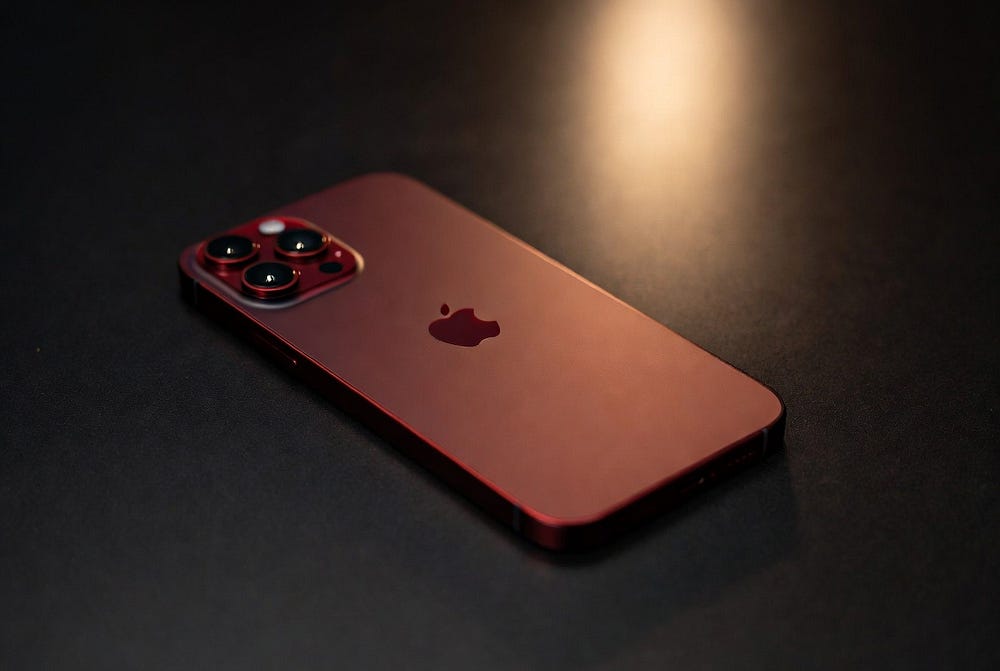
What it will have is deep red. Mark Gurman at Bloomberg said Apple has been testing a “deep red” finish — more of a rich burgundy or dark wine tone, not the bright red on standard iPhones. Some Weibo leakers are also mentioning coffee brown and purple as possibilities. Whether those are separate colors or different descriptions of the same reddish tone is still unclear.
People have wanted a Pro in red for years. And based on what’s been described — a muted, sophisticated red on a titanium frame — it could look really good. But two years without black is going to keep annoying a significant portion of buyers, and Apple knows exactly what it’s doing.
Design Changes: Subtle But Real
The overall form factor stays the same as the 17 Pro — titanium frame, three-lens rear camera plateau, screen sizes at 6.3 inches for the Pro and 6.9 inches for the Pro Max. If someone sees you using an 18 Pro, they will not be able to tell it from a 17 Pro. That’s fine for some people and genuinely frustrating for others.
A few visual tweaks though. Apple is reportedly dropping the two-tone back design — where the camera area and the rest of the glass had slightly different finishes on the 17 Pro — in favor of a more uniform look. Better alignment between the Ceramic Shield glass and the frame. There’s also a vague rumor about a “slightly transparent” section on the Ceramic Shield back near the MagSafe area, though nobody has explained what that actually looks like or whether it’s even real.
The Camera Control button is getting simplified. Right now it uses both capacitive touch (swipe gestures) and pressure sensing. The 18 drops the capacitive layer, going pressure-only. I actually think this is a good call. Camera Control on iPhone 17 sometimes registered a swipe when I wanted a press, or just didn’t respond. Pressure-only should be more reliable. You lose some gesture options but gain consistency.
What’s Actually Not Great — The Real Cons
Okay, let’s be straight about the downsides.
The design hasn’t changed in any meaningful way. You’re paying $1,100 for something that looks identical to a phone Apple sold last year. If visual differentiation matters to you — and for a lot of people it does — this is going to feel like a let-down.
Full under-display Face ID isn’t here. One component moves under the screen, the Island shrinks, but the cutout stays. If you’ve been waiting specifically for a completely clean front display, you’re waiting at least another year.
Variable aperture is a first-generation feature on iPhone. That means there will almost certainly be quirks. Maybe it adds some thickness to the camera module. Maybe there are edge cases where the mechanical parts don’t behave exactly as expected. New hardware always has something that only shows up after reviewers spend two weeks with it.
The standard iPhone 18 isn’t coming until spring 2027. Apple has never staggered the lineup this way before. If you want a regular-priced upgrade in the fall, your only options are paying Pro prices or buying last year’s model. That’s a real problem for people who budget for upgrades and aren’t looking to spend $1,100.
And the iPhone Fold is launching the same week. It’s going to dominate every headline in September. The iPhone 18 Pro — even with its genuine upgrades — risks being described as “the other phone Apple also launched” in most reviews. That won’t affect the product itself, but it affects how much the general conversation centers on it, which matters for people who rely on reviews to make decisions.
The Foldable Is Happening and You Should Know About It
The iPhone Fold launches alongside the 18 Pro in September. Mark Gurman called it “the most significant overhaul in the iPhone’s history” — above iPhone 4, above iPhone 6, above iPhone X. It opens like a book, roughly 5.5 inches closed and 7.8 inches fully open. Same A20 chip. Price expected above $2,000.
For most people considering an 18 Pro, the Fold is not a realistic alternative. $2,000+ is a lot. And first-generation foldables always have compromises — the crease on the inner display, hinge durability questions, software that isn’t fully optimized yet. Remember the original Samsung Galaxy Fold? Screen peeling within days for some reviewers. I’m not saying Apple will have those problems. But first-gen anything has something.
The 18 Pro will be the smarter, more practical choice for most people. The Fold is for early adopters who want to be first and can absorb the cost of a potential rough edge or two.
Who Should Actually Buy This Phone
If you’re on iPhone 15 Pro or older — yes, the 18 Pro is probably worth it. Variable aperture camera, much better battery, 2nm chip, smaller Dynamic Island. That’s a real jump over two or three years of holding on.
If you’re on iPhone 16 Pro — I’d personally skip it. Design is basically identical, and while the camera upgrade is real, it won’t meaningfully change your day-to-day.
If you’re on iPhone 17 Pro — there’s genuinely no reason to upgrade. You have the good camera, the fast chip, solid battery. The 18 Pro gives you a slightly smaller Dynamic Island and a new color. Not worth $1,100.
If you’re on a standard iPhone — 15 or 16 — and thinking about moving to Pro for the first time, September 2026 is actually a great time. You’d skip the 17 Pro and jump straight to variable aperture, 2nm chip, and big battery improvements in one go. That’s a satisfying upgrade.
What We Still Don’t Know
The colors are still messy. Gurman says deep red. Instant Digital says coffee, purple, burgundy. These could all be the same dark reddish tone described by different people, or they could be separate options. We’ll probably know more after WWDC in June.
Whether variable aperture is on both Pro sizes or just the Pro Max is still unconfirmed. The 18 Pro battery size hasn’t been leaked. Storage tiers aren’t out yet. Exact display brightness specs for the new LTPO+ panels are unclear. And nothing definitive has been said about whether the 24MP selfie upgrade applies to both models or just one.
What does seem solid: September 2026 launch for the 18 Pro, 18 Pro Max, and the Fold. Supply chain sources say trial production has already started, with mass production expected around July — right on schedule.
So if your current phone is working fine, wait until at least June. WWDC might reveal more, and leaks get much more specific in the months before launch. But if you’re planning to upgrade this fall anyway, the iPhone 18 Pro lineup looks like the most interesting September Apple has had in a while. Variable aperture alone puts it in a different conversation than anything the 17 Pro was offering. Whether that’s enough depends entirely on where you’re upgrading from.