There’s a quiet kind of excitement building around Apple’s least glamorous iPad. Not the Pro with its tantalizing OLED display. Not the Air, which got a shiny M3 upgrade just weeks ago. We’re talking about the plain, unfussy, starts-at-$349 base iPad — the one that’s been sitting in the corner while every other product in Apple’s lineup got a glow-up.
That’s about to change. According to Bloomberg’s Mark Gurman, writing in his Power On newsletter on March 22, 2026, Apple has been on track since last year to launch a refreshed entry-level iPad in the first half of 2026. The device is slated for release in the iOS 26.4 timeframe, which runs through May. iOS 26.4 already hit release candidate stage in mid-March, which means this launch window is closing fast. If you’ve been waiting for a reason to finally replace that aging tablet, here it comes.
The headlining change? The A16 chip is out, and the A18 is in. That might sound like a minor spec bump, and in some ways it is. But the implications reach much further than raw performance numbers. This is the chip that brings Apple Intelligence to Apple’s cheapest tablet — and that’s either a huge deal or a mild curiosity, depending on how optimistic you are about where Apple’s AI features are actually headed.
What the A18 Actually Brings to the Table
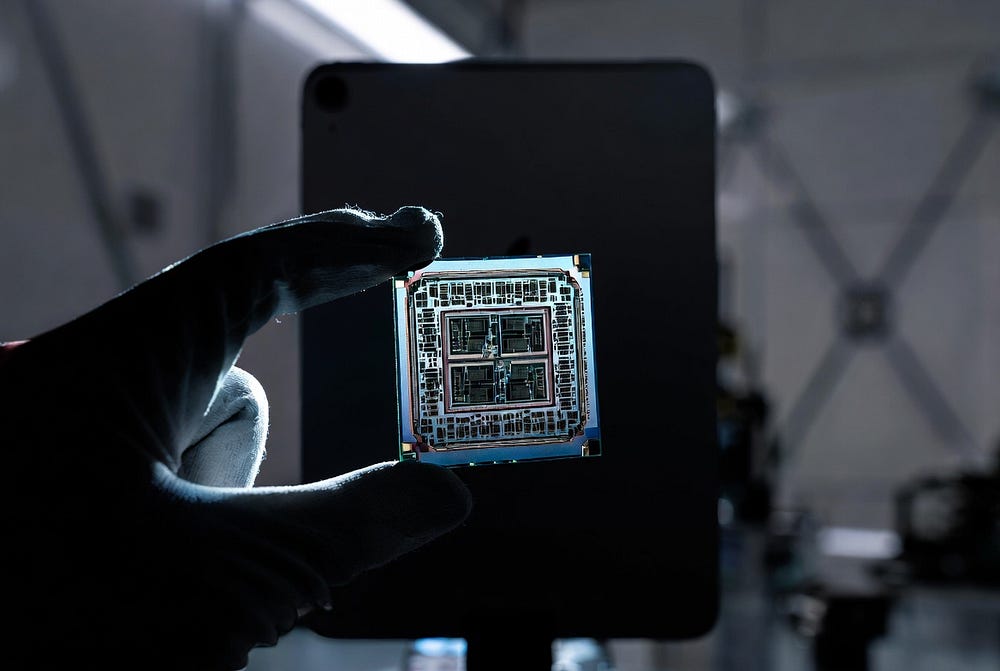
Let’s start with the performance side, because it’s genuinely impressive even if it isn’t the main story here. The A16 Bionic, which currently powers the base iPad, was the chip inside the iPhone 14 Pro. Good chip. Launched in 2022. By the time this new iPad ships, it’ll be powering a device that’s potentially three or four years behind the curve at launch. The A18, by contrast, is the chip Apple put inside the iPhone 16 series — a 3nm design built on TSMC’s second-generation N3E process, with a significantly more capable Neural Engine and measurably better GPU performance.
What that means in practice: faster app loads, smoother multitasking, better performance in creative apps like Procreate or LumaFusion, and a device that should feel genuinely quick for at least five or six years. The base iPad has always punched above its weight in day-to-day usability, and the A18 only extends that run.
But here’s the part most people are actually paying attention to. The A18 is the minimum required chip for Apple Intelligence, Apple’s on-device AI feature set that has been rolling out across the iPhone 16 lineup and the M-series iPad and Mac products. The current base iPad, running an A16, is completely locked out. It can’t run Writing Tools, can’t use Image Playground, can’t touch the enhanced Siri features that Apple has been building toward since WWDC 2024. It’s a bit of an awkward omission for a product that Apple sells to students, families, and first-time tablet buyers — exactly the people who might actually care about these features.
The A18 fixes that. Once this iPad lands, it’ll be the most affordable Apple device with Apple Intelligence support. That’s a meaningful headline for Apple to sell, even if the AI features themselves are still catching up to their original promises.
The Apple Intelligence Asterisk
This is where I’ll be honest with you, because the marketing around Apple Intelligence deserves a bit of scrutiny. The features that are actually available right now — Writing Tools, image generation, some basic Siri improvements — are useful but not exactly mind-blowing. The features that would genuinely wow someone, like the deeply integrated Gemini-powered Siri upgrade with real contextual awareness, are expected to arrive with iOS 26.5, not 26.4. Which means the iPad launching in this window gets Apple Intelligence, yes, but not the version Apple was originally promising at WWDC 2024.
That’s not a reason to skip the product. It’s just worth knowing. If you buy this iPad expecting a dramatically smarter assistant experience out of the box, you’ll be waiting a bit longer. The good news is that the device will absolutely support those features when they arrive — that’s precisely the point of getting the A18 aboard.
To be fair, even the current Apple Intelligence features have their uses. The writing assistant is genuinely handy for students. The summarization tools work well for email-heavy workflows. And the on-device processing means your data isn’t going anywhere you didn’t ask it to go, which matters more to some people than the features themselves.

The C1 Modem Question
One detail that hasn’t fully crystallized in the rumor circuit yet: whether this new iPad will include Apple’s in-house C1 modem and the N1 networking chip. Both debuted in the iPhone 16e earlier this year and represent Apple’s first serious push into silicon it designs end-to-end for wireless connectivity. Gurman notes the possibility but flags that the rumors aren’t concrete on this point.
If Apple does include these chips, it would be another incremental but meaningful improvement — better power efficiency during cellular use, potentially improved Wi-Fi performance from the N1, and another step toward Apple reducing its dependence on Qualcomm modems across the whole product lineup. If they don’t, the iPad still gets the A18 and all that comes with it, so it’s not a deal-breaker either way. Just something worth watching when the official announcement comes.
Who This iPad Is Actually For
Here’s a question worth asking: in a world where Apple now sells the MacBook Neo for $599, who exactly is the market for a base iPad that costs $349 — and potentially $598 with the Magic Keyboard Folio attached?
That’s a real tension that the folks at 9to5Mac flagged recently, and it’s not a trivial one. If you’re a buyer who wants to use an iPad as a laptop replacement, you’re looking at a keyboard accessory that costs almost as much as the tablet itself. At that point, the MacBook Neo starts looking like the smarter spend — it runs full macOS, has a built-in keyboard and trackpad, and ships with a battery life story that most iPad keyboard combos can’t quite match.
But that framing misses the point of the base iPad entirely. The $349 price tag isn’t aimed at people who want a laptop substitute. It’s aimed at students who need a device for note-taking and research, kids who need something durable and controllable for schoolwork, travelers who want a light screen for reading and streaming, and — honestly — a huge chunk of people who just want a nice, fast tablet that runs Apple apps without spending $750 or more. For all of those buyers, the base iPad with an A18 is a compelling product. The keyboard argument is a different conversation.
Apple also sells the Magic Keyboard Folio at $249, which is a lot for a keyboard. That’s a reasonable criticism. But the iPad doesn’t need a keyboard to be useful. Most people who buy this device never attach one.
Think about what the base iPad actually competes against. The Samsung Galaxy Tab A9+ starts around $280 and runs Android on a chip that doesn’t come close to the A18 in benchmark performance. Amazon’s Fire tablets are fine for streaming but struggle the moment you ask them to do anything more demanding. The base iPad, even at its current A16 configuration, is faster than nearly everything else in its price tier. With the A18, that gap widens further. In raw performance per dollar, this product is almost comically good value — which is why Apple sells so many of them.
The education market deserves specific mention here. Schools and districts buy base iPads in the thousands, and they care about three things: reliability, longevity, and manageability via Apple’s MDM tools. The A18 extends useful device life significantly, which means schools can justify keeping these on students’ desks for longer before a refresh cycle. That’s not nothing. Apple’s education business has been built substantially on the base iPad, and a chip upgrade that adds years of future-proof capability is a genuine selling point to procurement teams, not just individual consumers.
Why the Chip Generation Gap Matters Less Than You’d Think
There’s a familiar pattern in Apple’s chip strategy for the base iPad: it runs a chip that’s roughly two generations behind the iPhone at launch. The current iPad launched with the A16, which debuted in the iPhone 14 Pro in 2022. The new one gets the A18, which launched with the iPhone 16 in 2024. Two years behind, same as before.
Some people find this annoying. And I get it — Apple is essentially recycling chips across its product lines in a way that’s clearly calculated. But the practical reality is that for most tablet tasks, the difference between an A18 and an M3 is not something you’d ever feel with your fingers. Browsing, streaming, writing, drawing, light video editing — the A18 handles all of it without breaking a sweat. The M-series chips earn their keep in Pro workflows: 4K video editing, large Xcode projects, running multiple professional apps simultaneously. That’s not what this iPad is for.
The A18 is, by any reasonable measure, a fast chip. It’s also efficient enough that battery life should be genuinely good — the 3nm process is significantly more power-conscious than the 5nm A15 and A16 nodes that came before it. For a device that a lot of people use in tablet mode for hours at a time, that matters quite a bit.
There’s also a longevity argument here that doesn’t get enough attention. Apple typically supports its iOS devices for six to seven years after launch. The A15-powered iPhone 13 still runs the latest iOS builds today, and the A18 should comfortably outlast that track record. If you buy this iPad and use it daily for five years, the relevant question isn’t whether it’s as fast as a MacBook Pro. The question is whether it’s fast enough to do what you need it to do for half a decade without feeling like you’re fighting the hardware. On that measure, the A18 wins easily.
Compare that to the current A16 model, which is already two years old at the component level even when new. Buy the old one today and you’re starting the clock from behind.
Apple’s Chip Recycling Strategy — Genius or Cynical?
This is probably the right moment to address something that tech writers tend to dance around: Apple’s chip hand-me-down system is deliberately designed to protect margins and preserve product hierarchy, not just to be charitable to budget buyers. When Apple puts the A18 in the base iPad, it’s because the A18 is no longer cutting-edge for iPhones and the engineering cost of including it in a lower-margin device has dropped substantially.
That’s not a critique exactly — it’s just how hardware economics work. Apple fabrics its chips at TSMC at massive volume, and as newer nodes ramp up, older node production gets cheaper. The A18 going into a $349 tablet in 2026 costs Apple a fraction of what it cost to put in a $799 iPhone in 2024. Everybody wins, more or less.
But it’s worth knowing this so you’re not romanticizing the move as Apple being generous. They’re being strategic. The base iPad gets a chip that’s become inexpensive to produce and which happens to unlock Apple Intelligence, which happens to be something Apple wants to say is available “across its entire lineup.” The incentives all point the same direction, and the end consumer benefits. That’s fine. Just clear-eyed about it.
What this does tell you is that the base iPad will continue to follow this pattern for the foreseeable future. Expect the 13th generation iPad, whenever it arrives in 2028 or so, to get the A18 Pro or the A19 — whatever trickles down from the iPhone 17 lineup. The gap will probably remain two years. The device will probably remain a great value. Apple’s formula here isn’t broken, so they’re not fixing it.
The Timing Is Interesting
March 2026 was a busy month for Apple. The company rolled out a week of announcements that included the MacBook Neo, the iPhone 17e, and the M3 iPad Air. A lot of people expected the base iPad to be part of that wave. It wasn’t. And nobody at Apple offered a public explanation for the gap.
Gurman’s reporting suggests the product simply wasn’t ready in time for that launch window, but that the road map remains intact. The iOS 26.4 release candidate hitting in mid-March signals that the software side is essentially done, which is usually a good indicator that hardware announcements are near. April looks like the most likely window, though May remains possible if supply chain considerations push things back.
That kind of vague two-month window might feel frustrating if you’re actively in the market right now. Should you buy the current A16 iPad on a deal and call it a day? Or wait?
Honestly, if you’re within a month or two of this launch and you’re not in a rush, waiting is almost certainly worth it. You’ll get a faster chip, Apple Intelligence compatibility, and — presumably — a device that Apple will support with software updates for several more years. The A16 iPad is a good product, but it’s going to feel increasingly dated as Apple Intelligence matures, especially given that the base model is the only major Apple device that currently lacks support.
Apple’s Broader AI Moment — And What This Means
There’s a bigger picture here that’s easy to miss if you’re just tracking product specs. Apple is in the middle of a quiet but significant push to make Apple Intelligence a standard feature across its entire lineup, not a premium differentiator. The iPhone 15 Pro was the first device to support it. Then the iPhone 16 line brought it to non-Pro phones. The iPad Pro and iPad Air got there with their M-series chips. Now the base iPad is next.
After this launch, every current-generation Apple device will support Apple Intelligence. That’s the moment Apple’s been building toward — the point at which the features stop being a selling point for expensive hardware and start being a baseline expectation. Whether the features are compelling enough to justify that status is a fair debate. But the infrastructure is almost there.
And there’s something quietly notable about the base iPad being the last piece of that puzzle. It’s Apple’s highest-volume tablet. It sells to schools, families, and budget-conscious buyers who aren’t reading tech blogs or tracking chip generations. When those buyers start getting Writing Tools and enhanced Siri features alongside everyone else, that’s when Apple Intelligence becomes genuinely mainstream in the way the company has been promising.
What Would Make This Launch Actually Exciting
The A18 chip is the star of this story, and the Apple Intelligence angle is the marketing narrative Apple will push hard. But if there’s one thing that would genuinely surprise people — and I say this as someone who’s tracked too many “minor refresh” iPad announcements — it would be any movement on the accessories side.
The base iPad still uses Lightning. Wait — no, it moved to USB-C with the 11th generation. What it still uses is the first-generation Apple Pencil, which requires that awkward Lightning-to-USB-C adapter for charging and doesn’t support hover detection or the tilt-sensitive features of the second and Pro Pencils. Apple Pencil support has always been the base iPad’s most frustrating limitation, and it persists partly by design — Apple wants to keep a clear gap between this device and the more expensive Air and Pro models.
That gap will almost certainly remain with this refresh. The A18 iPad will still support only the first-gen Pencil, will still come in the same familiar rectangular form with Touch ID in the top button, and will still start at $349. Boring is kind of the brand here.
And maybe that’s fine. The base iPad has been “boring” in design terms since 2022’s major redesign, and that design is genuinely good — thin, light, fast, and with a screen that’s more than sufficient for most uses. Boring and excellent aren’t mutually exclusive.
Should You Wait for It?
If you’re currently using an iPad from 2020 or earlier, yes — waiting a few weeks for this refresh is a pretty easy call. You’ll get a dramatically faster device, modern chip support, and Apple Intelligence capabilities that older hardware simply can’t run.
If you’re using a 2022 or 2023 base iPad with an A14 or A15 chip, the calculus is more personal. The A18 is meaningfully faster, and the AI feature gap will matter more as iOS 26 matures. But your current iPad isn’t slow. It’s still capable. Upgrading purely for Apple Intelligence today might feel anticlimactic given that the more impressive AI features aren’t fully live yet.
If you’re looking to buy a first tablet — for yourself, a family member, or a student — just wait. A few weeks to potentially get two extra years of relevant chip life and Apple Intelligence support is worth a little patience.
The base iPad has always been Apple’s most underrated product. It doesn’t get the breathless coverage of an iPhone launch or the design praise of an iPad Pro reveal. But more people buy it than any other tablet Apple makes. And with the A18 inside, it’s about to become considerably harder to argue against.

The Bigger Picture
Apple won’t throw a big event for this. There’ll be a press release, a few hours of tech Twitter excitement, and then it’ll quietly become the default answer to “what iPad should I buy?” for the next two years.
That’s exactly how Apple likes it. Steady, predictable, and positioned to sell millions of units to people who just want something that works. The A18 chip makes that proposition meaningfully stronger. Apple Intelligence eligibility makes it future-proof in a way the current model isn’t.
The budget iPad was the last holdout in Apple’s AI hardware story. Not for much longer.