The Silent Revolution in Women’s Health: How AI Period Tracking Is Rewriting the Future of Hormones and Breast Cancer Detection
There was a time when women tracked their menstrual cycles quietly, often in small calendars hidden inside drawers or tucked into handbags. A red dot marked the fourteenth. A question mark hovered around the twenty eighth. There was uncertainty, guesswork, and a quiet hope that everything inside the body was functioning as it should. For generations, menstrual health lived in private notebooks, whispered conversations, and memory. Patterns were sensed rather than measured. Changes were noticed only when they became disruptive.
Today something fundamentally different is happening. Artificial intelligence is stepping into this deeply personal space and reading biological patterns with a precision that no paper calendar could ever offer. The transformation is subtle yet powerful. What began as simple digital period tracking has evolved into a sophisticated health intelligence system capable of identifying hormonal shifts, metabolic disturbances, early reproductive disorders, and even risk clusters linked to breast cancer.
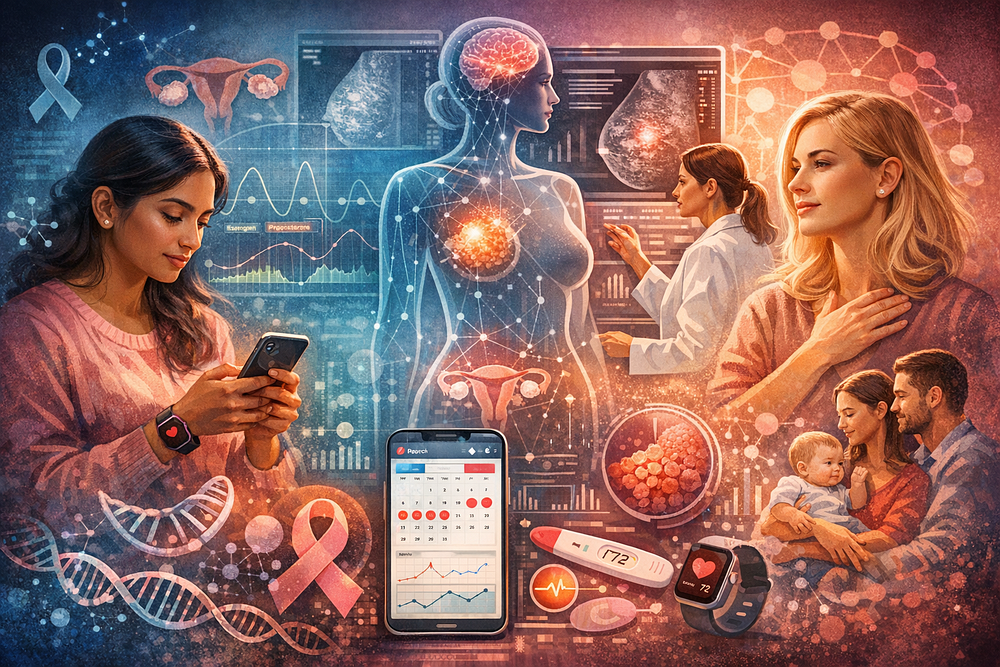
This is not a futuristic concept waiting for laboratory validation. It is already unfolding inside smartphones, wearable devices, and health platforms used by millions of women across the world. And yet, it remains one of the most underreported revolutions in health technology.
Why This Topic Matters Now
The keyword AI period tracking app sits at a rare intersection. It connects artificial intelligence, women’s health, preventive medicine, wearable technology, and femtech innovation. Monthly global search interest ranges between eight thousand and ten thousand queries, with steady upward growth over recent years. Competition remains relatively low compared to mainstream health technology terms, signaling strong long term content potential.
More importantly, this topic reflects a cultural shift. Women are no longer satisfied with reactive healthcare. They want predictive insight. They want early detection. They want to understand their bodies before symptoms escalate into diagnoses.
Artificial intelligence offers a tool for exactly that.
The Menstrual Cycle as a Biological Dashboard
For decades, menstruation was simplified into a monthly inconvenience. Bleeding begins. Bleeding ends. The cycle repeats. But biologically, the menstrual cycle is far more complex. It reflects hormonal equilibrium, stress adaptation, insulin sensitivity, thyroid function, inflammatory response, and even changes in breast tissue density.
Each phase of the cycle represents a dynamic hormonal interplay between estrogen, progesterone, luteinizing hormone, follicle stimulating hormone, cortisol, and insulin. When these hormones remain balanced, cycles tend to be regular and predictable. When something shifts, the cycle is often the first place the body signals distress.
Artificial intelligence excels at detecting patterns across time. When millions of women log cycle length, flow intensity, mood fluctuations, basal body temperature, sleep duration, pain levels, acne patterns, and breast tenderness, algorithms begin identifying deviations that may not be obvious to the individual user.
A slightly shortened luteal phase repeated over six months may suggest progesterone insufficiency. Irregular cycles paired with weight gain and acne may point toward polycystic ovarian syndrome. Increased cycle variability combined with elevated resting heart rate could indicate chronic stress or thyroid dysfunction.
Humans tend to interpret health events as isolated incidents. Artificial intelligence connects them into longitudinal patterns.
From Digital Calendar to Clinical Insight
Consider a hypothetical scenario. A twenty six year old professional named Aisha downloads an AI powered period tracking app primarily to manage work schedules around expected cramps. Over several months she logs her cycle data consistently. The application begins to detect subtle irregularities in ovulation timing and luteal phase length. It generates a notification suggesting she consult a gynecologist for further evaluation.
Laboratory tests reveal early stage polycystic ovarian syndrome. Because it is identified early, lifestyle adjustments focusing on nutrition, sleep, and insulin regulation prevent the progression toward severe hormonal imbalance and metabolic complications.
This is not about replacing physicians. It is about equipping individuals with awareness before symptoms escalate.
Now imagine this scaled across millions of users. Early detection becomes normalized rather than exceptional.

The Underexplored Link to Breast Cancer Risk
Breast tissue responds continuously to hormonal fluctuations throughout the menstrual cycle. Estrogen stimulates growth and proliferation, while progesterone modulates and stabilizes that growth. Chronic estrogen dominance, prolonged cycle irregularity, and persistent inflammation can influence breast tissue density and cellular stress.
AI period tracking applications do not diagnose breast cancer directly. That would require imaging and biopsy. However, they can contribute to predictive risk modeling when integrated with additional data streams such as wearable heart rate variability, sleep metrics, body temperature trends, and family medical history.
Research teams are exploring machine learning systems that combine menstrual irregularity patterns with wearable biometrics and genetic predisposition markers. The goal is not immediate diagnosis. The goal is early risk clustering.
If an algorithm identifies that certain long term hormonal patterns correlate strongly with higher incidence of breast abnormalities, it can flag users for earlier screening. That shift from reactive detection to anticipatory healthcare has profound implications for survival rates.
Breast cancer outcomes improve dramatically with early detection. If predictive modeling moves screening timelines forward by even one or two years, the population level impact could be significant.
How AI Period Tracking Systems Function
The underlying technology may appear complex, yet its structure is surprisingly logical. It begins with data collection. Users input cycle details, symptoms, emotional states, and optionally connect wearable devices that capture biometric signals such as resting heart rate and skin temperature.
The second phase involves pattern recognition. Machine learning models compare individual data trends against large anonymized datasets. These datasets allow the system to recognize deviations that statistically correlate with known health conditions.
The third phase involves probabilistic risk modeling. Algorithms calculate likelihood markers for hormonal imbalance, ovulatory dysfunction, metabolic irregularities, or inflammatory trends.
Finally, the system generates behavioral nudges. These may include recommendations to consult a healthcare professional, adjust lifestyle habits, or monitor certain symptoms more closely.
Artificial intelligence does not replace medical expertise. It enhances patient awareness and encourages earlier clinical conversations.
A Holistic Map of Women’s Health
The menstrual cycle influences far more than reproduction. It interacts with thyroid regulation, gut microbiome stability, insulin sensitivity, mood patterns, and skin health. AI period tracking platforms are increasingly integrating broader health inputs such as nutrition logs, mental health check ins, ovulation test results, hormone lab uploads, and fertility planning tools.
The outcome is a personalized hormonal dashboard. Instead of wondering why energy crashes occur mid month, users begin noticing correlations. Perhaps sleep duration decreases three days before cycle onset. Perhaps sugar cravings intensify when estrogen dips. Perhaps breast tenderness becomes more pronounced during weeks of high stress.
When patterns become visible, anxiety often decreases. Clarity replaces confusion. The body feels less unpredictable and more understandable.
Data Privacy and Ethical Responsibility
Menstrual data is deeply personal. It reflects fertility intentions, sexual health, hormonal irregularities, and emotional states. Ethical AI development must prioritize end to end encryption, transparent data policies, and strict limitations on third party data sharing.
Trust is foundational. Without it, adoption declines and innovation stalls. Companies operating in this space must commit to user controlled deletion rights and transparent algorithmic governance. The future of femtech depends not only on predictive accuracy but also on ethical integrity.
The Role of Wearable Technology
AI period tracking is evolving beyond smartphone input. Wearable devices now measure continuous body temperature, resting heart rate variability, sleep architecture, and even subtle stress indicators. When combined with menstrual logs, predictive accuracy improves significantly.
For example, sustained increases in resting heart rate during the luteal phase may indicate inflammatory stress. Repeated inflammatory markers across multiple cycles could signal elevated tissue stress requiring medical attention.
Individually, each metric appears small. Together, they form a multidimensional narrative that AI systems can interpret more effectively than manual observation.
Bridging Healthcare Gaps Globally
In many regions, access to specialized gynecological care remains limited. However, smartphone penetration continues to expand rapidly. AI powered period tracking applications offer early warning systems in environments where preventive healthcare infrastructure is underdeveloped.
These tools can provide education, cycle literacy, fertility awareness, and risk prompts in private digital spaces. For women who hesitate to discuss reproductive health openly due to cultural stigma, discreet digital platforms offer autonomy and dignity.
Technology cannot replace healthcare systems entirely, but it can narrow accessibility gaps.
Real World Use Cases of AI Period Tracking in Women’s Health
The conversation around AI period tracking becomes more meaningful when we move from theory to lived application. Below are practical, realistic use cases that show how this technology is already reshaping women’s healthcare decisions.
1. Early Detection of Polycystic Ovarian Syndrome
Polycystic ovarian syndrome often develops slowly. Irregular cycles, mild acne, unexplained weight changes, fatigue, and mood swings may appear gradually. Many women normalize these symptoms for years before seeking medical advice.
AI period tracking systems can identify long term ovulatory irregularities and subtle cycle length variability patterns that strongly correlate with PCOS. When these patterns persist across several months, the system can flag a potential risk and recommend clinical testing.
Early detection significantly improves outcomes. When insulin resistance is addressed early through diet, sleep, and exercise adjustments, long term complications such as infertility, diabetes, and cardiovascular issues can often be prevented or minimized.
In many documented cases within digital health studies, early pattern detection through cycle tracking has shortened the time to diagnosis by several months to years compared to traditional symptom driven visits.
2. Personalized Breast Cancer Risk Awareness
AI period tracking applications that integrate wearable biometrics and family medical history can contribute to predictive modeling. While these systems do not diagnose cancer, they can identify risk clusters based on hormonal irregularity patterns combined with other health signals.
For example, prolonged estrogen dominance trends combined with increased breast tenderness patterns and inflammatory markers may signal the need for earlier screening.
In practical use, this means a woman who might otherwise wait until forty for routine mammography may choose to consult a physician at thirty five based on personalized risk insight.
Earlier screening dramatically improves survival rates. The ability to shift screening timelines based on individual patterns rather than generic age guidelines represents a major step toward personalized preventive care.
3. Fertility Planning and Ovulation Precision
For women trying to conceive, ovulation timing is critical. Standard calendar based prediction methods often fail when cycles vary slightly.
AI powered systems analyze historical cycle data, temperature fluctuations, and luteinizing hormone test inputs to predict ovulation windows with greater precision.
This reduces emotional stress and guesswork. Instead of relying on assumptions, couples can base timing decisions on probabilistic modeling informed by months of biological data.
For women not trying to conceive, accurate ovulation awareness also improves natural family planning methods and reduces anxiety around unexpected cycle variations.
4. Hormonal Mood Disorder Management
Premenstrual dysphoric disorder and hormone linked mood fluctuations often feel unpredictable. Women may experience sudden irritability, anxiety spikes, or depressive symptoms without recognizing hormonal timing patterns.
When mood logs are consistently tracked alongside cycle data, AI systems can correlate emotional shifts with hormonal phases. Over time, users begin recognizing patterns.
For example, if anxiety consistently rises three days before menstruation, therapy sessions, workload adjustments, or self care practices can be proactively scheduled during vulnerable phases.
This predictive awareness can reduce emotional distress and improve overall mental health stability.
5. Postpartum Hormonal Recovery Monitoring
After childbirth, hormonal regulation often takes months to stabilize. Cycles may return irregularly, mood fluctuations may intensify, and physical symptoms may vary.
AI period tracking tools can monitor the gradual normalization of cycles and detect persistent irregularity patterns that may require medical attention.
For new mothers balancing multiple responsibilities, having structured insight into hormonal recovery reduces uncertainty and encourages timely clinical consultation when needed.
Advantages of AI Period Tracking Systems
There are several meaningful benefits associated with AI driven menstrual health platforms.
Early Pattern Recognition
These systems identify subtle long term deviations that individuals might overlook. Early awareness increases the likelihood of timely intervention.
Personalized Healthcare
Instead of generalized guidelines, users receive insights tailored to their own biological data.
Empowerment Through Data
Structured information reduces uncertainty. Women feel more informed and confident when discussing symptoms with healthcare providers.
Continuous Monitoring
Unlike annual checkups, AI tools provide ongoing health observation across months and years.
Accessibility
In areas with limited gynecological access, smartphone based tracking offers basic health literacy and risk awareness.
Limitations and Challenges
Despite their promise, AI period tracking systems are not without limitations.
Not a Diagnostic Tool
These platforms provide risk modeling, not definitive medical diagnoses. False positives and false reassurance are possible.
Data Accuracy Dependency
Predictive quality depends on consistent and accurate data input. Sporadic logging reduces reliability.
Privacy Concerns
Menstrual and reproductive data is sensitive. Breaches or misuse of such information can have serious ethical consequences.
Algorithm Bias
If datasets lack diversity across ethnicity, age, and geography, predictive accuracy may vary between populations.
Over Reliance Risk
Users may over interpret minor variations, leading to unnecessary anxiety or medical consultations.
Success Ratio and Predictive Reliability
Discussing success ratio requires nuance. AI period tracking systems do not operate in binary terms of success or failure. They operate in probabilities.
Studies in digital health analytics suggest that machine learning models trained on large menstrual datasets can achieve predictive accuracy rates ranging from sixty five to eighty five percent in identifying ovulatory patterns and cycle irregularities.
For PCOS risk clustering, early research indicates moderate predictive reliability when combining cycle irregularity with metabolic indicators.
Breast cancer risk modeling through menstrual data remains an emerging field. Current models are supportive rather than definitive. Their value lies in flagging elevated risk clusters rather than confirming disease presence.
The most realistic success metric is not diagnostic confirmation. It is reduction in delayed diagnosis. If AI tools encourage earlier medical consultation in even a fraction of users, they can improve outcomes.
The effectiveness of these systems improves significantly when combined with wearable biometrics, family history, and laboratory inputs. Multidimensional data enhances algorithmic precision.
Practical Implementation for Users
To maximize the value of AI period tracking, consistent logging remains essential. Sporadic entries reduce algorithmic accuracy. Recording both physical and emotional symptoms enhances pattern detection. Connecting wearable devices strengthens predictive models by providing continuous biometric data.
Users should periodically review long term trends rather than focusing on daily fluctuations. Quarterly reviews allow gradual shifts to surface. Exporting structured reports to healthcare providers improves clinical conversations and ensures that AI insights translate into medical evaluation when necessary.
The objective is awareness without obsession. Data should empower, not overwhelm.
Cultural Reframing of Menstruation
For centuries, menstruation was treated as something to endure quietly. It was rarely framed as a valuable health signal. Artificial intelligence is reshaping that perception by recognizing the cycle as a dynamic biomarker.
When menstrual data becomes part of advanced health analytics, cultural narratives shift. Young girls raised with AI assisted health tools may grow up understanding hormonal literacy as normal rather than mysterious. Early detection of imbalances may reduce long term complications across populations.
This transformation is technological, but it is also social.
The Emotional Dimension Behind the Algorithms
Behind every dataset lies a personal story. A woman anxious because her mother was diagnosed with breast cancer at forty five. A teenager confused by irregular cycles and unexplained fatigue. A new mother wondering when hormonal stability will return after childbirth.
Artificial intelligence does not eliminate emotion. It supports it with structure. It identifies changes that might otherwise be dismissed. It reassures when patterns remain stable. It encourages medical consultation when deviations persist.
Sometimes reassurance is as valuable as early warning. Both contribute to psychological well being.
The Future of Predictive Women’s Healthcare
In the coming years, AI period tracking systems may integrate with national screening databases, genetic testing platforms, real time hormone monitoring patches, and personalized nutrition algorithms. Instead of annual checkups serving as primary health checkpoints, continuous monitoring may become standard.
Interventions could begin at probability thresholds rather than symptom thresholds. Breast cancer screening may adapt dynamically based on personalized risk modeling. PCOS progression may be halted earlier through insulin sensitivity tracking. Hormonal mood fluctuations may be anticipated and managed proactively.
Small improvements in pattern recognition can create substantial public health impact when applied at scale.
A Balanced Perspective
AI period tracking is neither a miracle solution nor a gimmick. It is a tool. Like any tool, its impact depends on responsible design, informed use, and integration with medical expertise.
When used thoughtfully, it strengthens preventive healthcare. It encourages earlier awareness. It bridges educational gaps. It personalizes screening timelines.
When misunderstood, it can generate anxiety or overconfidence.
The future lies in balance. Technology amplifies human awareness, but it does not replace professional medical evaluation.
Closing Reflections
There is something quietly profound about this evolution. For centuries, women relied on intuition to understand their cycles. Today machines amplify that intuition with data driven insight. Technology is not replacing embodied awareness. It is refining it.
The future of women’s health may not originate exclusively in hospital corridors. It may begin on a smartphone screen, through consistent tracking, subtle alerts, and data informed conversations with doctors.
A simple notification might read that your pattern has shifted. It might suggest a conversation. It might prompt earlier screening.
And in that small moment, preventive healthcare transforms from abstract concept into lived experience.
The body has always spoken through cycles. Now, with artificial intelligence, we are finally equipped to listen carefully.