Apple Just Blew Up Its Own Chip Roadmap for AI — And Nobody Agrees If That’s Genius or Panic
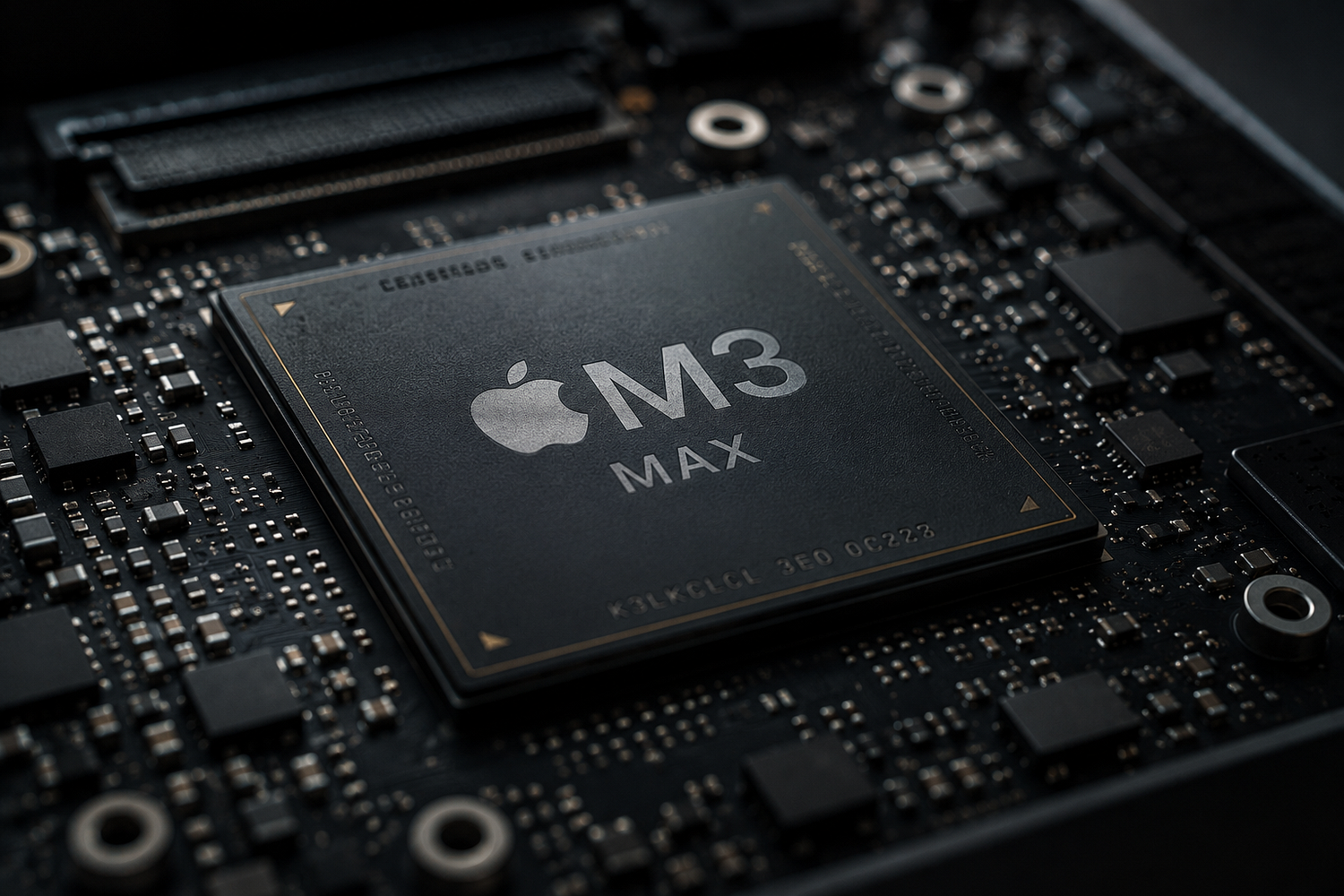
Apple has canceled a chip generation. Not delayed it. Not trimmed a feature. Canceled it, for the first time since the Apple Silicon transition began with the M1 in 2020. The M6 Pro and M6 Max — the chips that were supposed to power the next MacBook Pro, Mac Studio, and Mac mini upgrades — are not coming. In their place, Apple is fast-tracking an entirely new AI-focused chip family called M7, pulling the timeline forward by as much as six months just to get it out the door sooner.
That’s not a rumor anymore. It’s confirmed by Bloomberg’s Mark Gurman, and it lines up with what Apple’s own outgoing CEO Tim Cook told the Wall Street Journal in June: the company is dealing with a memory supply crunch he called a “hundred-year flood.” Depending on who you ask, this is either Apple making a bold, overdue pivot to win the AI hardware race, or Apple scrambling to catch up after getting caught flat-footed by an industry it helped create. Both arguments have real evidence behind them, and that’s exactly what makes this worth digging into.
The Mac Roadmap Just Got Rewritten Mid-Cycle
Here’s what was supposed to happen. Apple ships a base M6 chip, then a few months later, M6 Pro and M6 Max versions follow for the higher-end MacBook Pro, Mac Studio, and Mac mini. That’s how every generation has worked since the M1 in 2020, base chip first, Pro and Max variants trailing behind on the same architecture.
That pattern is broken now. Apple will still ship the base M6 — internally codenamed J804 — in a 14-inch MacBook Pro before the end of 2026, built on TSMC’s 2nm node. But the Pro and Max tiers of that generation simply won’t exist. Instead, Apple is skipping straight to M7, and pulling that generation’s launch forward. The base M7 (codenamed Delos) is expected in the first half of 2027, with Pro, Max, and Ultra variants — grouped internally under the codename Andros — arriving in late 2027 and 2028.
Professional Mac users who need a Pro or Max chip right now are stuck in an awkward spot. If you’re on an M4 Pro or M5 Pro machine waiting for the next upgrade, that upgrade isn’t coming until late 2027. <cite index=”6–1">That leaves an unusual 18-month gap where the current M5 Pro and M5 Max MacBook Pro remain the fastest consumer laptop chips Apple sells, simply because nothing newer for that tier is on the way.</cite> Three real options exist for anyone in that position: buy the current M5 Pro/Max machine now, wait for a rumored MacBook Ultra expected in late 2026 or early 2027 (still running M5 Pro/Max silicon, not M7), or just wait out the gap until late 2027.
Why would Apple blow up a roadmap that’s worked fine for six generations? The official line is memory bandwidth. <cite index=”9–1">The base M7 is targeting roughly 240 GB/s of memory bandwidth, up from 200 GB/s on M5 — about a 56% jump — because memory bandwidth is the main bottleneck for on-device AI inference, not raw processor speed.</cite> Apple’s chip designers have apparently decided that shipping a Pro and Max version of last year’s memory architecture wasn’t worth the effort when a full redesign was already in motion.
Apple’s Quietly Building Its Own AI Server Chip Too
While the Mac story gets most of the headlines, something arguably bigger has been happening in Apple’s data centers. For years, Apple ran its AI workloads — including the Private Cloud Compute system that handles Apple Intelligence requests too complex for an iPhone to process on its own — on repurposed Mac chips. That’s what Craig Federighi confirmed back in September 2024, and it always sounded a little strange. Using consumer laptop and desktop silicon to run server-scale AI is a bit like using a sports car engine to power a delivery truck. It might work, but it’s not what the engine was built for.
That’s changing. Apple has a project internally codenamed ACDC, first reported back in May 2024, aimed at building Apple Silicon specifically for AI server farms. By December of that year, reports emerged that Apple had partnered with Broadcom on a chip called Baltra, <cite index=”7–1">planned for mass production in 2026 and intended purely for Apple’s own internal use rather than sale to outside customers.</cite> <cite index=”7–1">Apple is reportedly working with Broadcom specifically on the chip’s networking technology, and building it on TSMC’s N3P process — the same advanced node OpenAI and Nvidia are expected to use for their own custom AI silicon.</cite>
Analyst Ming-Chi Kuo, who has a decent track record on Apple supply chain calls, says the Baltra-class chips will enter mass production in the second half of 2026, with dedicated AI data centers being constructed in 2027 and going live that same year. That’s a meaningfully different Apple than the one people picture: a company that historically kept its infrastructure spending quiet and let Amazon, Google, and Microsoft duke it out over custom AI silicon. Amazon has Trainium. Google has its TPUs. Microsoft has Maia. Meta has MTIA. Apple, notably, has been the odd one out — until now.
There’s a wrinkle worth mentioning here, and it’s the kind of detail that gets buried under the bigger headlines. Apple has also been exploring using Amazon’s Trainium2 chips to help pretrain its AI models, which is a strange thing to see one Big Tech company doing on another’s custom hardware. And separately, reports say Apple has been using a version of Google’s Gemini model as the base for training a smaller, on-device-friendly model of its own. So the picture isn’t “Apple builds everything in-house.” It’s closer to Apple building some of its own hardware while renting compute and borrowing model architecture from competitors at the same time. Make of that what you will — it’s not exactly the vertically-integrated, does-everything-itself Apple that the marketing usually suggests.
The Real Debate: Smart Bet or Playing Catch-Up?
This is where people genuinely disagree, and honestly, there’s no clean answer.
The case for “smart bet”: Apple’s entire AI pitch has always been about privacy and running things on-device instead of shipping your data to a cloud server somewhere. If that’s the strategy, then investing heavily in on-device AI silicon — even at the cost of blowing up a chip roadmap — is exactly what you’d expect a company playing the long game to do. Processing AI requests locally is also just cheaper for Apple at scale; it skips the ongoing cost of running massive data centers for every Siri request. A report on Apple’s WWDC 2026 AI strategy put it plainly: on-device processing is essentially free once the hardware exists, while cloud-based AI inference is expensive and gets more expensive as usage grows. If Apple’s chips are powerful enough to keep more AI processing local while competitors lean harder on data centers, that’s a genuine structural advantage, not just a marketing angle.
The case for “playing catch-up” is just as strong, though. Apple Intelligence launched in 2024 to fairly muted reception, Siri’s promised overhaul got delayed repeatedly, and the company’s own executives have described internal restructuring after what’s been characterized as a fumbled AI rollout. Canceling an entire chip tier mid-cycle isn’t something a company does from a position of comfort — it’s something a company does when the ground shifted under it faster than expected. The memory crunch forcing this pivot wasn’t really Apple’s choice either. It’s a byproduct of every major AI lab — Meta alone announced a $65 billion AI infrastructure budget for 2026 — competing for the same limited supply of high-bandwidth memory that only SK Hynix, Samsung, and Micron can produce at scale. Apple didn’t pick this fight. It got dragged into it by Nvidia, OpenAI, and everyone else buying up the memory supply chain.
Which read is correct? Depends on which Apple you believe you’re looking at. A company confidently building infrastructure years ahead of need doesn’t usually cancel a chip generation with six months’ notice. But a company in genuine crisis mode doesn’t usually manage to fast-track a next-gen architecture by six months either. It’s possible — likely, even — that both things are true at once. Apple got caught behind on AI, and is now moving aggressively enough that the catch-up looks, from a distance, a lot like foresight.
How Apple Stacks Up Against Everyone Else Racing to Build AI Chips
Zoom out and Apple is really just the latest name on a list that’s gotten crowded fast. Amazon has Trainium and Inferentia. Google has been building TPUs since 2015 and is now on its sixth or seventh generation depending how you count. Microsoft has Maia. Meta has MTIA. OpenAI, notably, doesn’t have decades of chip design experience the way Apple does, and it’s still going the Broadcom route for custom silicon — the same partner Apple is using for Baltra. That overlap isn’t a coincidence. Broadcom has quietly become the go-to partner for any company that wants custom AI silicon without building a chip design team from scratch, and Apple, OpenAI, and Google have all gone through Broadcom’s door at different points.
Where Apple genuinely differs from that list is the on-device angle. Amazon, Google, Meta, and OpenAI are all building chips to run in data centers, full stop — bigger, faster, hungrier for power, optimized for training and serving models at massive scale to millions of users at once. Apple’s M7 push is aimed at the opposite end of the spectrum: making a chip inside a laptop or eventually a phone powerful enough that it doesn’t need to phone home to a data center for every AI request. Qualcomm has been chasing something similar with its Snapdragon X series for Windows laptops, and there’s a real argument that on-device AI processing becomes the more interesting battleground over the next few years, not because it’s more powerful, but because it’s cheaper to run at scale and doesn’t carry the same privacy baggage as sending everything to the cloud.
That doesn’t mean Apple gets a free pass on the data center side, though. Baltra exists because Apple realized it couldn’t keep running AI workloads on repurposed Mac chips forever, no matter how good its on-device story sounds. The two efforts — M7 for consumer devices, Baltra for internal AI infrastructure — aren’t really competing strategies. They’re the same bet made twice, once for what’s in your pocket and once for what’s humming in an Apple data center you’ll never see.
Why Your Next iPhone or Mac Costs More Because of This
Here’s the part that actually affects people who don’t care about chip architecture at all: prices already went up, and Apple’s own CEO said it’s directly tied to this AI chip scramble.
<cite index=”9–1">On June 25, 2026, Apple raised prices across its Mac and iPad lineup, something Evercore ISI called a “rare move” for happening mid-cycle rather than at a normal product launch.</cite> The base MacBook Pro moved from $1,699 to $1,999. The MacBook Air went from $1,099 to $1,299. The Mac Studio M3 Ultra jumped from $3,999 to $5,299 at its starting configuration — that’s a $1,300 increase on one machine. Evercore pegged the increases at 17% to 25% across the affected lineup.
The mechanism is worth understanding because it’s not really about Apple’s chips at all — it’s about memory. High-bandwidth memory, the type used in AI server chips from Nvidia and others, gets manufactured on the same fabrication lines as the regular LPDDR5X memory that goes into a MacBook or iPhone. HBM physically stacks eight to twelve memory dies on top of each other and consumes three to four times the wafer area per usable bit compared to standard consumer memory. When a fab allocates more of its lines to HBM for AI data centers — because AI customers will pay far more per wafer — that’s less capacity left over for the memory going into consumer laptops and phones. Same factories, same equipment, same skilled workers, just diverted toward whoever’s paying more, and right now that’s Nvidia’s AI customers, not MacBook buyers.
Samsung’s memory division expects HBM to account for over 30% of its total DRAM revenue in 2026, up from single digits just two years earlier. That’s the scale of the shift. And it’s not slowing down — the same report projects elevated memory prices continuing through at least 2027 or 2028, with relief only arriving once new fabrication capacity and better packaging techniques come online, which takes years, not quarters.
The iPhone 19, expected in September 2026, is caught in the same squeeze. Industry estimates put a likely price increase somewhere between $50 and $200 depending on how memory costs trend between now and launch, with Pro models more exposed since they carry more memory to begin with. If you’ve been holding off on a new iPhone or Mac purchase, the pattern so far suggests waiting isn’t going to save you money. It’s more likely to cost you more.
So What Actually Happens Next?
WWDC 2026 already gave a preview of where this is heading. iOS 27 and the broader software lineup leaned hard into on-device AI capability, with reports suggesting Apple trained a smaller model off a Gemini base specifically so it could run locally on iPhone hardware rather than routing requests to a data center. That only works if the underlying silicon can handle it, which loops straight back to the M7 and Baltra chip strategy.
The near-term calendar looks something like this: base M6 MacBook Pro before the end of 2026, a possible MacBook Ultra using current M5 Pro/Max chips in late 2026 or early 2027, Baltra-class AI server chips entering mass production in the second half of 2026 with dedicated data centers coming online through 2027, and the full M7 Pro, Max, and Ultra lineup not landing until late 2027 into 2028. That’s a long runway, and a lot can shift between now and then — memory prices could ease sooner than expected, or the crunch could get worse if AI infrastructure spending keeps accelerating the way Meta’s $65 billion commitment suggests it will.
What’s not really in question is that Apple has shifted from being a company that folds AI features into existing hardware to one that’s redesigning its hardware roadmap around AI first. Whether that turns out to be the move that finally gives Apple a real edge in the AI race, or just the story of a company one step behind and sprinting to close the gap, is going to depend on how M7 and Baltra actually perform once they ship — not on anything Apple’s marketing team says between now and then.
One thing seems fairly safe to say either way. The next 18 months are going to be uncomfortable for anyone buying Apple hardware, and unusually interesting for anyone watching how the company positions itself once M7 and Baltra actually reach real users. Whether that discomfort was avoidable, or simply the price of admission for staying relevant in a hardware race Apple didn’t start but now can’t afford to lose, is the question that won’t get a real answer until late 2027.