The Digital Heartbeat: Finding Our Rhythm in the Age of Artificial Intelligence
I remember the exact moment the panic set in. It was a Tuesday, around 3:00 PM, and my desk was a graveyard of half-empty coffee cups and sticky notes that had lost their stick. I had a product launch strategy due by sunset, a mountain of raw interview data to transcribe, and a creative brief that felt like it was written in a language I did not speak. The cursor on my screen blinked with a rhythmic, mocking steadiness… thump, thump, thump… a digital heartbeat reminding me that time was bleeding away while I sat paralyzed by the sheer volume of “to-do.”
I felt like a relic. I was working harder than ever, yet I was barely treading water. My back ached from the posture of a man defeated by his own inbox. I looked at the clock, then at the flickering light in the hallway, and I felt a profound sense of obsolescence. Was this it? Was this the pinnacle of the professional experience? To be a human filing cabinet, a manual translator of data, a tired engine running on the fumes of yesterday’s inspiration?
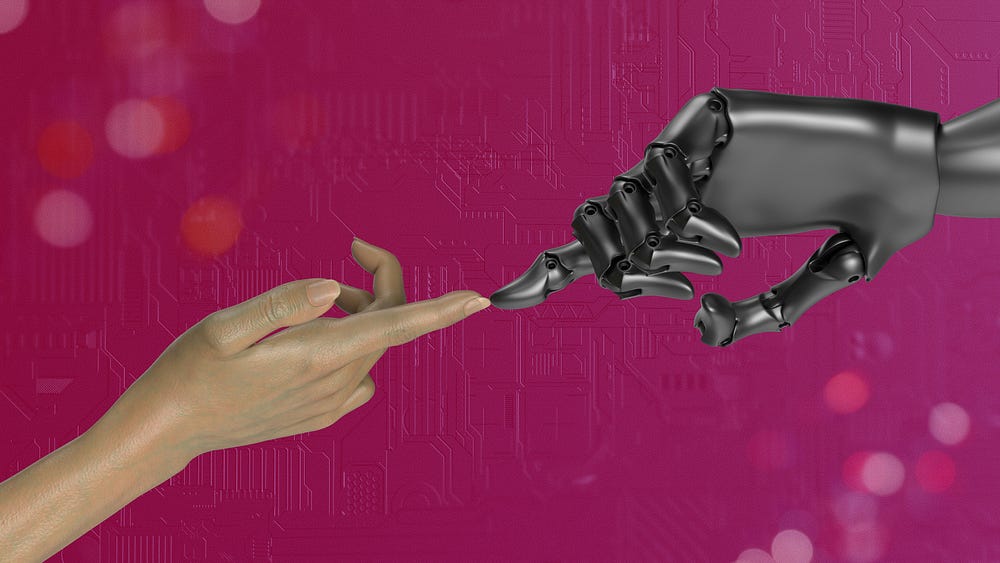
That was the day I stopped trying to outrun the machine and decided to let it carry me. I did not need a replacement; I needed a collaborator. I started experimenting with a few early AI interfaces, and the shift was not a loud explosion of “future tech.” It was a quiet, profound sigh of relief. Suddenly, the transcription that used to take my entire evening was finished before my kettle whistled. The creative block that felt like a concrete wall became a doorway.
We often talk about artificial intelligence as this cold, metallic force coming to steal our chairs at the table. But sitting there that afternoon, watching a tool help me organize my own scattered thoughts, I realized the truth is much warmer. AI is not here to take the “human” out of work. It is here to take the “robotic” out of it. It is here to handle the repetitive, the soul-crushing, and the mundane, so we can finally get back to the parts of our jobs that actually make us feel alive.
The keyword here is AI Productivity Workflows, a concept searched by thousands of people every month who are just as tired as I was. They are looking for a lifeline. They are looking for the Top 10 AI Tools that actually deliver on the promise of an easier life. Here is how I rebuilt my day, and how you can rebuild yours…
1. Jasper.ai | The Architect of Expression
In the old world, the blank page was an adversary. It was a white abyss that swallowed ideas whole. Jasper.ai arrived not as a ghostwriter, but as an architect. It understands the structural integrity of a good story. When I sit down to write now, I do not start from zero. I start from a conversation.
Jasper uses machine learning to mimic brand voices and human nuances. It is not just spitting out synonyms; it is understanding the intent behind the words. If I tell it to be “empathetic yet professional,” it avoids the dry, corporate drone that plagues most business writing.
- Use Case: Blog Outlining. When I have a rough idea, I ask Jasper to generate five unique angles. It takes my raw thoughts and turns them into a structured roadmap in seconds. This allows me to focus on the storytelling rather than the logistics of “what comes next.”
- Use Case: Ad Copy. If I am stuck on a Facebook ad, I use the “Problem-Agitate-Solution” template. It writes persuasive hooks that would usually take me an hour of hair-pulling to master, allowing for rapid A/B testing that simply was not possible manually.
2. Otter.ai | The Auditor of Ideas
There is a specific kind of exhaustion that comes from trying to listen and record at the same time. You miss the nuance of a speaker’s voice because you are too busy looking at your notebook. Otter.ai became my digital ears, a silent participant in every meeting that never gets tired and never forgets a quote.
It uses ambient voice recognition to separate speakers and time-stamp every word. It is the end of the “what did he say again?” era.
- Use Case: Client Meetings. I let Otter run in the background. By the time I say goodbye, I have a searchable transcript and a summary of the next steps. I can look a client in the eye instead of staring at my keyboard.
- Use Case: Voice Memo Journaling. Sometimes my best ideas happen while driving. I talk to Otter, and it turns my verbal ramblings into a clean, actionable document for later, ensuring that fleeting sparks of genius are not lost to the wind.
3. Midjourney | The Visionary’s Lens
I have always been a “visual thinker” with “stick-figure skills.” It is a frustrating combination. Midjourney broke that barrier. It is a generative engine that lives inside Discord, turning prose into painting. It feels like reaching into a dream and pulling out a photograph.
It does not just “make pictures.” It understands lighting, texture, and composition. It understands the difference between a “cinematic sunset” and a “watercolor dawn.”
- Use Case: Concept Art. When pitching a brand idea, I use Midjourney to create a vivid mood board. It helps the client “see” the vision before we even start, bridging the gap between my imagination and their expectations.
- Use Case: Custom Social Assets. Instead of using the same stock photo everyone else has, I generate a unique digital painting that perfectly matches my brand colors, giving my content a premium, bespoke feel that drives engagement.
4. ChatGPT | The Librarian of the Infinite
ChatGPT is the tool that started a thousand conversations. But beyond the hype, it is a researcher of unparalleled speed. I treat it like a highly educated intern who has read every textbook in the library and is eager to help me summarize them.
The power of ChatGPT is not in the answers it gives, but in the questions it helps you ask. It is a Socratic partner.
- Use Case: Data Synthesis. I paste a long, boring PDF into the chat and ask it to extract the three most important trends. It saves me an entire afternoon of reading dry reports.
- Use Case: Code Debugging. When my website breaks, I paste the error. ChatGPT finds the missing bracket or the faulty line in seconds. It turned a task that used to require a developer into something I can solve during my coffee break.
5. Synthesia | The Democratization of Video
Professional video used to be a gatekept industry. You needed a studio, a camera, a teleprompter, and a brave face. Synthesia changed that by creating AI avatars that speak your script with hauntingly realistic accuracy.
It is a tool for the shy, the busy, and the budget-conscious. It removes the friction of “production.”
- Use Case: Internal Training. Instead of a boring manual, I create a one-minute video featuring an AI avatar that explains new company policies. It is more engaging and results in much higher information retention.
- Use Case: Personalized Sales. I can send a video greeting to a potential lead where the avatar speaks their name. It creates a “wow” factor that a standard email simply cannot match, making the recipient feel seen.
6. Grammarly | The Guardian of Tone
We have all sent that email. The one where we were tired, and it came off a bit too blunt. Or the one where we were nervous, and it sounded shaky. Grammarly is more than a spell-checker; it is an emotional intelligence filter for the digital age.
It analyzes the “pulse” of your writing. It asks: Are you being too wordy? Are you being too formal?
- Use Case: High-Stakes Emails. Before I hit send on a proposal, Grammarly checks if I sound confident and clear. It is my final safety net against the “send” button anxiety.
- Use Case: Document Consistency. It ensures that technical terms are spelled the same way across a 50-page report. This level of detail used to require a human editor; now it is done in real-time.
7. DALL-E 2 | The Surgeon of Imagery
While Midjourney is the poet of AI art, DALL-E 2 is the surgeon. It excels at “outpainting” and “inpainting” — the ability to change specific parts of an image or expand it beyond its borders.
It is about precision. If you need a very specific object in a very specific place, this is the tool.
- Use Case: Website Icons. I generate custom icons that are perfectly consistent with my site’s aesthetic. I no longer have to settle for “close enough” in icon libraries.
- Use Case: Presentation Slides. I use it to create metaphorical images (like a literal “bridge” over a chasm) to illustrate complex business problems. It makes my slides memorable and professional.
8. Adobe Podcast AI | The Studio in the Clouds
Audio quality is the “invisible” factor in professionalism. You can have the best message in the world, but if you sound like you are speaking through a tin can, people will tune out. Adobe Podcast AI uses neural networks to reconstruct your voice.
It effectively “removes” the room you are standing in, leaving only the clarity of your speech.
- Use Case: Remote Interviews. Even if my guest has a cheap microphone, this tool cleans their audio so the final product sounds like we were in the same room.
- Use Case: Voiceovers. I record scripts on my phone while walking. The AI removes the wind and traffic noise, allowing me to create content on the go without sacrificing quality.
9. Notion AI | The Neural Workspace
Notion was already the “second brain” for millions. With AI integrated directly into the page, it became an active participant in organization. It does not just store your notes; it interprets them.
It bridges the gap between “having information” and “using information.”
- Use Case: Meeting Summaries. It takes a page of messy bullet points and turns them into a clean table with checkboxes and deadlines. It saves me the thirty minutes of “cleaning up” that usually follows every call.
- Use Case: Content Translation. If I am working with a global team, I can translate my notes into five different languages instantly. It removes the language barrier in a single click.
10. RunwayML | The Future of Motion
Video editing used to be the most time-consuming part of my week. Scrubbing through timelines, masking backgrounds, color grading… it was a chore. RunwayML makes these complex tasks feel like magic.
It is “Green Screen” technology for the masses, without the actual green screen.
- Use Case: Background Removal. I can record a video in my messy kitchen and remove the background with one click. I can then replace it with a professional office or a stylized abstract world.
- Use Case: Text-to-Color Grade. I can tell the AI to make my video look like a “moody noir film,” and it adjusts the colors and lighting automatically, giving my content a high-end cinematic feel.
The Human Verdict: Why This Matters
As I look back at that panicked Tuesday, I realize that my fear was not of the technology, but of my own limitations. I was trying to be a machine. I was trying to process data, transcribe words, and generate icons with mechanical precision. And I was failing, because I am a human.
When we use these Top 10 AI Tools, we are not surrendering our careers. We are reclaiming our humanity. We are handing over the “robotic” tasks to the robots so that we can do the one thing they cannot: care.
A machine can write a poem, but it cannot feel the heartbreak that inspired it. A machine can generate an image, but it cannot understand why that image makes a person cry. A machine can summarize a meeting, but it cannot feel the tension in the room when a deal is about to close.
The future of work is a partnership. It is a dance between the efficiency of the algorithm and the soul of the individual. By Future Proofing Workflows today, we are ensuring that tomorrow, we have more time to dream, more time to connect, and more time to be truly, authentically human.
The revolution did not happen because the technology got smarter… it happened because we finally decided to work wiser.